SSGC gas supply to households is now restricted to three meal times a day because of falling domestic production, according to the managing director of the Sui Southern Gas Company (SSGC), who spoke to Dawn on Saturday. Muhammad Amin Rajput said national gas production had fallen by about 50 percent over the past decade, while imported liquefied natural gas (LNG) has also been hard to secure since April because of the Iran war.
What the SSGC Gas Supply Schedule Means for Households
Under the current arrangement, the Sui Southern Gas Company supplies domestic consumers during breakfast, lunch and dinner windows, so that households receive gas when they need it most for cooking. Rajput said the company has been monitoring availability continuously since last week and described the approach as a way of protecting domestic consumers, who would otherwise face unpredictable shortages across the day.
He said gas availability on the SSGC network had dropped to around 605 million cubic feet per day (mmcfd) because of depletion in gas fields, compared with 695 mmcfd last year, a fall of roughly 13 percent. Of the current volume, about 300 mmcfd goes to domestic consumers, which is roughly half, while the remainder is supplied to industry, power and fertiliser plants.
Gas Production Decline and Disrupted LNG Imports
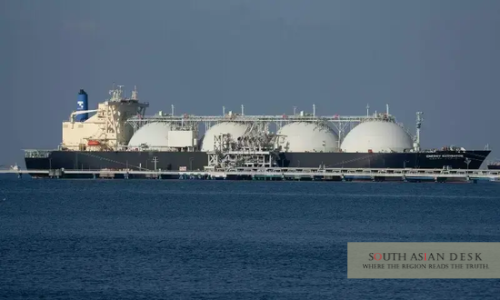
The managing director’s comments point to two separate pressures on supply. The first is the long-term gas production decline from ageing fields, which he said has cut national output by about half in ten years. The second is a more recent shortfall in imported LNG, which Rajput said has been limited since April by the Iran war and sharply reduced RLNG availability from Qatar.
The disruption has been sudden. Pakistan began 2026 with a surplus of LNG, but the US-Israeli war with Iran, which began on 28 February, halted supplies from Qatar, which accounts for about 90 percent of the country’s LNG, according to analysis published by East Asia Forum. Imported LNG made up about one-fifth of gas consumption between July 2025 and March 2026, according to the latest Economic Survey, as reported by Arab News. SSGC Chairman Asif Inam had earlier said that supplies to domestic consumers were being restricted to meal times to manage available resources.
Rajput said the Petroleum Division has secured limited gas supplies to meet other critical needs, including the power and fertiliser sectors. He added that these competing requirements call for prudent management and careful allocation of the gas that is available.
Low Pressure and the Compressor Complaint
Although SSGC maintains that domestic supply in Karachi is adequate, many residents have complained that the flame is too weak for cooking. Rajput said a localised problem should not be generalised across a network of roughly 50,000 kilometres of pipelines, of which 16,000 kilometres are in Karachi. SSGC serves 3.2 million customers across Sindh and Balochistan, including about two million in Karachi.
The managing director blamed low pressure largely on the illegal use of gas compressors and suction pumps, which he said can drain the supply of an entire block or building. He warned that substandard devices create safety risks and have caused property damage and, in some cases, loss of life. Rajput urged consumers to report such use, and said removing the devices would help restore pressure during supply hours. The devices can also distort meter readings and inflate bills, he added.
He also said SSGC rehabilitated about 7,000 kilometres of distribution pipelines in 2025-26, replacing ageing and corroded pipes, mostly in Karachi, which he said has improved pressure at tail-end locations and reduced unaccounted-for gas.
What Comes Next
The meal-time schedule is likely to remain in place for as long as production keeps falling and LNG supplies stay uncertain. Households in areas with low pressure will be watching whether SSGC’s enforcement against illegal compressors and its pipeline repairs make a noticeable difference, while industry and power producers will want clarity on how the remaining gas is shared.
The broader question is whether Pakistan can secure dependable alternative supplies before winter demand rises. Until it does, the limited volume available to SSGC will continue to be divided between households and other sectors, and the company’s ability to maintain pressure during the three supply windows will determine how consumers experience the shortage in practice.
Follow SouthAsianDesk on X, Instagram and Facebook for insights on business and current affairs from across South Asia.