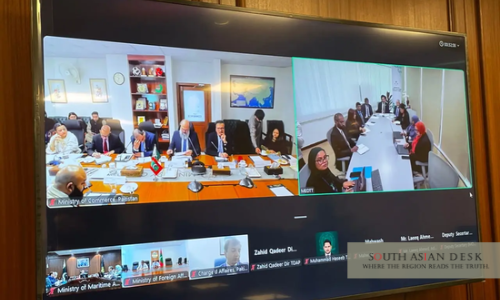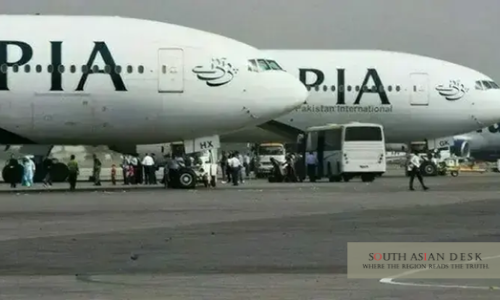
PIA privatisation has so far brought Rs80 billion in fresh equity into the airline and Rs10 billion to the government, with a further Rs90 billion expected from the next phase in June 2027, according to the prime minister’s adviser on privatisation, Muhammad Ali. He made the remarks on Thursday at the sixth Pakistan Prosperity Forum in Islamabad, as reported by Business Recorder.
What the Adviser Said at the Pakistan Prosperity Forum
Ali said privatisation is not merely about transferring shares, but about bringing in fresh capital and modern expertise. He argued that national resources should go to education, health and public welfare instead of covering losses in the public sector, and that the government’s core job is effective policymaking and regulation, not running commercial enterprises.
He also said that the real measure of success is the creation of new economic value, and not the number of entities sold. Business Recorder’s report did not break down the expected Rs90 billion for June 2027, or say which parts of the transaction it covers.
How the PIA Privatisation Deal Was Structured
A consortium led by Arif Habib Corporation won the auction in December 2025 with a bid of Rs135 billion for a 75 percent stake, against a government reserve price of Rs100 billion. Under the terms, 92.5 percent of the proceeds went into the company and the remainder, about Rs10 billion, to the government. The buyer was also required to retain all employees for 12 months, according to Reuters.
The first closing took place this summer. Profit reported on 3 July that the consortium’s vehicle, PIA Equity Limited, held 66.67 percent of Pakistan International Airlines Corporation Limited (PIACL) after the share transfer and new share issuance, while PIA Holding Company retained 33.33 percent. At that stage the consortium paid Rs10 billion to the government as sale proceeds and injected Rs80 billion into PIACL as fresh equity, the figures Ali repeated at the forum. The consortium has also notified the Privatisation Commission of its intent to buy the remaining 25 percent stake, according to ProPakistani.
The Wider Case for Privatising State-Owned Enterprises
Ali placed the airline sale within a broader argument about public finances. He said state-owned enterprises (SOEs) posted losses of Rs342.8 billion in the first six months of the 2025-26 fiscal year, while government financial support for them rose 31 percent to a record Rs804 billion.
Other official figures give a fuller picture. A meeting of the Cabinet Committee on State-Owned Enterprises in September was told that profitable SOEs earned aggregate profits of Rs423.3 billion over the same period, and that SOEs contributed Rs839 billion to the government against Rs804 billion in support, leaving a net positive fiscal flow of Rs35 billion in the government’s favour. The same review identified circular debt, weaknesses in parts of the power and infrastructure sectors and governance gaps as areas needing sustained attention. In other words, the losses are concentrated in particular entities, while the portfolio as a whole is not uniformly loss-making.
Other Privatisations and Projects Under Way
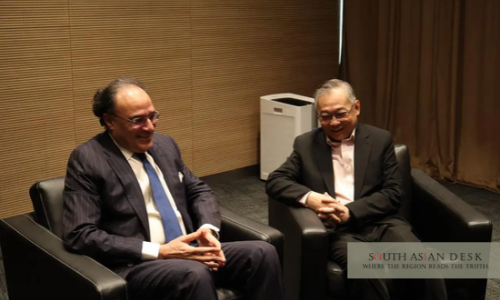
Ali said the privatisation of First Women Bank had brought a global investor into Pakistan’s market, and that the sale of the power distribution companies IESCO, GEPCO and FESCO had entered the key due diligence phase. He added that a public-private partnership was expected to attract investment of $672 million in the M-6 motorway. Private and foreign capital is also being explored elsewhere in the economy, including a proposed $30 billion Saudi energy infrastructure programme and the finance minister’s investment pitch in Singapore this week.
Details of the distribution company sales, including valuations, timelines and the identity of prospective buyers, were not given in the report. Those transactions will be an important test of whether the model used for PIA can be repeated in sectors with more complex financial positions.
What Comes Next
The next milestone for the airline is the June 2027 phase that Ali referred to. Whether the Rs90 billion arrives on schedule will depend on the terms of the share purchase agreement and on the consortium completing its remaining obligations, which the adviser’s remarks did not describe in detail. Independent figures on PIA’s operating performance under the new management would help readers judge the claims made about the deal, but none were presented at the forum.
For now, the PIA privatisation stands as the clearest example of the government’s approach, which combines asset sales with fresh equity from private owners. Its longer-term results will be judged on the airline’s finances, service and employment after the retention period, as well as on the revenue the government receives.
Follow SouthAsianDesk on X, Instagram and Facebook for insights on business and current affairs from across South Asia.