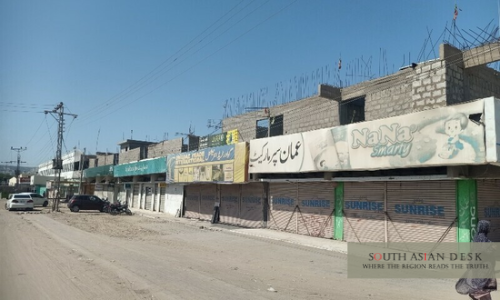
A shutter-down strike in Balochistan brought commercial activity to a halt in Quetta and most districts of the province on Thursday, as traders and political parties protested against what they described as worsening law and order, rising inflation, unemployment and prolonged power and gas outages. The strike was observed on the call of the All Parties Alliance and received wide support from the business community.
Why the Shutter-Down Strike in Balochistan Was Called
The strike had been announced earlier this month after an all-parties conference in Quetta, convened by the Awami National Party at the Quetta Press Club under the chairmanship of its provincial president, Asghar Khan Achakzai, according to The Express Tribune. Representatives of several major parties, including the National Party, Jamiat Ulema-e-Islam and the Pashtunkhwa National Awami Party, attended the gathering. The participants resolved to turn their grievances into a joint political and democratic campaign.
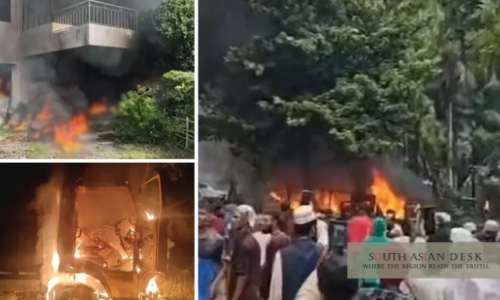
According to Dawn, the protest was directed at growing security concerns, issues relating to the province’s natural resources and mineral wealth, and the closure of trade routes. Organisers also pointed to the presence of armed elements on highways and to incidents in which vehicles carrying traders’ goods were set on fire. In addition, protesters voiced concern over alleged undemocratic measures against political leaders and workers, as well as arrests and lengthy electricity and gas loadshedding.
Markets Remain Closed Across Quetta
In Quetta, markets, shops and business centres stayed shut for the entire day. Major commercial areas, among them Jinnah Road, Qandhari Bazaar, Suraj Ganj Bazaar, Masjid Road, Liaquat Bazaar, Abdul Sattar Road and Prince Road, were closed, along with Mekangi Road, Mission Road, Alamdar Road and Toghi Road. Several other parts of the province also saw markets and business centres remain closed.
Police took strict security measures to maintain law and order during the strike. Armed personnel patrolled different parts of the provincial capital, and additional police contingents were deployed in major markets and commercial areas.
Rallies Converge at Manan Chowk
Leaders of the All Parties Alliance and traders’ organisations took out rallies from different parts of Quetta, which converged at Manan Chowk, where a demonstration was held. Those who addressed the gathering included Maulana Abdul Rahman Rafiq, the JUI-F chief in Quetta, Musa Baloch of the Balochistan National Party, Ali Ahmed Langove of the National Party, Ahmed Jan of the Pashtunkhwa Milli Awami Party and Abdul Rahim Kakar, the president of a traders’ association.
The speakers said the government had failed to provide basic facilities, including electricity and gas, which had compelled people from different walks of life to take to the streets. They added that political parties and traders’ organisations had joined hands to draw attention to growing insecurity, inflation, unemployment, lawlessness and what they called the government’s failure to address public grievances.
Power and Gas Outages Fuel Public Anger
The leaders said residents had repeatedly approached the authorities over gas shortages and electricity outages during the cold weather, but that their complaints had gone unaddressed. The timing of the shortages has added to public frustration, as demand for gas typically rises in winter in Balochistan, where temperatures in many areas fall sharply.
The strike also reflects a wider effort by the province’s political parties to build a united front. The Express Tribune reported that a provincial leadership meeting has been scheduled for 26 November to finalise the next course of action, while an all-parties conference is planned for the first week of December to present the province’s urgent problems before the national leadership.
For traders in particular, the closure carried a cost, since a full day of lost business is significant for small shopkeepers. Yet the strong turnout in Quetta and other districts suggested that concerns over inflation, unemployment and basic services cut across party lines. Whether the authorities respond to the demands raised during the shutter-down strike in Balochistan will likely shape the direction of the campaign in the coming weeks.
Follow SouthAsianDesk on X, Instagram and Facebook for insights on business and current affairs from across South Asia.
Read More: