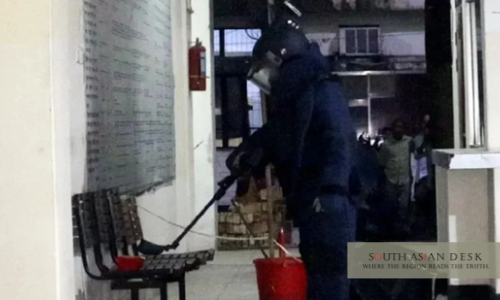
Unrest in Bangladesh deepened on Thursday as crude bomb blasts, arson attacks and vandalism were reported in Dhaka and other parts of the country, coinciding with a nationwide lockdown called by the banned Awami League. The violence has intensified in recent days ahead of the planned return of former prime minister Sheikh Hasina, which is expected in December, and has left residents anxious about their safety.
Lockdown Call Meets Heavy Security Deployment
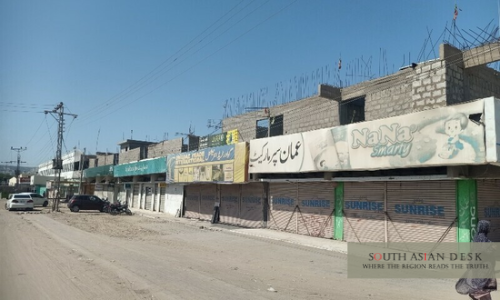
The Awami League, led by Sheikh Hasina, called the lockdown for Thursday, and parts of the country were reported to have shut down. Despite stepped-up security, witnesses described a series of improvised explosions before dawn in the capital, and police and witnesses said at least four people were wounded. Police also said two members of the ruling Bangladesh Nationalist Party were killed in the violence, according to Reuters.
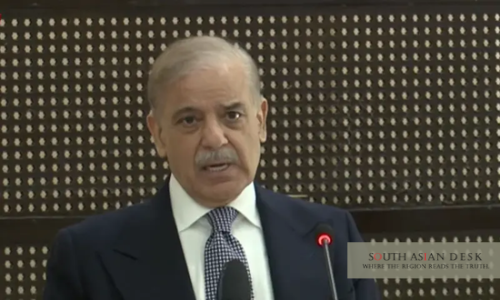
Home Minister Salahuddin Ahmed vowed strict legal action against those responsible, saying investigators would rely on audio and video evidence to identify the perpetrators. Hundreds of arrests were reported in the lead-up to the shutdown, and police increased security across Dhaka, including by deploying additional personnel at major flyovers.
Attacks on Muhammad Yunus’s Home and Grameen Bank
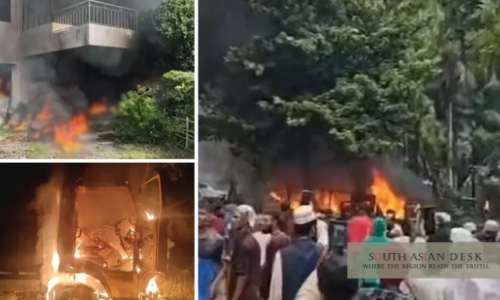
One of the most notable developments came in Chattogram, where the ancestral home of Muhammad Yunus, the Nobel laureate who led the interim government after Sheikh Hasina’s ouster, was set on fire late on Wednesday. Police said the blaze was confined to an abandoned ground-floor room used as a storeroom at the house in the Panchlaish area. A police patrol spotted the fire and quickly extinguished it, and no casualties were reported. It was not immediately clear who was responsible.
The incident followed a series of arson attacks on Grameen Bank, the microfinance institution founded by Mr Yunus. Reuters reported, citing the bank, that at least 37 of its branches and offices have been targeted in arson attacks or attempted fires since 10 November, with 14 more attacked since midnight on Tuesday. Al Jazeera noted that the attacks on the bank’s branches and on Mr Yunus’s family home appeared to be new developments in the wider campaign of violence.
Why Unrest in Bangladesh Is Raising Public Fear
The latest violence is the continuation of a wave that began more than a week earlier. Reporting by bdnews24 on 12 November recorded 31 crude bomb blasts at 20 locations in Dhaka over a single week, along with eight vehicles torched at seven sites. In Faridpur, a bus parked beside the Dhaka-Barishal Highway was set alight, and its driver, who was trapped inside, later died.
The attacks have unsettled commuters, parents and transport operators. Some parents told bdnews24 that they kept their children at home whenever political tension rose, while a Dhaka University student said the blasts had shaken his sense that the campus was safe. Such accounts show how far the unrest in Bangladesh has reached into daily life, affecting schools, public transport and the willingness of ordinary people to travel.
Rival Groups and a Tense Political Climate
The picture has been complicated by reports of reprisals. India TV, citing newspaper reports, said rival activists believed to be linked to the ruling BNP attacked or set fire to the homes of two Awami League leaders in Dhaka. Such accounts point to a cycle of attacks that authorities will find difficult to break, particularly while the Awami League remains banned and its leadership is outside the country.
The attacks on the property of Mr Yunus and Grameen Bank also carry symbolic weight, given the central role the Nobel laureate played in the country’s political transition after the 2024 uprising. The sites targeted so far range from private homes and bank branches to buses and institutions, which has made the pattern of violence difficult to predict.
With Sheikh Hasina’s return planned for next month, the coming weeks are likely to test the capacity of the security forces to prevent further bloodshed. Whether the government can restore public confidence will depend on how quickly those behind the crude bomb blasts and arson attacks are identified and brought to account, and on whether political leaders can lower the temperature before tensions rise further.
Follow SouthAsianDesk on X, Instagram and Facebook for insights on business and current affairs from across South Asia.