The PKSF solar power scheme has entered its field-level rollout, with the Palli Karma-Sahayak Foundation (PKSF) approving loans and disbursing funds to 96 partner organisations under a government-funded financing initiative, according to The Financial Express. The Government of Bangladesh recently approved a loan of Tk5 billion to PKSF for the purpose, and the foundation says it has completed all the necessary preparatory work.
What the PKSF Solar Power Scheme Offers
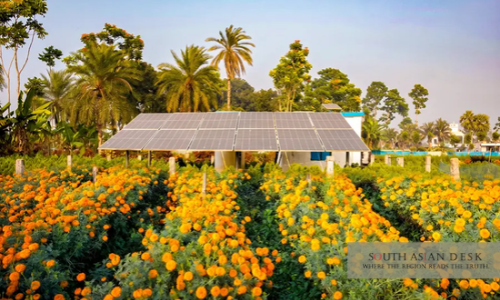
Under the foundation’s Renewable Energy Financing Program, loans from the fund will be given to clients at an interest rate of 6 percent. Individuals, households and entrepreneurs will be able to borrow to install solar power systems, and PKSF says 21,000 clients across the country will be able to fit rooftop solar systems on their homes or business premises.
The loans will be delivered through PKSF’s partner organisations, which are the microfinance institutions that deliver its financing in different parts of the country. According to a media release, the initiative is expected to cut electricity costs, ensure an uninterrupted power supply and encourage the use of environment-friendly technologies, with positive effects for households and microentrepreneurs.
What PKSF Expects the Scheme to Deliver
The release estimates that the PKSF solar power scheme will generate about 40 megawatts of electricity, reduce dependence on fossil fuels and cut carbon emissions by at least 600,000 tonnes over 15 years. It also expects new jobs in the service sector, particularly in maintaining solar systems, and says progress will be monitored in real time through an automated dashboard. These are PKSF’s own projections, and the release did not describe how they were calculated.
Where the Scheme Fits in Bangladesh’s Solar Plans
The PKSF solar power scheme is one part of a larger government effort. In September, the government set up a Tk1,500 crore renewable energy financing fund, with Tk500 crore each going to PKSF, the Infrastructure Development Company Limited (IDCOL) and the Bangladesh Infrastructure Finance Fund Limited, according to The Business Standard. The report said loans to end borrowers would be capped at 6 percent including fees, for up to ten years, and that the three institutions would have to report quarterly on installed capacity, the number of beneficiaries and loan recovery.
The targets are far larger than this single programme. Bangladesh’s Renewable Energy Development Policy 2026-2030 aims for renewables to supply 20 percent of electricity generation by 2030, and a draft plan envisages about 10,450 megawatts of new capacity by then, including 5,500 megawatts from rooftop solar, BSS reported. The country had about 1,852 megawatts of installed renewable capacity in September, of which 1,473 megawatts was solar, according to pv magazine. Prime Minister Tarique Rahman said at the Bangladesh Solar Expo on 3 November that the government wanted to add 3,000 to 4,000 megawatts of solar power to the grid before next summer.
By comparison, the 40 megawatts expected from PKSF’s scheme is a small fraction of those goals, although it targets a different group, namely rural households and small businesses that may find it harder to borrow from banks.
Questions the Release Leaves Open
Financing has been described as a main obstacle to rooftop solar. Entrepreneurs told a seminar reported by bdnews24 that banks’ complex and conditional lending rules held back installations. A Dhaka Tribune opinion piece in September estimated that a three-kilowatt rooftop system costs around Tk3 lakh and might pay for itself in five or six years, depending on output, loan costs and equipment quality. Whether the PKSF scheme’s 6 percent loans make that arithmetic attractive for low-income borrowers will depend on loan sizes and repayment terms, which the release did not specify.
The release also did not say how clients will be selected, what the maximum loan will be or what technical standards the installed systems must meet. It said the 21,000 clients “will be able” to install systems, and did not report how many loans had been approved at the time of the announcement.
What Comes Next
The first signs of progress will come from the partner organisations’ disbursement figures and the foundation’s real-time dashboard. Whether the scheme reaches the 21,000 clients and the 40 megawatts will depend on how quickly the loans are approved, how many installers are available locally, and whether the systems perform as expected after installation.
For now, the PKSF solar power scheme is an early-stage rollout with expected benefits that have yet to be measured. Its results will help show whether low-interest credit through microfinance networks can widen rooftop solar adoption beyond the households and businesses that already have access to bank loans.
Follow SouthAsianDesk on X, Instagram and Facebook for insights on business and current affairs from across South Asia.