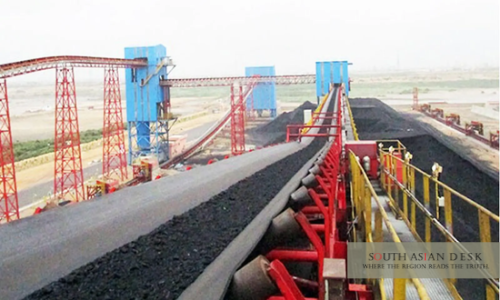
The Port Qasim coal conveyor failure that began on November 18 has disrupted supplies of imported fuel to power plants and industries, including cement and textile manufacturers, according to Dawn. The only coal-handling conveyor system at Pakistan International Bulk Terminal (PIBT) has been out of operation since that date, at a time when the power sector is already contending with disruptions in liquefied natural gas supply and reduced hydroelectric availability.
Discharge Rates Fall to One-Tenth of Normal
With the conveyor out of action, vessels are being unloaded manually at a far slower pace. The state-run Jamshoro Power Company (JPC) reported that discharge has fallen to 3,000 tonnes per day, compared with the usual 30,000 tonnes. As a result, public and private sector power plants and their coal suppliers face mounting demurrage charges while ships wait to unload their cargo. Beyond the financial burden, the slowdown raises the prospect of power generation problems, penalties and revenue losses.
According to PIBT, the conveyor was damaged on November 18 while coal was being discharged from the vessel Pegasus 8. The terminal attributed the damage to the excessively dusty nature of Tanzanian coal and to foreign materials in the cargo, particularly sharp pieces of iron. PIBT has said that repairs could take eight to 10 days.
Jamshoro Power Company Warns of Mounting Losses
In a letter to PIBT and the federal government, JPC said it depends on uninterrupted coal receipts through the terminal and that the disruption puts that supply at immediate risk. The company warned that delayed arrivals threaten critical stocks at its plant and, in turn, its operations and the electricity it supplies to the national grid. Longer queues at the terminal would also expose waiting vessels to demurrage, which raises the cost of imported coal and, ultimately, the cost of generating electricity.
JPC put figures on the risk. Based on five upcoming vessels, it expects demurrage exposure to exceed $2 million to $3 million, equivalent to Rs556 million to Rs834 million. The company also cautioned that insufficient coal inventory could result in capacity payment losses of roughly Rs2.2 billion per month. It further noted that delays to incoming shipments would raise future procurement costs because of demurrage on vessels that are already en route or on order.
Dispute Over Force Majeure
The disagreement between power producers and the terminal operator centres on whether PIBT should declare force majeure. Power producers and suppliers have asked the terminal to do so, saying such a declaration would help them pursue insurance claims and avoid financial losses. JPC formally requested that PIBT make the declaration without delay and stated that all demurrage, detention, additional expenses, damages and losses arising from the disruption should be borne by the terminal. A shipping line has also warned that it will seek compensation for the prolonged wait for discharge, as well as for any damage caused to its vessel during conventional unloading.
PIBT has rejected these requests. It maintains that the breakdown is not an event that gives rise to a force majeure declaration on its part, because discharge operations are continuing, albeit through conventional means that are understandably slower. The positions of the two sides therefore remain far apart, and the question of who will bear the accumulating costs is unresolved.
Port Qasim Coal Conveyor Failure: Dependence on a Single Berth and Conveyor
Sources told Dawn that the terminal’s reliance on a single jetty, one coal berth and one conveyor system has compounded the problem. A second conveyor was proposed in 2021 to raise annual handling capacity from 12 million tonnes to 17 million tonnes, but it has yet to be built. The absence of a backup system means that any breakdown of the existing equipment immediately reduces the terminal’s ability to receive coal imports.
The episode highlights how a single point of failure at a port can affect the wider energy and industrial supply chain. Until repairs are completed, power producers, coal suppliers and shipping lines will continue to face delays and rising costs. The outcome of the dispute over responsibility for those costs will depend on whether PIBT reconsiders its position or whether the affected parties pursue their claims through other channels.
Follow SouthAsianDesk on X, Instagram and Facebook for insights on business and current affairs from across South Asia.
Read More: