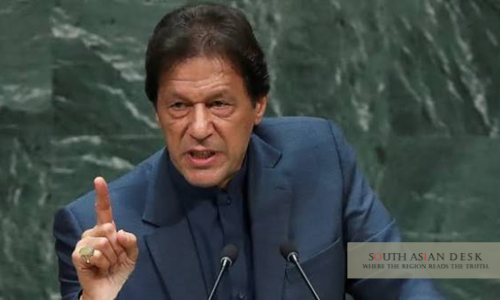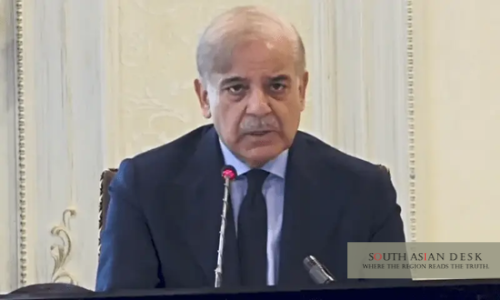
Provocative statements by cabinet members have drawn the attention of Prime Minister Shehbaz Sharif, who on Tuesday directed federal ministers to stop trading political remarks and to settle their differences through consultation. The directive, issued through the Prime Minister’s Office, follows several days of public sparring between coalition figures over a proposed referendum and the creation of new provinces.
In the statement, the prime minister said the federal government’s entire focus remained on public welfare projects and that it was continuing its journey from economic stability towards sustainable economic growth.
Why Provocative Statements by Cabinet Members Drew the Prime Minister’s Attention
The appeal comes amid rising political tensions within the governing alliance. Over the past few days, coalition partners have engaged in a war of words, and one member of the federal cabinet went public with his grievance against a colleague.
The exchange has centred on the Naqvi-Sanaullah row. On Monday, PML-N Senator Rana Sanaullah, who also serves as adviser to the prime minister on political affairs, said Interior Minister Mohsin Naqvi had complicated the matter of creating new provinces by delivering an “irrelevant speech at an irrelevant forum.” Sanaullah stood by his criticism of the interior minister’s decision to open the debate while addressing the Pakistan Economic Summit in Islamabad in July. The Express Tribune reported that he also faulted Naqvi for failing to take the Pakistan Peoples Party on board.
Naqvi, for his part, responded without naming his colleague. According to Dawn, he warned that the day he commented on this minister, the minister would not be able to show his face. The remark added to an already charged atmosphere.
The New Provinces Debate Behind the Naqvi-Sanaullah Row
The disagreement is rooted in a policy question that has dominated political discourse in recent weeks. Naqvi set off a political storm in July when he called for the creation of new administrative units to “reset” the country’s system of governance. More recently, on November 12, he suggested that a public referendum could offer a way out of the long-running disagreement over new provinces, arguing that it could settle the debate once and for all.
The proposal has raised constitutional questions, with reports noting that parliamentary approval is considered necessary for any referendum. Sanaullah has maintained that the matter will now reach parliament as a controversial issue, a view that sits uneasily with Naqvi’s public advocacy of a popular vote. Neither the Presidency nor the Prime Minister’s Office has publicly detailed what was discussed when the prime minister and President Asif Ali Zardari met earlier this month.
The Prime Minister’s Directive to Federal Cabinet Ministers
Against this backdrop, the prime minister said the federal government had always promoted the politics of development and progress. He then directed all federal cabinet ministers to refrain from making political statements against one another, adding that matters among members of the cabinet should be resolved through mutual understanding and consensus.
Mr Sharif also warned of the damage that public disagreements can cause. He said statements by federal ministers against one another create a negative impression and divert attention from the government’s agenda of development and progress. The language suggests that the leadership is concerned less about the substance of the provinces debate than about the perception of discord at the top of the government.
What the Directive Means for the Coalition
Whether the instruction will end the public exchanges remains to be seen. The prime minister’s statement did not announce any formal mechanism for resolving the dispute, and the underlying question of how, and whether, new provinces should be created is far from settled. Any move on the issue would still require engagement with coalition partners, the opposition and parliament.
For now, the message from the prime minister is one of restraint. By urging ministers to settle matters privately, he has sought to protect the government’s economic narrative at a time when the cabinet’s attention, in his view, should remain fixed on public welfare. How far the federal cabinet ministers heed that call will become clearer in the coming days, as the debate over new provinces continues in parliament and beyond.
Follow SouthAsianDesk on X, Instagram and Facebook for insights on business and current affairs from across South Asia.
Read More: