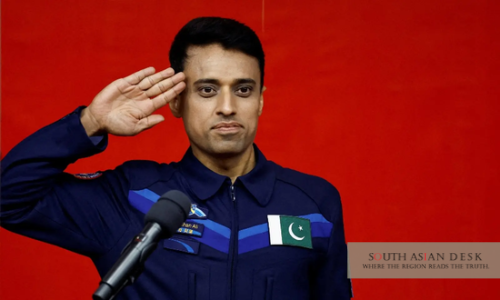
The first Pakistani astronaut, Zeeshan Ali, is scheduled to lift off on November 25 as part of China’s Shenzhou-24 mission, a flight that will also make him the first foreign national to visit the Tiangong space station. The China Manned Space Agency (CMSA) confirmed his place on the crew on Tuesday, ahead of the launch from the Jiuquan Satellite Launch Center in northwest China.
The spacecraft is due to leave the ground at 8:18am Beijing Time, which is 5:18am Pakistan Time, on Wednesday. Planning Minister Ahsan Iqbal, who is currently in China, described Ali on X as Pakistan’s first astronaut.
The Crew and Objectives of the Shenzhou-24 Mission
According to the CMSA, Chinese astronaut Tang Hongbo will command the Shenzhou-24 mission, with Wu Yi serving as pilot and Ali taking the role of payload specialist. Speaking at a press conference, CMSA spokesperson Zhang Jingbo confirmed that Ali would be the first foreign national to visit Tiangong.
Ali is expected to spend about a week in orbit, working alongside the Chinese crew on roughly 90 experiments. The agency said the mission also includes an orbital rotation with the crew of the earlier Shenzhou-23 mission, routine operations and maintenance of the station, and continued space science research involving space payloads.
Once the new crew arrives at the Tiangong space station, Ali will return to Earth aboard the Shenzhou-23 spacecraft, which docked with the station in May. He will travel back with Lai Ka-ying, Hong Kong’s first astronaut and the only woman currently on board, and Zhang Zhiyuan. Their colleague Zhu Yangzhu will remain in orbit to complete China’s first full-year stay in space, a key endurance test for future lunar and potential deep-space ambitions. He will be joined for the next six-month rotation by Hongbo and Yi, who is making his first journey to space.
What the First Pakistani Astronaut Said Before Launch
Addressing a press briefing in Jiayuguan, Ali said he was deeply grateful to the Chinese government for helping Pakistan realise its dream of going into space. He explained that he had arrived at the Astronaut Centre of China a few months earlier, carrying the hopes of 250 million Pakistanis, and that his training had exceeded his expectations. Beyond acquiring spaceflight skills, he said, he had learned the Chinese language and could now speak with his crewmates in it.
He described the partnership as one that proves friendship between the two countries is real, not only on paper but also in orbit. Looking ahead, he said the mission is “not a finish line; it is a launch pad,” and expressed hope that cooperation would grow from a single astronaut on one flight to joint missions to the Moon, Mars and beyond. In a message to Pakistani children, he urged them to look up at the sky and remember that he would be up there with their dreams.
Ali also said the achievement should send the world a message that the two nations work hand in hand for the peaceful use of space.
China-Pakistan Space Cooperation Reaches a New Milestone
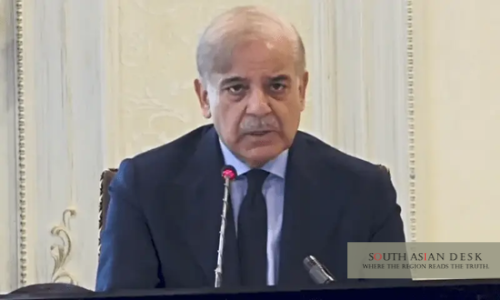
The flight is the result of a long-developing partnership. In February 2025, the Pakistan Space and Upper Atmosphere Research Commission (Suparco) and the CMSA signed an agreement under which two Pakistanis would train in China, with one of them joining a mission to the Tiangong space station. In April, Ali and Khurram Daud were chosen to begin that training, and Prime Minister Shehbaz Sharif met them to congratulate them on their selection.
Ali noted that 2026 marks the 75th anniversary of China-Pakistan space cooperation, as well as 75 years of diplomatic relations between the two countries. Mr Iqbal said the joint mission reflected the trust and “iron brotherhood” between Islamabad and Beijing, while Information Minister Attaullah Tarar called it a source of joy and pride for the entire nation.
The partnership also fits into China’s wider space strategy. Beijing has invested heavily in its space programme in recent years and aims to land astronauts on the Moon by 2030. China has been barred from the International Space Station since 2011, when the United States prohibited Nasa from collaborating with Chinese space agencies, and it has since sought partners elsewhere. Pakistan, a long-standing “all-weather” friend and a country for which China is the largest trading partner and a major foreign investor, is a natural fit.
A Moment of National Pride
For many Pakistanis, the launch represents a rare moment of shared aspiration in science and technology. If the mission proceeds as planned, the first Pakistani astronaut will complete his week aboard Tiangong and return home having joined a small group of people who have viewed Earth from orbit. Whether this flight becomes the start of a sustained Pakistani presence in space will depend on how far the two countries extend their cooperation after the mission ends.
Follow SouthAsianDesk on X, Instagram and Facebook for insights on business and current affairs from across South Asia.
Read More: