India signed a $1 billion agreement on Friday to procure 113 US fighter engines for its Tejas Mk1A fighter jets, marking a key step in enhancing military capabilities. The deal, inked by state-owned Hindustan Aeronautics Limited (HAL) and GE Aerospace, addresses past supply delays and strengthens India-US defence ties. Deliveries start in 2027, with completion by 2032. This procurement powers 97 additional Tejas aircraft, vital for countering threats from China and Pakistan. How will this reshape South Asia’s aerial balance?
HAL GE Engines Deal Signals Stronger India-US Ties
The HAL GE engines deal for the Tejas Mk1A underscores a pivotal moment in bilateral defence cooperation. Signed on 7 November 2025, the pact covers 113 F404-GE-IN20 engines and a comprehensive support package. HAL confirmed the agreement in an official statement: “The Hindustan Aeronautics Limited (HAL) has entered into an agreement with General Electric Company, USA, on 7th November 2025, for the supply of 113 Nos of F404-GE-IN20 engines and support package for execution of 97 LCA Mk1A programme.”
This India US $1 billion defence engines pact follows months of negotiations amid trade frictions, including US tariffs on Indian goods. Yet, it highlights resilience in strategic partnerships. Deliveries will span five years, ensuring steady supply to avoid previous bottlenecks. The engines, each valued at around USD 9 million, will equip advanced variants of the indigenous Tejas light combat aircraft.
Defence officials note the timing aligns with India’s push for self-reliance under the Atmanirbhar Bharat initiative. The deal builds on a 2021 contract for 99 engines worth USD 716 million, which faced delays due to global supply chain issues. HAL received the first batch of those engines in March 2025, with 12 more expected by the fiscal year-end.
Tejas Fighter Jet Engines Procurement Boosts IAF Strength
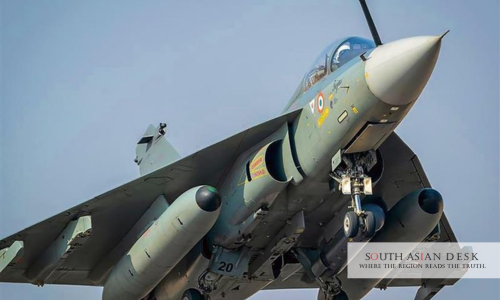
The Tejas fighter jet engines procurement India relies on forms the backbone of the Indian Air Force’s (IAF) modernisation drive. The Mk1A variant, an upgraded single-engine multirole jet, features enhanced avionics, radar, and electronic warfare suites. Each aircraft requires one F404 engine, providing 84 kilonewtons of thrust for superior manoeuvrability.
This procurement addresses the IAF’s squadron shortfall. Currently, India operates 31 fighter squadrons against a sanctioned strength of 42. Ageing MiG-21s and Mirage 2000s are being phased out, with China fielding over 50 squadrons and modern J-20 stealth fighters. Pakistan, bolstered by Chinese aid, maintains around 20 squadrons, including JF-17 Thunder jets.
The 97 new Tejas Mk1A jets, contracted in September 2025 for INR 62,370 crore (USD 7.4 billion), will join 83 earlier ordered units. Total Tejas fleet could exceed 220 by 2035. HAL’s Nashik and Bengaluru divisions will integrate the engines, with final assembly targeting six jets annually from 2027.
Experts highlight the engines’ reliability. The F404 series has logged over 25 million flight hours globally. For India, it means reduced dependence on foreign suppliers while fostering technology transfer. GE’s involvement includes maintenance training for HAL technicians, extending engine life to 4,000 hours.
Why This Matters in South Asia’s Geopolitical Landscape
In South Asia, the India buys 113 US fighter engines move carries profound implications. It fortifies India’s aerial deterrence against China’s expanding footprint in the Indian Ocean Region and along the Line of Actual Control. Beijing’s support for Islamabad, including joint exercises and arms sales, heightens risks. This pact ensures the IAF maintains qualitative edges in beyond-visual-range combat and precision strikes.
Economically, the HAL GE engines deal Tejas Mk1A injects vitality into India’s defence industrial base. HAL’s order book now tops INR 1.2 lakh crore (USD 14.3 billion), with exports eyed for nations like the Philippines and Argentina. The deal creates 5,000 direct jobs in manufacturing and sustains 10,000 in supply chains.
Regionally, it signals a pivot from Russian imports, which dominate 60% of IAF inventory. Amid Ukraine-related sanctions, diversification to US systems like the F404 reduces vulnerabilities. Pakistan’s reliance on Chinese engines for its JF-17s contrasts sharply, potentially widening the technological gap.
Background: Evolution of Tejas and Past Challenges
The Tejas project began in the 1980s under the Aeronautical Development Agency (ADA). Designed as a lightweight, cost-effective alternative to heavy fighters, it emphasises indigenous design. Initial flights occurred in 2001, with full operational clearance in 2019. Over 40 Tejas Mk1 jets serve in IAF squadrons, proving combat-ready in exercises like Tarang Shakti 2024.
Engine Supply Hurdles
The Tejas fighter jet engines procurement India has navigated turbulence. Indigenous Kaveri engine development stalled due to thrust shortfalls. GE’s F404 became the interim solution, but 2021-2024 saw delays from COVID-19 disruptions and US export controls. HAL invoked penalties, recovering USD 10 million. Recent stabilisations, including GE’s dedicated India production line, promise on-time delivery.
In 2023, India and the US inked a co-production deal for F414 engines for future Mk2 variants, valued at USD 1 billion over a decade. This tiered approach, import now, manufacture later aligns with Make in India goals.
Impact on India-US Defence Relations
The India US $1 billion defence engines pact exemplifies deepening ties. Bilateral trade hit USD 190 billion in 2024, with defence sales exceeding USD 20 billion since 2008. Joint ventures like iCET (Initiative on Critical and Emerging Technology) facilitate tech sharing. Despite tariff spats under the Trump administration, strategic imperatives prevail.
GE Aerospace benefits too, with India as its third-largest market. The firm employs 1,500 Indians and invests USD 30 million annually in local R&D. This reciprocity extends to civil aviation, where HAL-GE collaborations power regional jets.
What’s Next for Tejas and Regional Security
Future phases include 108 naval Tejas variants by 2030 and Mk2 production from 2028, powered by F414 engines. HAL targets 25% export share in global light fighters. Negotiations for 114 Rafale jets proceed parallelly, diversifying the fleet.
In South Asia, this fortifies stability. Enhanced IAF capabilities deter adventurism, promoting dialogue over conflict. As deliveries ramp up, India buys 113 US fighter engines will symbolise a self-assured defence posture.
The HAL GE engines deal Tejas Mk1A not only replenishes squadrons but catalyses industrial growth. With engines en route, the Tejas fleet soars towards operational maturity, securing skies for decades.
Published in SouthAsianDesk, November 8th, 2025
Follow SouthAsianDesk on X, Instagram, and Facebook for insights on business and current affairs from across South Asia.