

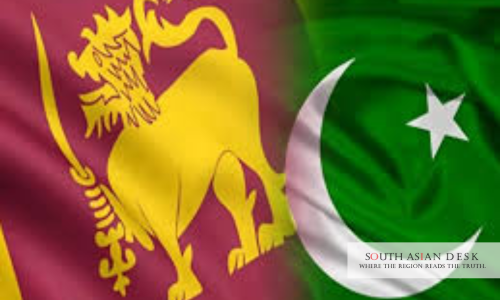
Sri Lanka has called on Pakistan to accelerate Sri Lanka Pakistan trade ties expansion by joining the Colombo Summit 2025 and revitalising their Free Trade Agreement, targeting a leap from current modest volumes to a potential US$5 billion in bilateral trade. Officials from both nations met in Karachi this week to map out new sectors, amid Colombo’s economic rebound and Islamabad’s export diversification push. The initiative, led by Sri Lanka’s Consul General PK Sanjeewa Pattiwila, underscores seven decades of diplomatic bonds now pivoting to commerce.
This push for Sri Lanka Pakistan trade ties expansion holds profound implications for South Asia. Amid regional tensions and global supply chain disruptions, closer economic links between Sri Lanka and Pakistan could knit a resilient trade web, easing reliance on distant markets like China or the EU. It promises job creation in export hubs, stabilises currencies through balanced flows, and models intra-regional cooperation that might inspire broader SAARC revival. For two island-continent neighbours, once bound by cricket and defence pacts, this commercial pivot arrives at a critical juncture, bolstering food security via agri swaps and tech transfers that counter climate vulnerabilities.
Sri Lanka Invites Pakistan to Colombo Summit 2025
Sri Lanka’s diplomatic overtures gained momentum during a high-level visit to the Karachi Chamber of Commerce and Industry (KCCI). Consul General PK Sanjeewa Pattiwila extended a formal invitation to Pakistani firms for the Economic and Investment Summit 2025, set for 2-3 December in Colombo. The event, organised by the Ceylon Chamber of Commerce, aims to showcase Sri Lanka’s reform agenda and attract foreign direct investment.
Pattiwila highlighted the summit’s role in Sri Lanka Pakistan trade ties expansion. “The private sectors of Sri Lanka and Pakistan can particularly thrive in agri-based industries, seafood, spices, animal feed, value-added seafood, construction, and information technology,” he stated during the KCCI meeting. He added that relations between the two countries, rooted in mutual respect and cooperation for over seven decades, now demand a commercial upgrade.
KCCI President Muhammad Rehan Hanif welcomed the proposal. He affirmed readiness for deeper collaboration in textiles, pharmaceuticals, agriculture, logistics, tourism, information and communications technology, and services. The chamber, representing thousands of exporters, views the summit as a platform to explore joint ventures that could double current export lines to Sri Lanka.
This invitation aligns with broader diplomatic efforts. Earlier in October, Sri Lanka’s High Commissioner to Pakistan, Fred Senevirathne, hosted a luncheon for Pakistani business leaders in Islamabad. There, he reiterated Colombo’s commitment to the Colombo Summit 2025 as a catalyst for bilateral trade boost Sri Lanka Pakistan. Senevirathne urged participants to leverage the event for networking with Sri Lankan policymakers and investors.
Data from the Pakistan Ministry of Commerce underscores the urgency. Bilateral trade stood at approximately US$150 million in fiscal year 2024-25, a fraction of the estimated US$5 billion potential cited by business councils. Pakistan enjoys a surplus, exporting textiles, cement, pharmaceuticals, rice, and cereals, while importing tea, coconut products, medium-density fibre boards, rubber goods, and surgical instruments from Sri Lanka.
Pakistan Sri Lanka FTA Revitalization Takes Centre Stage
At the heart of Sri Lanka Pakistan trade ties expansion lies the Pakistan Sri Lanka Free Trade Agreement (PSFTA), inked in 2002 and operational since 2005. The pact grants preferential tariffs on over 4,500 products, yet utilisation remains low due to non-tariff barriers and limited awareness.
Recent official reviews signal a thaw. On 22 September 2025, Pakistan’s National Assembly Standing Committee on Commerce convened to assess the PSFTA’s impact. Members noted its foundational role in Sri Lanka Pakistan trade ties expansion but called for updates to cover emerging sectors like digital services and green energy. Committee Chair Jamila Gilani emphasised, “The agreement must evolve to reflect current economic realities, ensuring equitable growth for exporters on both sides.”
Sri Lanka’s Department of Commerce echoed this in a 9 September update, confirming Pakistan’s full tariff phase-out in 2009 and urging reciprocal measures for Sri Lankan goods. High Commissioner Senevirathne, in an October address, stressed the need for Pakistan Sri Lanka FTA revitalization through a joint working group. “We propose establishing this mechanism to address bottlenecks and unlock new opportunities,” he said, proposing quarterly reviews starting post-summit.
Pakistan’s Ministry of Foreign Affairs reinforced the momentum in a 5 September 2025 briefing. Spokesperson Mumtaz Zahra Baloch detailed discussions between leaders on strengthening economic ties, including trade facilitation under the PSFTA. “Matters relating to further bolstering political, economic, and trade relations were thoroughly explored,” the transcript revealed, linking the agenda to broader South Asian stability.
Business leaders from both sides decry the status quo. Zubair Motiwala, Chairman of the Businessmen Group in Karachi, remarked during Pattiwila’s visit, “The existing trade volume does not reflect the true potential of the relationship. There is immense scope for enhancing bilateral trade as both countries have numerous products to offer each other.” He pointed to Ceylon tea’s faded dominance in Pakistan, overtaken by Kenyan imports, and called for aggressive marketing to reclaim market share.
Sectors Poised for Bilateral Trade Boost Sri Lanka Pakistan
Sri Lanka Pakistan trade ties expansion hinges on diversifying beyond traditional baskets. Agri-based products top the list: Pakistan eyes Sri Lankan spices and value-added seafood, while Colombo seeks more cereals and animal feed from Islamabad. Construction materials, like Pakistan’s cement, could fuel Sri Lanka’s infrastructure rebuild, post its 2022 crisis.
Information technology emerges as a wildcard. Pattiwila noted synergies in software outsourcing, with Pakistan’s freelance hubs complementing Sri Lanka’s engineering talent. Tourism, dormant since the pandemic, offers revival: Pakistani outbound travel to Sri Lanka surged 30% pre-COVID, per Ceylon Tourist Board figures.
Pharmaceuticals present low-hanging fruit. Pakistan exports generic drugs worth PKR 500 million annually to Sri Lanka, but joint R&D could expand this to vaccines and biotech. Logistics firms advocate port linkages, leveraging Colombo’s transshipment hub for Pakistani goods en route to Africa.
Challenges persist. Non-tariff hurdles, such as certification delays, stifle flows. Yet, official data from Pakistan’s Commerce Ministry projects a 25% uplift in PSFTA utilisation if revitalised, injecting US$1 billion into combined GDPs within three years.
Background: A Legacy of Untapped Bonds
Pakistan and Sri Lanka share deep historical ties, from shared colonial pasts to military alliances during the 1971 war. The PSFTA marked their first bilateral pact, predating similar deals with India and Singapore. Diplomatic exchanges, including defence accords, laid groundwork, but trade lagged, averaging under 1% of each nation’s total.
Post-2022, Sri Lanka’s IMF-backed reforms slashing deficits and liberalising sectors reignited interest. Pakistan, facing IMF pressures of its own, seeks Asian diversification beyond textiles to the West.
What’s Next for Sri Lanka Pakistan Trade Ties Expansion
The Colombo Summit 2025 looms as a litmus test. Pakistani delegations, backed by FPCCI, plan sector-specific panels. A joint working group, if formed, could convene by Q1 2026, targeting PSFTA amendments.
Analysts forecast incremental wins: a 15% trade hike by 2027 if momentum holds. Yet, geopolitical crosswinds, like India-Pakistan frictions, test resilience.
As envoys ink agendas and chambers plot ventures, the Sri Lanka Pakistan trade ties expansion heralds not just ledger gains, but a fortified South Asian mosaic.
Published in SouthAsianDesk, November 12th, 2025
Follow SouthAsianDesk on X, Instagram, and Facebook for insights on business and current affairs from across South Asia.
