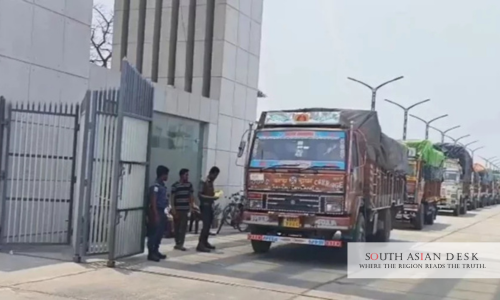
Bangladesh rice import from Benapole in 2025 resumes with 13,528 tons of coarse rice arriving from India via the land port since August. Officials confirmed this on Monday, August 25, 2025, at 4:35 PM.
These imports underscore Bangladesh’s growing reliance on its neighbours for staples, a trend that influences food policies across South Asia. India emerges as a key supplier amid regional volatility, influencing price stability from Dhaka to Delhi.
Surge in India Rice Exports to Bangladesh
India’s rice exports to Bangladesh accelerated in 2025, with Benapole serving as the primary gateway. The Bangladesh Food Situation Report for October 2025 outlines a budgeted 1.5 million metric tons (MMT) of food grain imports for the fiscal year 2025-26. This includes 0.90 MMT of rice to bridge domestic shortfalls.
Private and public sectors imported 1.53 MMT of rice in the previous year, per the report from the Food Planning and Monitoring Unit (FPMU) under the Ministry of Food. Projections for 2025 show continued dependence, driven by stagnant production and rising demand. Aus cultivation covered 93 per cent of the 3.23 MMT target, while Aman planting progresses toward 18.20 MMT.
Benapole processed 13,528 tons from August 21 to November 18, 2025. Monthly volumes climbed from 1,260 tons in August to 5,435 tons in September and 5,188 tons in October. November added 1,645 tons by mid-month. These figures reflect a deliberate push to ease market pressures after the 2024 uprising disrupted supply chains.
Shyamal Kumar Nath, deputy assistant officer at Benapole’s plant quarantine centre, confirmed the totals. He noted arrangements for swift unloading to expedite clearance. This efficiency aids in channeling rice to wholesalers quickly.
Historical data from the World Integrated Trade Solution (WITS) underscore the pattern. In 2023, India supplied 211,900,000 kg of semi-milled or wholly milled rice to Bangladesh, valued at US$76.46 million. Thailand followed with 115,349,000 kg at US$50.98 million. Such volumes position India as the dominant source, with Benapole handling a significant share.
Duty-Free Rice Import in Bangladesh Eases Prices
Duty-free rice import from Bangladesh forms the backbone of these operations, exempting consignments from tariffs to curb inflation. The interim government authorised imports through land ports like Benapole in August 2025, following a four-month halt. This policy targets coarse varieties, which form 70 per cent of local consumption.
Aminul Haque, vice president of the Benapole Importers and Exporters Association, observed price impacts. He stated that wholesale and retail rates fell slightly since the resumption. Continued inflows could drive further reductions, he added. This aligns with FPMU data showing LC-settled rice prices stable from November 2024, with a 2.58 per cent uptick in the fourth quarter of 2025.
Five clearing and forwarding (C&F) agents manage the process. Babulur Rahman of M/s Bhuiya Enterprise highlighted coordination with the Customs House. Their efforts ensure seamless entry, preventing bottlenecks at the border.
Broader economic context reveals vulnerabilities. Bangladesh’s rice production hit 38.00 MMT in 2024-25, up 15.8 per cent year-on-year. Yet, per capita availability dipped to 170 kg annually due to population growth. Imports fill the gap, with government procurement at 1.2 MMT for the public distribution system.
The Monthly Release of Foreign Trade Statistics from December 2023 provides baseline trends, though updated 2025 figures remain provisional. Essential commodity imports, including rice, rose amid global price fluctuations. Thai 5 per cent parboiled FoB prices increased 2.61 per cent in Q4 2025, influencing landed costs.
Benapole Port Rice Shipments Optimise Trade Flow
Benapole port rice shipments reached 13,528 tons across 145 consignments in 395 trucks. This land route, linking Petrapole in India, bypasses sea delays and cuts costs. Quarantine checks verify quality, focusing on pest-free coarse rice suitable for milling.
Nath emphasised streamlined protocols. Unloading occurs within hours, with samples tested on-site. This setup supports daily clearances of up to 50 trucks, per association estimates.
India’s export surge benefits both sides. New Delhi lifted its 2023 ban on non-basmati rice, enabling 2025 flows. Bangladesh, in turn, accesses affordable supplies amid domestic floods that shaved 0.5 MMT from Aman yields.
Trade data from the Bangladesh Bureau of Statistics (BBS) tracks monthly essentials. Rice imports averaged 100,000 tons in peak months, with Benapole contributing 10-15 per cent. The Export and Import Rice Data portal on data.gov.bd offers granular views, aiding policy analysis for self-sufficiency.
Challenges persist. Border congestion occasionally halts trucks, and currency fluctuations affect payments. Yet, bilateral talks in September 2025 reaffirmed commitments to smooth exchanges.
Background of Bangladesh Rice Import
The 2024 July Revolution upended Sheikh Hasina’s government, triggering shortages as ports idled. Rice prices spiked 20 per cent, hitting low-income households. Muhammad Yunus’s interim administration prioritised essentials, resuming land imports in August 2025.
Pre-uprising, India supplied 17.38 MMT in 2020, per WITS. The 2023 volume doubled, reflecting trust in the corridor. Duty waivers, extended from the 2022 flood relief, persist to 2026. FPMU monitors stocks at 2.5 MMT nationally, sufficient for three months. Private millers stockpile 60 per cent of imports, distributing via markets.
What’s Next: Scaling Imports for Stability
Authorities plan 0.90 MMT more rice imports by June 2026. Enhanced Benapole capacity could double throughput with digital customs. Regional forums like SAARC push joint stockpiles. India pledges steady supplies, eyeing mutual benefits. Domestic incentives aim to lift production to 40 MMT by 2030.
Bangladesh rice import Benapole 2025 bolsters resilience, yet sustained efforts guard against future shocks.
Published in SouthAsianDesk, November 19th, 2025
Follow SouthAsianDesk on X, Instagram, and Facebook for insights on business and current affairs from across South Asia.