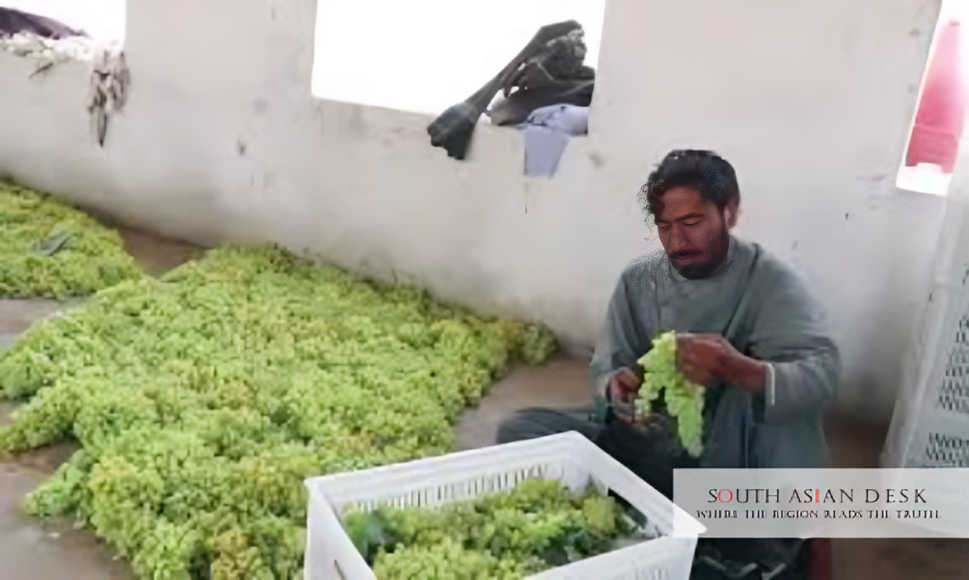
Uzbekistan has finalised an Afghanistan Uzbekistan agriculture export deal that lifts import restrictions on key Afghan produce, enabling air shipments of fruits to Central Asian markets and beyond. The agreement, involves officials from both governments. It addresses who benefits: Afghan farmers and Uzbek consumers. The why centres on boosting bilateral trade to $3 billion annually. How it works: simplified phytosanitary checks and duty-free access for 14 agricultural categories.
This deal marks a pivotal shift in Central Asian commerce. For South Asia, it eases pressure on landlocked Afghanistan’s exports, previously routed through Pakistan, now disrupted by border tensions. Uzbekistan’s move fosters stability by integrating Taliban Uzbekistan trade boost agri 2025 initiatives, potentially reducing smuggling and enhancing food security across borders. With Afghan agricultural output at 60% of GDP, this pact could stabilise prices in Uzbekistan and open doors for Indian and Pakistani intermediaries via Uzbek hubs.
Uzbekistan Lifts Afghan Agri Import Restrictions in Landmark Accord
The core of the Afghanistan Uzbekistan agriculture export deal eliminates tariffs on 14 goods, including pomegranates, figs, grapes and almonds. Uzbekistan’s Ministry of Investment, Industry and Trade announced the changes in a press release dated August 25, 2025. “This preferential trade framework will abolish import duties and streamline phytosanitary permits for Afghan agricultural exports,” stated Laziz Kudratov, Uzbek Minister of Investment, Industry and Trade.
Data from the ministry shows bilateral trade reached $1.134 billion in 2024, up 30.7% from 2023. Uzbek exports dominated at $1.09 billion, while Afghan inflows stood at $44 million. The new deal targets a $500 million surge in Afghan agri exports by end-2025, focusing on perishable items. Nuruddin Azizi, Afghan Acting Minister of Commerce and Industry, hailed it as “a gateway for our farmers to access premium markets without barriers.”
Afghanistan‘s Ministry of Commerce corroborated the figures in its own statement. Officials project 20,000 tonnes of fruits airlifted in the first quarter post-deal. This aligns with earlier pacts: a February 2025 electricity and trade agreement already pledged to lift restrictions, now realised here.
Afghanistan Air Exports Fruits Uzbekistan: New Logistics Pathways Emerge
Air exports form the backbone of this expansion. Uzbekistan has greenlit dedicated cargo flights from Kabul and Mazar-i-Sharif to Tashkent, with onward connections to Almaty and Moscow. “Afghanistan air exports fruits Uzbekistan will commence immediately, targeting seasonal peaks,” Azizi said during the signing ceremony.
The Afghan ministry’s data indicates pomegranates alone could fetch $150 million annually via these routes. Uzbekistan’s state carrier, Uzbekistan Airways, will allocate two weekly flights, capacity 50 tonnes each. This circumvents Pakistan border closures since November 2024, which halted 70% of Afghan truck exports.
In Balkh province, spokesperson Haji Zaid confirmed initial shipments: 500 tonnes of figs and vegetables departed Monday. “These air routes secure timely delivery, preserving quality for Uzbek shelves,” Zaid noted. Uzbek customs data from the Termez International Trade Centre projects a 40% rise in fresh produce imports by December 2025.
The deal integrates with the 2025-2026 bilateral cooperation programme, signed in June. That framework outlined logistics enhancements, including four new trade centres in Kabul, Mazar-i-Sharif, Tashkent and Samarkand.
Taliban Uzbekistan Trade Boost Agri 2025: Broader Economic Impacts
Under Taliban Uzbekistan trade boost agri 2025, the pact extends to joint ventures. Uzbekistan commits $200 million for Afghan processing plants near Hairatan border. “We aim to process 30% of exports on-site, creating 5,000 jobs,” Kudratov elaborated.
Afghan government figures reveal agriculture employs 80% of the workforce, yet exports languished at $400 million pre-2025 due to sanctions and logistics woes. This deal counters that: duty reductions of 10-75% on Afghan goods to Uzbekistan, plus transit access to China.
Uzbekistan’s February 2025 press release foreshadowed this, linking agri liberalisation to energy deals. Trade turnover hit $153.7 million in January 2025 alone, per ministry stats. Experts anticipate ripple effects: lower Uzbek fruit prices by 15%, benefiting 10 million consumers. Challenges persist. Climate risks, like Afghanistan’s droughts, could cap yields at 2.5 million tonnes this year.
Background: Evolution of Bilateral Ties
Relations warmed post-2021. A 2023 forum yielded $1.2 billion in contracts, per Uzbek records. The October 2024 preferential agreement kicked off duty waivers. By March 2025, ministers Kudratov and Azizi targeted $3 billion turnover, emphasising agriculture.
July 2025 saw President Shavkat Mirziyoyev direct eased visas and bank settlements for Afghan traders. The Hairatan industrial zone, under construction, will host agri plants by 2026. These steps build on MoUs from 2024: cotton, textiles and customs data sharing. Trade houses opened in May 2025 facilitated B2B deals worth $300 million.
What’s Next for the Afghanistan Uzbekistan Agriculture Export Deal
Implementation ramps up quarterly, monitored by a joint group led by Afghan Deputy PM Mullah Abdul Ghani Baradar and Uzbek PM Abdulla Aripov. Next meeting: November 2025 in Kabul.
Expansions include rail links via Trans-Afghan project, potentially doubling volumes by 2027. Uzbekistan eyes $100 million in grants for Afghan irrigation. For South Asia, this could integrate Afghan produce into Indian markets via Uzbek overland routes, fostering $1 billion in regional agri trade. The Afghanistan Uzbekistan agriculture export deal signals enduring momentum, positioning both nations as agri powerhouses in a volatile region.
Published in SouthAsianDesk, November 21st, 2025
Follow SouthAsianDesk on X, Instagram, and Facebook for insights on business and current affairs from across South Asia.