

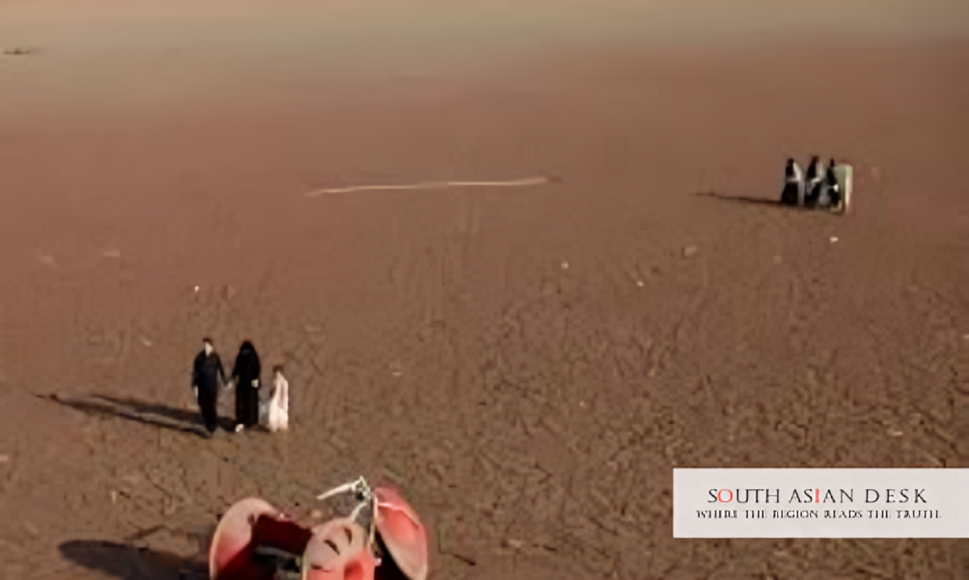
QUETTA – The Pakistan Meteorological Department issued a drought pre-alert on 5 December 2025 for 11 districts in western and southwestern Balochistan. Officials cite a 41.9 per cent rainfall deficit over the past three months as the trigger. This scarcity threatens water supplies and crops in an already arid province.
The alert affects Quetta, Chagai, Gwadar, Kech, Kharan, Mastung, Nushki, Pishin, Panjgur, Qilla Abdullah and Washuk. Rainfall from September to November totalled just 8.6 mm, against a norm of 14.8 mm. Temperatures averaged 0.9°C above normal. The Balochistan drought stems from consecutive dry days since May, with forecasts predicting scant rain until February 2026.
This development underscores broader water vulnerabilities in South Asia. Balochistan’s crisis amplifies regional strains on agriculture and food security. Pakistan faces recurrent droughts that displace communities and hike import costs. Neighbouring India and Afghanistan report similar patterns, straining shared river basins like the Indus. Mitigation here could model resilience for the subcontinent.
Rainfall Deficit Sparks Balochistan Drought Alert
The Pakistan Meteorological Department (PMD) tracks the Balochistan drought through indices like precipitation anomalies and consecutive dry days. Data shows a sharp drop in monsoon and post-monsoon rains. From May to November 2025, western Balochistan saw 20-50 per cent less precipitation than historical averages.
Deputy Director Muhammad Afzal of PMD Balochistan described the situation as a “climate emergency.” He noted the rise in dry spells now exceeds 30 days in high-risk zones. “Prolonged lack of rain pressures water tables and irrigation canals,” Afzal stated during a media briefing on 8 December 2025.
The National Disaster Management Authority (NDMA) echoed these concerns in its advisory dated 5 December. It highlights soil moisture depletion at 60-70 per cent below optimal levels. Livestock deaths could reach 15 per cent in affected areas without intervention, per NDMA estimates.
Balochistan’s terrain amplifies the Balochistan drought impacts. The province relies on rain-fed farming for 40 per cent of its wheat and barley output. Farmers in Kharan report canal levels at historic lows, forcing reliance on tube wells that drain aquifers faster.
Quetta Drought Threat Looms Over Urban Centres
Quetta faces acute risks from the Balochistan drought. As the provincial capital, it supplies water to over 2.5 million residents via the Pat Feeder Canal. Current storage stands at 25 per cent capacity, officials say.
The Quetta drought threat includes rationing measures. The Balochistan Irrigation Department activated emergency protocols on 7 December. “We prioritise drinking water, but agriculture suffers first,” said a department spokesperson.
Urban heat islands worsen conditions. Quetta recorded 35°C highs in November, far above the 25°C norm. This evaporation cycle deepens the Balochistan rainfall deficit. Residents queue for tankers, with delivery delays stretching to 48 hours in peri-urban areas.
Experts link the Quetta drought threat to broader urbanisation. Encroachment on green belts reduces natural recharge. The PMD advisory urges afforestation drives to combat this.
Drought in Balochistan 2025: Agricultural and Economic Toll
The drought in Balochistan 2025 endangers PKR 5 billion in crop losses. Wheat yields may fall 30 per cent province-wide, per preliminary agriculture department figures. Date palms in Panjgur, a key export, show wilting signs after 45 dry days.
Livestock sectors bear the brunt. Balochistan hosts 5 million small ruminants, vital for pastoral economies. Feed scarcity drives prices up 25 per cent since October. Nomadic herders migrate inward, straining host communities.
The Balochistan government allocated PKR 500 million for relief on 6 December. Funds target fodder subsidies and well drilling. Provincial Chief Minister Sarfraz Bugti called for federal aid. “This drought in Balochistan 2025 demands unified action,” Bugti said in a statement. International partners monitor closely. The World Bank-funded Balochistan Water Security Project, launched in 2024, accelerates dam upgrades. Yet, implementation lags in remote districts like Washuk.
Historical Context of Balochistan Rainfall Deficit
Balochistan has endured cycles of scarcity. The 1998-2003 drought killed 1.2 million livestock and displaced 200,000 people. That event prompted the NDMA’s formation.
Recent patterns mirror this. The 2018 Balochistan drought slashed crop output by 80 per cent in Tharparkar-adjacent zones. Recovery took two seasons, costing PKR 10 billion.
Climate models attribute the Balochistan rainfall deficit to shifting westerlies. El Niño remnants from 2024 delayed monsoons. PMD data logs a 15 per cent decline in winter rains since 2010. These precedents inform current strategies. Early warning systems, upgraded via UN partnerships, now reach 70 per cent of at-risk households through SMS alerts.
Official Measures Against the Balochistan Drought
Response efforts ramp up. The Provincial Disaster Management Authority (PDMA) deploys assessment teams to all 11 districts. Stockpiles include 10,000 tonnes of wheat for distribution. PMD’s National Drought Monitoring Centre issues weekly bulletins. The 4 November 2025 report flagged the Balochistan drought escalation, prompting the pre-alert.
Community involvement grows. Local jirgas in Kech coordinate water-sharing pacts. Women’s groups in Mastung lead conservation drives, reducing household use by 10 per cent. Federal coordination via the National Emergency Operations Centre ensures supply chains. Convoys deliver essentials to Gwadar, where port delays from dry docks compound issues.
What’s Next for Balochistan Rainfall Deficit
Forecasts offer slim hope. A western disturbance may bring 5-10 mm rain to northern Balochistan by mid-December. Yet, southern districts remain dry through January.
Experts predict the Balochistan drought could persist into spring 2026 without monsoonal rebounds. PMD recommends cloud seeding trials, budgeted at PKR 100 million. Long-term, integrated water management tops agendas. The Indus River System Authority plans cross-province allocations. Balochistan seeks 20 per cent more from federal reservoirs.
Authorities eye satellite tech for precision alerts. Enhanced models could cut response times by 40 per cent. As the Balochistan drought unfolds, proactive steps will define recovery. Officials stress unity to shield vulnerable livelihoods.
Published in SouthAsianDesk, December 8th, 2025
Follow SouthAsianDesk on X, Instagram, and Facebook for insights on business and current affairs from across South Asia.
