Peshawar air quality reached hazardous levels throughout 2025, driven by unchecked emissions and seasonal smog. Official data from the Khyber Pakhtunkhwa Environmental Protection Agency (EPA) shows average PM2.5 concentrations hit 98.2 µg/m³ from January to August, surpassing the World Health Organisation’s annual guideline by 19 times. Over 5 million residents in the Peshawar valley now face daily exposure to toxic air, as revealed in the Pakistan Air Quality Initiative’s latest assessment released this month.
The crisis peaked during winter months, with the Air Quality Index (AQI) exceeding 300 on 210 days. Local authorities attribute the surge to vehicular traffic and industrial outputs, while health experts report a 15% rise in respiratory cases since last year.
This escalation underscores a broader environmental challenge in South Asia, where rapid urbanisation and lax regulations amplify air pollution’s toll. Peshawar’s plight mirrors crises in Lahore and Delhi, shaving years off life expectancies and straining healthcare systems. With Pakistan ranking third globally for air pollution in 2024, a trend persisting into 2025, the issue demands regional cooperation to curb transboundary haze and protect vulnerable populations. Economic losses from reduced productivity and medical costs already top PKR 500 million annually in Khyber Pakhtunkhwa alone.
The Peshawar Air Pollution Crisis Deepens
Peshawar air quality has deteriorated steadily since 2024, when annual PM2.5 averages stood at 95.8 µg/m³. The 2025 data, compiled by the Pakistan Environmental Protection Agency (Pak-EPA), indicates a marginal worsening to 98.2 µg/m³ through mid-year. This marks zero days compliant with WHO’s 24-hour guideline of 15 µg/m³, and breaches of Pakistan’s national standard of 35 µg/m³ on 280 occasions. The Khyber Pakhtunkhwa EPA’s daily monitoring stations in Hayatabad and University Town recorded AQI values above 200 deemed “very unhealthy” on 45% of monitored days.
Contributing factors include Peshawar’s geography. Nestled in a basin ringed by the Khyber and Margalla hills, the city traps pollutants during temperature inversions, common from October to March. The Pakistan Air Quality Initiative report highlights how winter smog in Peshawar intensifies 4.1 times over monsoon baselines, creating a persistent haze that reduces visibility to under 500 metres.
Vehicular emissions dominate the Peshawar air pollution crisis. Transport accounts for 51% of PM2.5 emissions, per the initiative’s analysis. Peshawar registers over 110 new motorcycles monthly, swelling the fleet to 577,232 vehicles citywide. Diesel-powered trucks transiting the Afghanistan border add unchecked particulates, with inspections covering only 20% of heavy goods vehicles. Brick kilns contribute 19%, operating 1,200 units around the valley, many using low-grade coal without zigzag technology upgrades.
Health repercussions mount quickly. Exposure to elevated PM2.5 levels shortens average life expectancy by 5.8 years in the Peshawar valley, according to Pak-EPA estimates. Hospitals report a 12% uptick in asthma and bronchitis admissions from January to July 2025, affecting children and the elderly most severely. Dr. Afridi, a pulmonologist at Lady Reading Hospital, noted in a July briefing: “Patients arrive daily with pollution-aggravated conditions; the number rises with each smog episode.” The initiative’s study links these emissions to 1.8 million annual respiratory cases province-wide.
PM2.5 Emissions in Peshawar Fuel Ongoing Health Threats
PM2.5 emissions in Peshawar stem from diverse sources, complicating mitigation efforts. Fine particulates under 2.5 micrometres penetrate deep into lungs, triggering inflammation and cardiovascular strain. The Khyber Pakhtunkhwa EPA’s ambient monitoring reveals PM2.5 as the primary pollutant, averaging 148 µg/m³ in peak summer months, triple the national limit.
Industry ranks second, with small-scale operations like metalworking and pottery emitting 14% of particulates. These artisanal trades, vital to 30,000 livelihoods, rely on open furnaces and untreated exhausts. A 2025 Pak-EPA audit found 60% of such units non-compliant with emission controls. Brick kilns exacerbate the load, firing 2.14 kg of PM2.5 per capita annually, the highest in Pakistan.
The National Clean Air Policy (NCAP), unveiled by the Ministry of Climate Change in 2023 and updated in 2025, targets a 20% reduction in urban PM2.5 by 2030. It mandates vehicle fitness checks and kiln modernisations, yet enforcement lags. In Peshawar, only 15% of kilns adopted cleaner fuels by mid-2025, per ministry data. “Structural reforms must prioritise local sources,” states the NCAP executive summary. Budget allocations reached PKR 200 million for Khyber Pakhtunkhwa monitoring stations, but experts call for PKR 1 billion more in incentives.
Cross-border dynamics intensify PM2.5 emissions in Peshawar. Easterly winds from India carried haze in early 2025, elevating AQI by 25% in February, as tracked by IQAir sensors integrated with EPA data. Regional forums like the South Asia Air Quality Initiative urge bilateral monitoring, but progress stalls on data-sharing protocols.
Smog in Peshawar Traps Residents in Toxic Haze
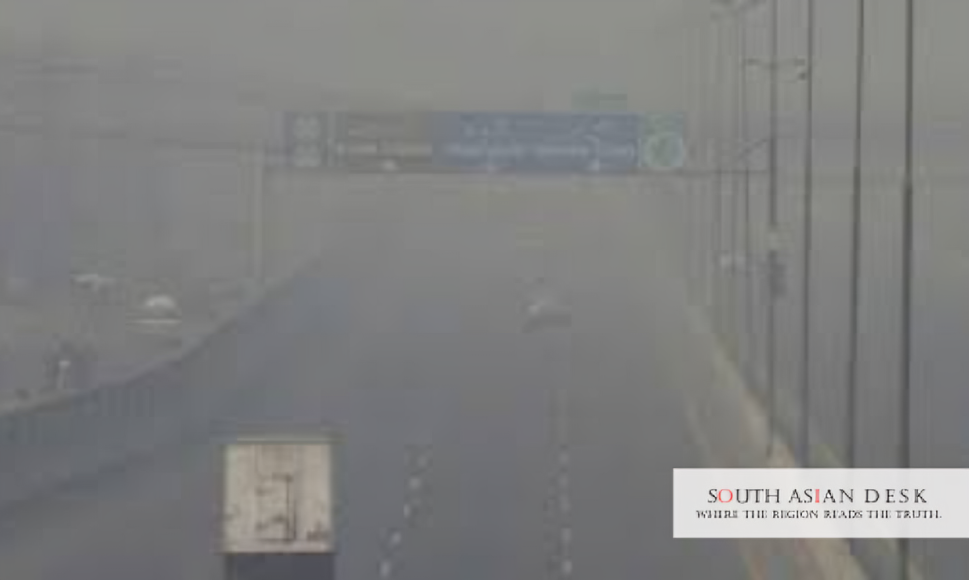
Smog in Peshawar transforms clear skies into a choking veil each winter, with 2025 episodes starting earlier than usual. The phenomenon, a mix of smoke and fog, enveloped the city from November 2024 into March 2025, grounding flights and closing schools on 15 days. Visibility dropped below 100 metres on the Grand Trunk Road, prompting motorway shutdowns from Peshawar to Islamabad.
The Khyber Pakhtunkhwa EPA issued 12 smog alerts in the first half of 2025, advising masks and indoor stays. Yet compliance remains low; only 40% of households own purifiers, per a ministry survey. Crop residue burning in adjoining Punjab adds to the influx, with satellite imagery showing 500 fire hotspots in October 2024 spilling over.
Economic fallout compounds the human cost. Tourism dipped 18% in smog-hit months, while agriculture suffers from stunted crop yields, wheat production fell 8% in valley districts. The Peshawar Clean Air Alliance (PCAA) estimates PKR 300 million in annual losses from sick days alone.
Recommendations from the Pakistan Air Quality Initiative focus on tailored interventions. Expanding the Peshawar Bus Rapid Transit could slash transport emissions by 25%, while zoning industrial trades into cleaner hubs promises 12% gains. “Peshawar can chart a path to cleaner air by balancing heritage with environmental upgrades,” the report concludes.
Background
Peshawar’s air woes trace to post-2000 urban boom, when vehicle numbers tripled amid industrial growth. The 2016 EPA study first flagged PM2.5 breaches, but monitoring expanded only in 2022 with five stations. Global rankings place Peshawar ninth worldwide for pollution, per the 2024 IQAir report, pma position held into 2025.
What’s Next
Provincial assemblies debate a PKR 500 million anti-smog fund in September 2025, eyeing electric bus pilots and kiln subsidies. The Ministry of Climate Change plans a November summit with India on haze mitigation. Success hinges on enforcement; without it, Peshawar air quality faces further decline.
Authorities vow sustained action to restore Peshawar air quality, targeting measurable drops in PM2.5 by 2026.
Published in SouthAsianDesk, December 12th, 2025
Follow SouthAsianDesk on X, Instagram, and Facebook for insights on business and current affairs from across South Asia.