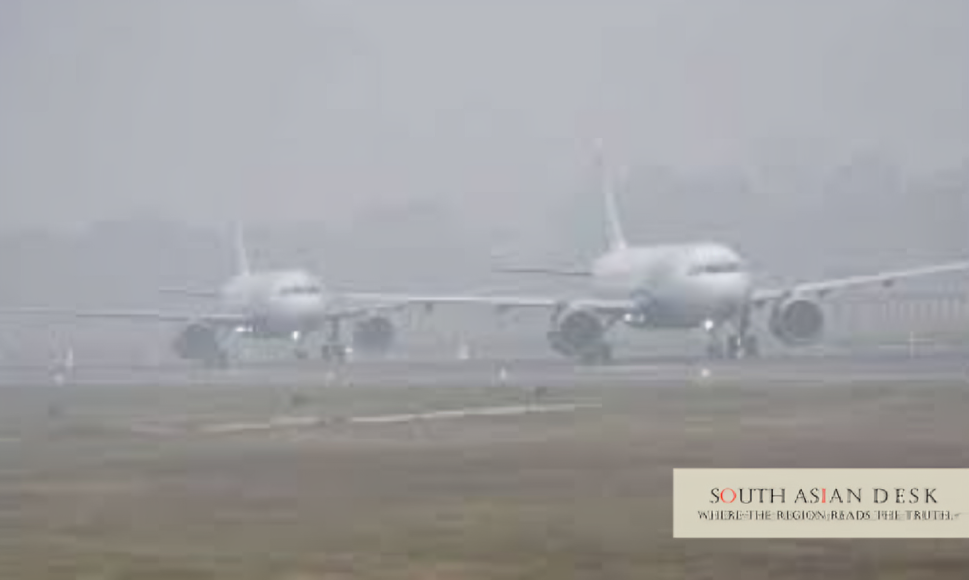
India Meteorological Department issued a red alert for dense fog north India on 19 December 2025, affecting Uttar Pradesh, Punjab, Haryana, Bihar and Uttarakhand. Visibility dropped to near zero in many areas, causing over 150 flight cancellations at Delhi airport and raising road safety concerns. Delhi AQI hovered at 387, classified as very poor.
The red alert north India highlights vulnerabilities in the region’s transportation networks during winter, where dense fog north India often leads to economic losses from delayed goods movement and increased health risks from poor air quality. In South Asia, such events strain cross-border trade routes linking India with Pakistan and Nepal, amplifying regional impacts on agriculture and daily commutes.
Red Alert North India Triggers Widespread Disruptions
IMD forecasted dense to extremely dense fog in Punjab, Uttarakhand and Bihar on 19 and 20 December, with similar conditions over Uttar Pradesh and Haryana in early mornings. The agency stated fog would persist for two to three days, urging caution to avoid accidents. Dense fog north India reduced visibility to 50 metres in parts of Delhi and Uttar Pradesh, prompting authorities to activate low-visibility procedures at airports.
At Indira Gandhi International Airport in Delhi, operations ran under CAT III conditions from early morning. Delhi International Airport reported 79 departures and 73 arrivals cancelled, including four international flights. Passengers faced delays averaging two hours. IndiGo airline advised travellers to check flight status, noting seasonal fog as the cause.
Road traffic slowed across national highways in Punjab and Haryana. Punjab police deployed additional patrols on NH-44, where fog punjab haryana created hazardous driving conditions. Reports indicated multiple minor collisions in Haryana’s Ambala district due to poor visibility. Rail services also suffered, with 20 trains delayed by up to four hours en route to Delhi.
Delhi AQI Nears Severe Amid Fog Punjab Haryana
Delhi AQI reached 387 by 8 AM on 19 December, up from 330 earlier, according to Central Pollution Control Board data. Fifteen of 40 monitoring stations recorded severe levels above 400, including Ghazipur at 442, ITO at 409, Palam at 447 and Anand Vihar at 441. The very poor category prompted Commission for Air Quality Management to enforce GRAP Stage IV restrictions across Delhi-NCR, banning non-essential diesel vehicles and construction activities.
Pollution sources included transport at 18.3 per cent, industries at 9.2 per cent and residential emissions at 4.5 per cent. Contributions from NCR districts like Jhajjar at 12.3 per cent and Sonipat at 8.8 per cent exacerbated the situation. Dense fog north India trapped pollutants, worsening Delhi AQI and leading to health advisories for vulnerable groups to limit outdoor exposure.
In Punjab and Haryana, fog punjab haryana combined with stubble burning residues pushed local AQI into poor categories. Haryana government monitored air quality in Gurugram and Faridabad, reporting values around 300. Punjab’s Amritsar and Ludhiana saw similar trends, with authorities urging farmers to avoid open burning.
Background
Winter dense fog north India stems from western disturbances and moisture from the Bay of Bengal, creating inversion layers that trap cold air. This year, reduced rainfall in November intensified conditions, as per IMD records. Historical data shows similar red alert north india events in 2024 disrupted over 500 flights in one week. In South Asia, such fog affects millions, from Delhi’s urban commuters to rural farmers in Uttar Pradesh delaying harvests.
Uttar Pradesh faced very cold days alongside dense fog, with temperatures dipping to 8 degrees Celsius in Lucknow. Bihar reported isolated very dense fog pockets, impacting school operations in Patna. Uttarakhand’s hill regions saw tourism dips due to road closures.
What’s Next
IMD predicts moderate to dense fog continuing into 20 December across north India, with potential easing by 22 December. Authorities plan enhanced monitoring at airports and highways. Residents should track updates, as persistent dense fog north india could prolong travel woes and elevate Delhi AQI risks.
Published in SouthAsianDesk, December 19th, 2025
Follow SouthAsianDesk on X, Instagram, and Facebook for insights on business and current affairs from across South Asia.