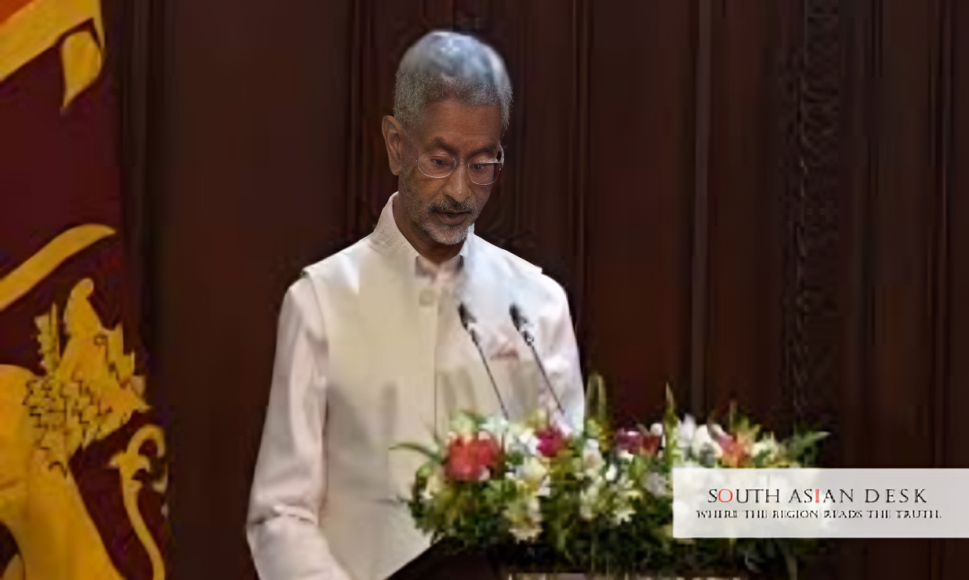
India has extended a $450 million assistance aid to Sri Lanka to support recovery from Cyclone Ditwah. External Affairs Minister S Jaishankar announced the aid during his visit to Colombo on Tuesday, December 23, 2025, meeting key leaders, including President Anura Kumara Dissanayake and Prime Minister Harini Amarasuriya.
The announcement underscores India’s role as a key partner in Sri Lanka’s reconstruction efforts following the cyclone’s widespread destruction. This support builds on ongoing humanitarian operations and highlights the deepening ties between the two nations in times of crisis.
Jaishankar Sri Lanka Visit Highlights Bilateral Support
External Affairs Minister S Jaishankar arrived in Colombo as a special envoy of Prime Minister Narendra Modi. He held discussions with Sri Lankan Foreign Minister Vijitha Herath, where he detailed the India aid to Sri Lanka package. Jaishankar stated that the assistance targets the hardest-hit regions, focusing on Cyclone Ditwah relief through infrastructure restoration.
During the joint remarks, Jaishankar said: “Just as Sri Lanka was recovering from the economic crisis of 2022, this natural disaster has created new difficulties.” He emphasised that the $450 million (USD 450 million on first mention) would aid in rebuilding essential connectivity, including railways, roads, and bridges, as well as reconstructing damaged homes.
Jaishankar also met President Dissanayake to discuss the cyclone’s impact. A letter from Prime Minister Modi was conveyed, reaffirming India’s commitment. The visit included interactions with Prime Minister Amarasuriya, where Jaishankar assured continued backing for Sri Lanka’s cyclone recovery. These engagements reflect India’s Neighbourhood First policy, prioritising regional stability and mutual aid.
The Indian aid to Sri Lanka comes at a critical juncture, as the island nation grapples with the aftermath of Cyclone Ditwah, which struck in late November 2025. Reports indicate the storm caused approximately $4 billion in damages and resulted in over 640 fatalities. Flooding and landslides displaced thousands, exacerbating vulnerabilities in areas still healing from the 2022 financial meltdown.
Cyclone Ditwah Relief Efforts Under Operation SagarBandhu
India’s response to the disaster began immediately through Operation SagarBandhu, a humanitarian and disaster relief initiative. National Disaster Response Force (NDRF) teams deployed to Sri Lanka conducted rescue operations in affected districts such as Puttalam, Kochikade, and Badulla. They evacuated stranded individuals, including infants and women, using boats and specialised equipment amid water levels reaching 8-10 feet.
Indian Air Force (IAF) Mi-17 helicopters facilitated evacuations, airlifting 34 citizens from Kotmale to Colombo, including foreign nationals from Germany, South Africa, Slovenia, and the United Kingdom. IAF also transported Sri Lankan Army troops to landslide zones and delivered medical aid and food supplies. A team of IAF medical experts trained Sri Lankan Air Force personnel on BHISHM cubes, modular field hospitals for rapid deployment in remote areas.
Indian Navy vessels, including INS Vikrant and INS Udaygiri, provided 4.5 tonnes of dry rations, 2 tonnes of fresh rations, and other essentials. Army engineers from the Shatrujeet Brigade repaired damaged optical fibre cables in Mahiyanganaya near Kandy, restoring communications disrupted by the cyclone.
High Commission of India in Colombo distributed emergency kits to flood-affected families in Gampaha District, including a village for the visually impaired. Foreign Secretary Vikram Misri handed over life-saving medicines to Sri Lanka’s High Commissioner in New Delhi, with full consignments airlifted via IAF C-17 aircraft.
These multifaceted efforts have saved lives and restored basic services, aligning with the broader India aid to Sri Lanka framework. The $450 million package will extend these initiatives into long-term Sri Lanka cyclone recovery, covering housing reconstruction and infrastructure repairs.
Background
Sri Lanka’s 2022 economic crisis led to fuel shortages, inflation, and debt default, prompting international bailouts. India provided over $4 billion in assistance then, including Credit lines for essentials. Cyclone Ditwah compounded these challenges, hitting the northern and eastern provinces hardest. The storm’s intensity, with heavy rains and winds, triggered floods that submerged communities and destroyed crops. Official estimates place displaced persons at over 100,000, with urgent needs for shelter and sanitation. India’s prior support set the stage for this latest Jaishankar Sri Lanka visit, reinforcing historical bonds rooted in cultural and economic links.
The cyclone’s timing, just as economic indicators improved under IMF-backed reforms, has raised concerns about setbacks. Agricultural losses could fuel food price hikes, while infrastructure damage hampers trade routes vital to South Asia’s connectivity.
What’s Next
Looking ahead, the implementation of India’s aid to Sri Lanka will involve joint monitoring committees to ensure transparent allocation. Discussions during Jaishankar’s visit hinted at further collaboration in education and capacity building. Sri Lanka cyclone recovery may include Indian expertise in resilient infrastructure, potentially through grants or soft loans. As weather patterns evolve, regional forums like BIMSTEC could enhance disaster preparedness, with India leading on early warning systems.
This pledge positions India’s aid to Sri Lanka as a model for South Asian solidarity, fostering stability amid climate vulnerabilities.
Published in SouthAsianDesk, December 23rd, 2025
Follow SouthAsianDesk on X, Instagram and Facebook for insights on business and current affairs from across South Asia.