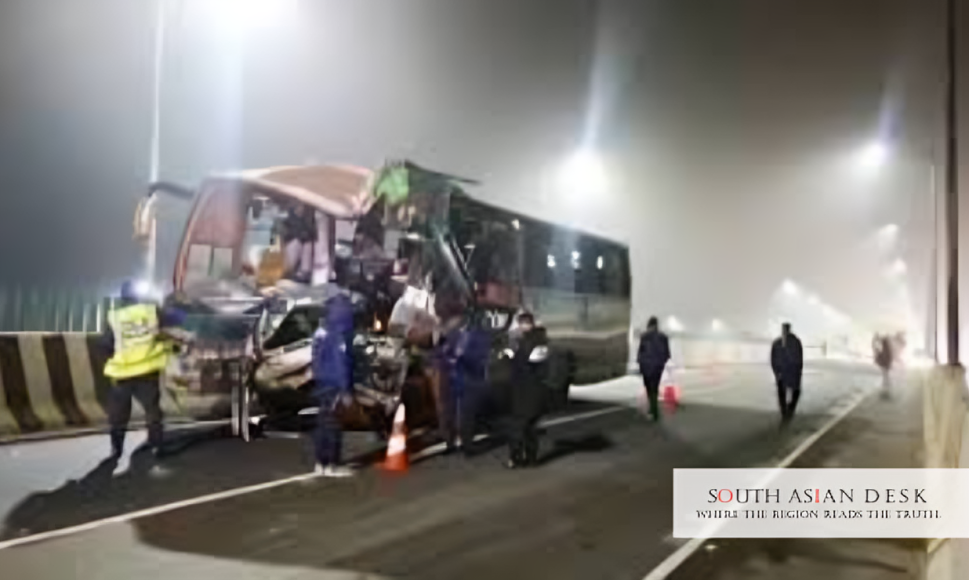
Dense fog in Bangladesh led to multiple collisions on the Dhaka-Mawa Expressway, injuring at least 20 people. The accidents happened over 10 hours from Thursday night to Friday morning in Munshiganj district. Buses, trucks and a covered van were involved. Fire service teams rescued victims and rushed them to hospitals.
The incidents highlight ongoing road safety challenges in South Asia during winter months. Dense fog reduces visibility across Bangladesh, India and Pakistan, often causing fog accidents Bangladesh-wide and disrupting key transport routes. Such events strain emergency services and underscore the need for better infrastructure in densely populated regions.
Details of Dhaka Mawa Expressway Accident
The first Dhaka Mawa Expressway accident occurred around 7 PM on Thursday in Bejgaon area of Srinagar. Two buses – one from Golden Line and another from Saad Abdullah Transport – collided head-on. Several passengers sustained serious winter fog injuries. Fire service personnel arrived quickly and transported the injured to Srinagar Upazila Health Complex. Critically hurt individuals were sent to hospitals in Dhaka and Faridpur for advanced care.
Srinagar Fire Station Officer Dewan Azad Hossain stated: “Fire service personnel rushed to the scenes immediately after receiving reports and began rescue operations. The injured were initially taken to Srinagar Upazila Health Complex while several critically injured passengers were referred to hospitals in Dhaka and Faridpur for advanced treatment.”
The second incident struck around 1 AM in Medenimondol area of Louhajang. A bus, truck and covered van crashed in a three-way collision. At least 10 people reported injuries here, adding to the tally of winter fog injuries. Dense fog Bangladesh conditions worsened overnight, contributing to the chaos.
By 5 AM Friday, a third accident unfolded in Chhanbari area of Srinagar. A bus and truck collided, injuring more passengers. No fatalities occurred across the events, but the total injured exceeded 20. Hasara Highway Police seized one bus and one truck, keeping them at the station for investigation.
Fog Accidents Bangladesh: A Recurring Winter Hazard
Fog accidents Bangladesh are common during winter, with dense fog blanketing highways and reducing visibility to near zero. Data from Bangladesh Road Transport Authority (BRTA) shows road accidents rise 20-30% in foggy seasons. In 2025, at least 13 accidents hit the Dhaka-Mawa Expressway alone, killing 10 and injuring 20 others due to overspeeding and poor weather.
A study on expressway safety from drivers’ perspectives notes dense fog as a top factor in collisions. BRTA issued safety guidelines in January 2025, urging drivers to use low beams, maintain distance and avoid high speeds in fog. Railways and BRTA reiterated these in foggy conditions, following crashes that killed four and injured 21 on the same route.
In December 2025, similar fog accidents Bangladesh injured several in Munshiganj. A bus-truck collision hurt 10, while another pile-up killed one and injured 15. These patterns reveal systemic issues: inadequate fog lights on vehicles, lack of reflective markers and delayed emergency responses in rural areas.
Dense fog Bangladesh not only affects roads but disrupts river transport. Ferries halt operations, stranding commuters. In South Asia, winter fog injuries claim hundreds annually, with Bangladesh’s Padma River basin particularly vulnerable. Economic losses mount from delayed goods transport and medical costs.
Authorities have urged drivers to limit speeds during dense fog Bangladesh periods. Highway police patrols increase, but enforcement remains spotty.
Impact on Victims and Response Efforts
Winter fog injuries from these crashes include fractures, head trauma and cuts. Victims, mostly bus passengers heading to or from Dhaka, faced immediate pain and transport disruptions. Hospitals in Srinagar handled initial care, but overloads led to referrals.
Fire service teams played a key role, arriving within minutes to extricate trapped individuals. Their coordination with police ensured quick scene clearance. Dense fog Bangladesh challenges rescuers too, as low visibility slows operations.
Community members assisted at scenes, highlighting local resilience. However, experts call for better training and equipment for foggy rescues. In past fog accidents Bangladesh, delays worsened outcomes.
Background
The Dhaka-Mawa Expressway, linking Dhaka to southern districts via Padma Bridge, sees heavy traffic year-round. Opened in 2022, it cuts travel time but faces safety woes in winter. Dense fog forms from cold waves meeting humid air, common in Bangladesh’s delta region. Climate data shows fog days increasing, linked to changing weather patterns in South Asia.
Previous winters saw deadly incidents: In December 2024, 10 vehicles collided on Mawa Expressway, killing one amid fog. Overspeeding plagues the route, with vehicles often exceeding 80 km/h limits. BRTA reports 2025 fatalities topped 5,000 nationwide, many fog-related.
Infrastructure upgrades, like fog detection systems and better signage, are proposed but slow to implement.
What’s Next after Dense Fog in Bangladesh
Authorities plan enhanced patrols and awareness campaigns to curb future Dhaka Mawa Expressway accident risks. BRTA may issue fresh advisories as winter deepens. With forecasts predicting denser fog Bangladesh in coming weeks, drivers must prioritise safety to prevent additional winter fog injuries.
As investigations continue, findings could shape new policies, ensuring safer travel amid persistent dense fog Bangladesh threats.
Published in SouthAsianDesk, January 2nd, 2026
Follow SouthAsianDesk on X, Instagram and Facebook for insights on business and current affairs from across South Asia.