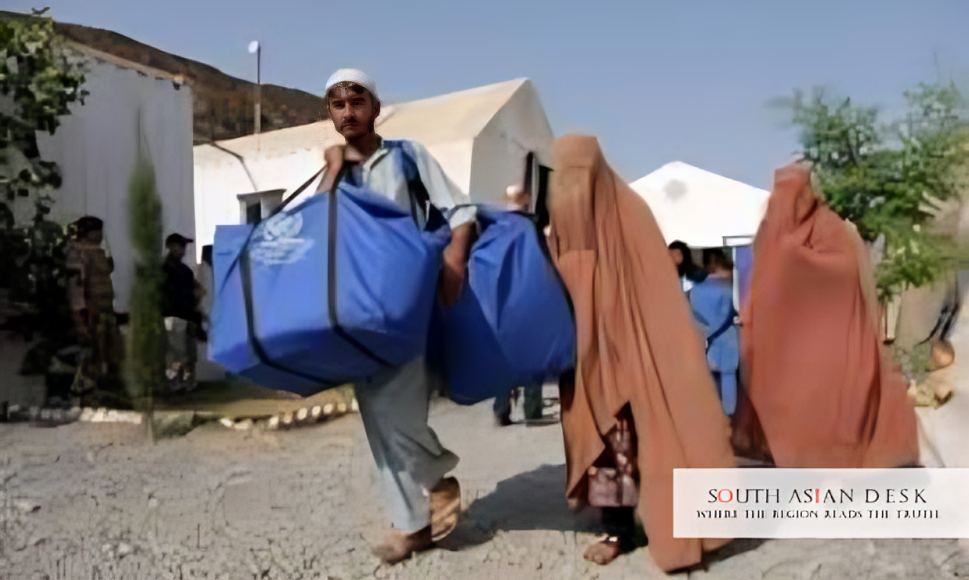
UNHCR announced on Saturday, December 20, 2025, that nearly 2.8 million Afghan refugees returned to Afghanistan from Pakistan and Iran this year. The returns include both voluntary repatriations and forced deportations, straining Afghanistan’s already fragile resources. From Pakistan alone, 931,700 Afghans crossed back between April 1 and December 13, with 135,200 as deportees.
This surge in Afghan refugees return to Afghanistan highlights a regional challenge. South Asia hosts millions of displaced Afghans, and these mass movements affect bilateral ties between Pakistan and Afghanistan. The returns exacerbate economic pressures and security concerns in the region, where host countries like Pakistan have provided refuge for decades but now face their own resource limits.
UNHCR Afghan Returns: Key Figures
UNHCR Afghan returns data shows a sharp rise in 2025. The agency tracks movements through border points like Torkham and Chaman. Of the 931,700 returns from Pakistan, 52 per cent involved undocumented Afghans, 46 per cent held Proof of Registration cards, and 2 per cent were asylum-seekers. Deportees made up 15 per cent of this total.
Overall, the 2.8 million Afghan refugees return to Afghanistan marks one of the largest displacements in recent years. UNHCR reports that many returns are not voluntary, driven by host country policies. In August, UNHCR urged Pakistan to halt forced returns, citing protection risks. By November, over one million Afghans had returned from Pakistan alone, per earlier agency updates.
Pakistan Afghan Deportations: Policy and Impact
Pakistan Afghan deportations intensified under the Illegal Foreigners Repatriation Plan. The government confirmed in July that the plan would continue, targeting undocumented Afghans and those with expired documents. By August, deportations of registered refugees began, despite international appeals.
In Khyber Pakhtunkhwa, authorities scaled back services in refugee villages to encourage voluntary returns. This includes reduced access to water, education, and health facilities. UNHCR expressed concern in October over denotification of these villages and forced returns, noting risks to vulnerable groups.
Pakistan has deported an estimated one million undocumented Afghans since September 2023, according to reports. The 135,200 deportees from April to December 2025 add to this figure. Human rights groups warn that such actions violate non-refoulement principles, pushing people into danger.
Afghanistan Humanitarian Crisis: Strains on Returnees
The Afghanistan humanitarian crisis deepens with each wave of returns. UNHCR states that returnees face deteriorating human rights, prolonged economic hardship, recurring natural disasters, and limited access to services. Many Afghan refugees return to Afghanistan only to encounter protection risks, especially women and girls under current restrictions.
An earthquake in September affected returnee areas, displacing thousands more. Food insecurity affects 17.4 million Afghans, with nutrition centres closing due to funding cuts. Health facilities shuttered in 2025 left three million without care.
UNHCR’s response for the Afghanistan humanitarian crisis is critically underfunded. Only 37 per cent of the required USD 478 million for 2025 has been received. An updated appeal seeks USD 258.6 million more to address emergencies. Without this, reintegration efforts falter, risking further displacement.
Background: Decades of Displacement
Afghans have fled conflict since the 1980s, with Pakistan hosting up to 3.7 million at peak. The Taliban takeover in 2021 triggered new outflows. Returns slowed initially but surged in 2023 amid Pakistan’s repatriation drive.
By 2024, over 1.5 million returned regionally. The 2025 spike in UNHCR Afghan returns reflects policy shifts in host nations. Iran deported 1.6 million Afghans between January and October, per UN figures. Combined, these movements total over four million in two years.
What’s Next: Appeals and Monitoring
UNHCR plans expanded post-return monitoring in 2026 to assess reintegration. The agency calls for increased resettlement opportunities, projecting 570,000 Afghans need them next year. Regional stability depends on international support. Pakistan may extend deportation deadlines, but no confirmation exists.
As the year ends, the focus remains on safeguarding those in the Afghan refugees return to Afghanistan process.
Published in SouthAsianDesk, December 20th, 2025
Follow SouthAsianDesk on X, Instagram, and Facebook for insights on business and current affairs from across South Asia.