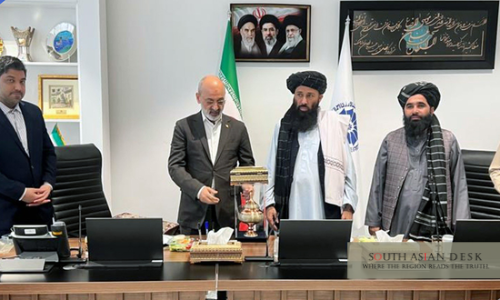
Afghanistan-Iran trade cooperation was the focus of a series of meetings held in Iran this week, when a delegation from Afghanistan’s Standard and Quality Authority (ASQA) sat down with several Iranian trade, accreditation and petroleum export institutions. The talks, reported on Tuesday, were aimed at strengthening bilateral ties and addressing technical barriers to trade between the two neighbours.
The delegation was led by ASQA Director General Mullah Abdullah Haji Bashir and Director of Planning and Policy Mufti Mohammad Hamid. They held separate discussions with representatives of different Iranian bodies during an ongoing official visit to the country.
Delegation Meets Iranian Trade and Standards Bodies
According to Ariana News, the delegation met members of the Iran Chamber of Commerce to discuss bilateral trade relations, standardisation and ways to resolve existing challenges that affect commercial exchanges between the two countries. The meeting gave the private sector in Iran a direct line to the Afghan authority responsible for product standards.
The visit began a day earlier, when the ASQA director general held talks with representatives of Iran’s Standards Organization. That discussion centred on strengthening cooperation in the field of standardisation, which underpins the rules that determine whether goods can move freely across the border. The latest round of meetings followed those initial discussions and widened the conversation to accreditation and energy products.
Why Conformity Assessment Matters for Afghanistan-Iran Trade Cooperation
One of the most significant meetings involved the head of Iran’s National Accreditation Center. The two sides reportedly focused on accreditation procedures and on the possibility of mutually recognising conformity assessment results. Conformity assessment refers to the testing, inspection and certification that show a product meets required standards. If each country accepts the other’s results, exporters can avoid repeating the same checks at the border, which saves time and money.
Such an arrangement could help facilitate trade by reducing duplication in testing and certification, a step that traders on both sides often cite as a source of delay. No agreement on mutual recognition has been announced, and the reported discussions were limited to exploring the possibility. Even so, the topic signals that both sides regard technical alignment as an important part of broader Afghanistan-Iran trade cooperation.
Petroleum Exports and Practical Challenges
The ASQA delegation also met officials from Iran’s Oil, Gas and Petrochemical Products Exporters’ Union. Discussions covered the challenges facing the export of Iranian petroleum products to Afghanistan and the search for practical solutions. Fuel is among the most important goods moving between the two countries, and quality control is a recurring concern because substandard shipments can damage vehicles and equipment and carry safety risks.
The report did not specify which obstacles were raised, nor whether any measures were agreed. It did make clear that the Standard and Quality Authority sees product quality and standards compliance as central to keeping such supply chains reliable.
The Wider Context of Trade Between Kabul and Tehran
The talks come at a delicate moment for regional commerce. Iran has been under heavy economic pressure from United States sanctions and a naval blockade of its ports. President Masoud Pezeshkian has said that Iranian exports and imports slumped by nearly 35 percent as a result. Afghanistan, a landlocked country with limited access to international markets, has long relied on Iranian ports, rail links and fuel supplies.
Trade between the two countries has nevertheless remained active. Reports earlier this year pointed to a fivefold increase in goods carried on the Herat-Khaf railway, although analysts warned that further sanctions could disrupt that route. More recently, an Afghan Commerce Ministry spokesman said continued trade with Iran had helped keep overall price rises in Afghanistan low, at around 3 percent, while a senior adviser at the Afghanistan Chamber of Commerce and Investment said more than 60 percent of the country’s trade now passes through Central Asia.
What Comes Next
ASQA said the visit forms part of its efforts to remove technical barriers to trade, improve cooperation with international standards institutions and facilitate more efficient and mutually beneficial commercial exchanges. Whether the meetings lead to formal arrangements, such as an agreement on recognising test results, will become clearer in the coming weeks. For traders in Herat, Kabul and across the border, the outcome could determine how quickly goods are cleared and how much they cost.
Follow SouthAsianDesk on X, Instagram and Facebook for insights on business and current affairs from across South Asia.
Read More: