Afghanistan-Pakistan airstrikes have raised fresh concerns over a widening border confrontation after Afghanistan’s Taliban authorities said they carried out strikes inside Pakistani territory, while Islamabad said its forces intercepted and shot down four drones in Balochistan.
The competing claims mark the latest escalation between the neighbouring countries, whose relationship has deteriorated sharply over cross-border militancy, air raids and accusations of harbouring armed groups. The reported exchange followed Pakistani air operations near the Afghan border that the United Nations said killed at least 28 civilians and injured 49 others.
Afghanistan’s defence ministry said its forces targeted what it described as an ISIS centre in Saranan, a town in Pakistan’s Balochistan province, as well as targets elsewhere in Khyber Pakhtunkhwa. Pakistan’s military said the incoming platforms were four “rudimentary” drones that were detected and neutralised by its air defence network.
Afghanistan-Pakistan Airstrikes Add to Border Crisis
The episode has deepened Pakistan Afghanistan border tensions at a time when both sides are already blaming each other for violence along their shared frontier.
Kabul has framed the latest operation as a strike against ISIS-linked targets. Islamabad, however, has rejected the idea that Afghanistan carried out conventional airstrikes and said the attempted attack involved drones launched from Afghan territory. Provincial authorities in Balochistan said a drone was sighted near a government school in Saranan and that two people were injured.
The distinction matters because Afghanistan’s Taliban government is not known to possess a conventional fighter jet fleet. Reuters cited defence data showing Afghanistan has a limited number of aircraft and helicopters, while Taliban forces are also known to have drones used in clashes with Pakistan.
For now, the facts on the ground remain difficult to independently verify. What is clear is that both governments are publicly acknowledging cross-border military activity, which increases the risk of further retaliation.
Pakistan Drones Shot Down, Islamabad Says
Pakistan’s position is that its forces shot down four drones before they could cause major damage. The Pakistani military said its air defence systems detected the drones and neutralised them through countermeasures.
Islamabad has long accused the Afghan Taliban administration of sheltering militants who carry out attacks inside Pakistan, particularly fighters linked to the Tehrik-e-Taliban Pakistan and affiliated groups. Pakistan says such groups use Afghan territory for planning and staging attacks, a charge Kabul denies.
The Taliban government says militancy inside Pakistan is Islamabad’s internal problem and has repeatedly rejected claims that it allows anti-Pakistan fighters to operate from Afghan soil. That disagreement has become one of the central causes of the worsening relationship between the two sides.
Taliban Airstrikes Claim Follows Pakistani Operations
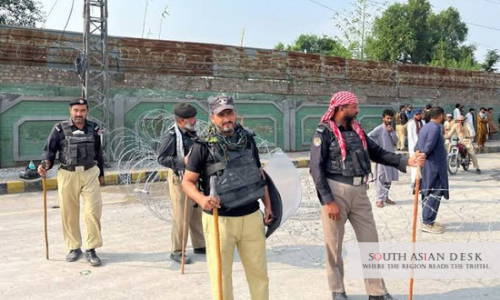
The latest claims came after Pakistan carried out air operations near the Afghan border. Islamabad said those operations were retaliation for attacks on Pakistani soil and targeted militant hideouts.
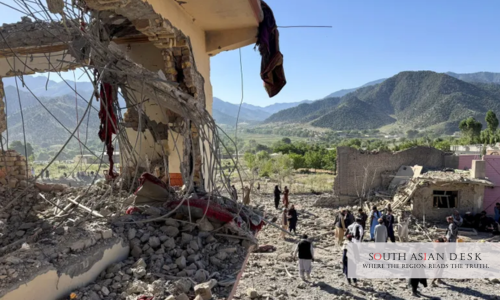
Afghan authorities and UN officials, however, reported civilian casualties. The United Nations Assistance Mission in Afghanistan said at least 28 civilians were killed and 49 injured in Pakistani airstrikes along the border. Afghan officials gave higher casualty figures and condemned the attacks as a violation of Afghan sovereignty.
Pakistan has maintained that its operations targeted armed groups responsible for attacks inside Pakistan. Kabul has rejected that justification and warned against further violations.
The cycle now appears increasingly familiar: Pakistan accuses Afghanistan-based militants of attacks, Pakistan conducts operations across or near the border, Afghan authorities condemn the strikes, and further retaliatory action follows.
Why Saranan and Balochistan Matter
Saranan Balochistan is significant because Balochistan is already one of Pakistan’s most sensitive provinces. It borders Afghanistan and Iran, hosts major infrastructure and mineral resources, and has faced both separatist violence and militant activity for years.
Any cross-border drone or air incident in Balochistan carries wider security implications. It risks complicating Pakistan’s internal security challenges while also expanding the theatre of Afghanistan-Pakistan tensions beyond the traditional flashpoints along the Khyber Pakhtunkhwa border.
Khyber Pakhtunkhwa remains another key front because of its long history of militant violence and its proximity to former tribal areas. Pakistan has repeatedly said attacks in the province are linked to groups operating from across the Afghan border.
Civilian Casualties Increase Diplomatic Pressure
The reported UNAMA civilian casualty figures have added urgency to calls for restraint. Civilian deaths in border operations make diplomatic de-escalation harder because each side faces domestic pressure to respond forcefully.
China has previously tried to mediate between Pakistan and Afghanistan, but those efforts have not produced a durable reduction in violence. The latest exchange suggests that the existing channels are not strong enough to prevent repeated confrontations.
The situation is especially dangerous because both sides are using language tied to sovereignty and counterterrorism. Pakistan says it is defending itself from militant attacks. Afghanistan says it is defending its territory and responding to threats. When both sides frame their actions as defensive, escalation becomes easier to justify.
A Risky New Phase in Border Tensions
The latest Afghanistan-Pakistan airstrikes dispute shows how fragile relations between Kabul and Islamabad have become. Even if the incident involved drones rather than conventional aircraft, it represents another step toward normalising cross-border military exchanges.
For Pakistan, the priority remains preventing militant attacks and pressuring Kabul to act against groups it says are based in Afghanistan. For the Taliban administration, the priority is resisting Pakistani military action on Afghan territory and denying responsibility for Pakistan’s domestic insurgency.
That leaves little room for compromise unless both sides agree on a mechanism to verify militant activity, investigate cross-border incidents and prevent civilian harm.
For now, the border remains tense, the claims remain contested and the risk of further clashes remains high.
Published in SouthAsianDesk, July 2, 2026
Follow SouthAsianDesk on X, Instagram and Facebook for insights on business and current affairs from across South Asia.