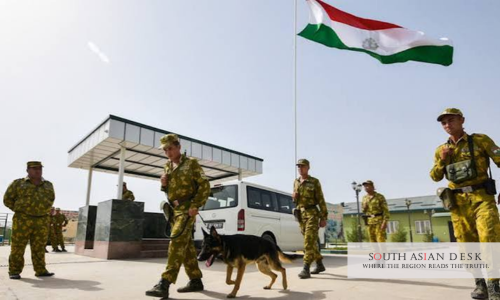
Afghanistan-Tajikistan border security continues to dominate discussions within the Collective Security Treaty Organization (CSTO), as member states say the frontier remains one of the most sensitive security zones in Central Asia. Officials from the Russia-led alliance say they are closely monitoring developments in Afghanistan, with particular attention paid to the shared border between Afghanistan and Tajikistan.
CSTO Officials Highlight Ongoing Monitoring Efforts
Viktor Vasilyev, Russia’s Permanent Representative to the CSTO, said the situation in Afghanistan is tracked continuously through several mechanisms within the organization. He noted that cooperation among member states in combating terrorism, extremism, and drug trafficking is ongoing.
“The greatest concern is the situation along Tajikistan’s border with Afghanistan,” Vasilyev said. “Therefore, the adoption of the targeted interstate program to strengthen the Tajikistan-Afghanistan border is considered one of the key factors.”
According to Vasilyev, the CSTO’s Afghanistan Working Group, which operates under the organization’s Council of Foreign Ministers, holds regular meetings to review developments inside Afghanistan and assess their security implications for the wider region. He added that each CSTO member state, along with Central Asian countries outside the alliance, shapes its relationship with Kabul according to its own national interests, which means the level of engagement with Afghanistan varies from country to country.
Why Afghanistan-Tajikistan Border Security Matters for Central Asia
The emphasis on Afghanistan-Tajikistan border security reflects broader anxieties among CSTO members about instability spreading northward from Afghanistan into Central Asia. The alliance, which includes Russia, Tajikistan, and several other former Soviet states, views the border as a potential entry point for militant activity, smuggling networks, and cross-border criminal operations.
Sadiq Shinwari, a military affairs expert, argued that the CSTO needs to move beyond monitoring and take concrete action. “The Collective Security Treaty Organization should engage in practical cooperation with Afghanistan in various areas,” he said. “Afghanistan currently needs cooperation and assistance, but so far the organization has not taken any significant practical action regarding Afghanistan.”
Islamic Emirate Pushes Back on Border Security Concerns
Zabihullah Mujahid, spokesperson for the Islamic Emirate, rejected the notion that the border poses a serious threat, saying security has been maintained throughout Afghanistan. He stated that Afghan and Tajik security forces already cooperate closely along their shared frontier.
“We assure everyone that there is no cause for concern regarding Afghanistan’s borders,” Mujahid said. “We also have full coordination with Tajikistan along the border. Afghan security forces and Tajik border guards coordinate with each other and do not allow any unauthorized activity.” He acknowledged that the area had previously been used by smugglers and that smuggling-related incidents had occasionally occurred, adding that such cases also happen in many other countries.
Regional Diplomacy Continues Around Border Security
The renewed attention to Afghanistan-Tajikistan border security follows an earlier meeting between the CSTO Secretary General and the President of Tajikistan, during which both sides discussed the broader regional situation. That meeting placed particular emphasis on strengthening security along the Tajikistan-Afghanistan border and on implementing joint programs to support that goal.
As Central Asian governments and the Islamic Emirate continue to hold differing views on the level of risk along the frontier, the CSTO’s ongoing focus suggests that Afghanistan-Tajikistan border security will remain a recurring theme in regional security discussions for the foreseeable future.
Published in SouthAsianDesk, August 8th, 2026
Follow SouthAsianDesk on X, Instagram and Facebook for insights on business and current affairs from across South Asia.