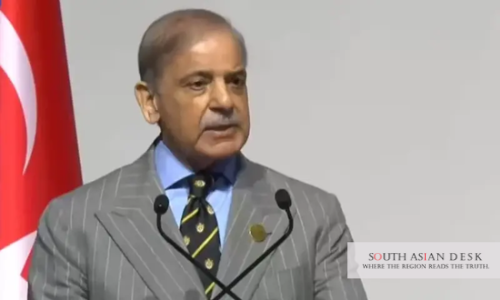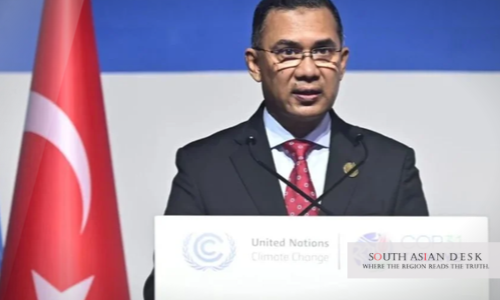
Bangladesh climate action has taken centre stage in international discussions after Prime Minister Tarique Rahman outlined five urgent measures to address the growing climate crisis, calling for stronger global cooperation, predictable financial assistance and greater access to clean technologies. Addressing a high-level meeting on Climate Action and the Just Transition at the United Nations Headquarters in New York on September 23, 2026, the prime minister stressed that climate-vulnerable countries cannot confront the consequences of global warming without meaningful international support.
Tarique presented his proposals during the high-level week of the 81st session of the United Nations General Assembly (UNGA), where world leaders and representatives of international organisations discussed climate resilience, environmental protection and the transition towards sustainable energy systems.
The five measures focused on reducing global greenhouse gas emissions, improving access to climate adaptation financing, expanding climate-smart technologies, accelerating renewable energy development and ensuring the full implementation of the Loss and Damage Fund. The prime minister argued that collective international action was essential to achieving a sustainable future, particularly for countries facing disproportionate climate risks despite contributing relatively little to global emissions.
Bangladesh Climate Action Calls for Stronger Global Emissions Reductions
The first proposal outlined by Tarique Rahman called for accelerated global reductions in greenhouse gas emissions to keep the 1.5 degrees Celsius warming limit within reach, as established under the Paris Agreement.
The target seeks to limit the rise in global average temperatures to 1.5 degrees Celsius above pre-industrial levels, reducing the severity of climate-related consequences. However, achieving this objective requires substantial and sustained reductions in emissions from countries across the world.
Bangladesh’s position reflects the growing concerns of developing countries that contribute relatively little to global emissions but remain particularly exposed to rising temperatures, extreme weather events and environmental degradation.
According to the prime minister, Bangladesh accounts for less than 0.5 per cent of global greenhouse gas emissions. Despite this limited contribution, the country is among the world’s most climate-vulnerable nations.
He warned that rising sea levels could submerge between 12 and 18 per cent of Bangladesh’s coastal areas by the end of the century, potentially affecting the livelihoods of tens of millions of people. Climate-related losses and damage have also been estimated at approximately one per cent of the country’s gross domestic product.
The prime minister maintained that international climate commitments must translate into concrete reductions in emissions if vulnerable countries are to avoid increasingly severe environmental and economic consequences.
Climate Finance for Developing Countries Remains a Major Priority
The second measure focused on ensuring predictable and accessible climate finance for countries facing significant climate-related risks. Tarique emphasised that developing nations require reliable financial assistance to strengthen their ability to adapt to environmental changes and protect vulnerable communities.
Climate adaptation involves measures designed to reduce exposure to climate-related threats, including flooding, rising sea levels, droughts and extreme weather events. These initiatives frequently require substantial investment in infrastructure, water management, agricultural resilience and disaster preparedness.
Bangladesh has already allocated approximately $3.19 billion for climate adaptation in its national budget, according to the prime minister. However, he cautioned that domestic spending alone would not be sufficient to address the country’s growing environmental challenges.
His remarks highlighted a broader concern among developing nations regarding the availability and accessibility of international climate funding. Although several international mechanisms have been established to support climate action, vulnerable countries continue to face difficulties securing adequate resources and implementing large-scale adaptation projects.
Bangladesh has also indicated that it wants international climate assistance to be provided increasingly through grants rather than loans, particularly for adaptation and climate-induced loss and damage. Such assistance would help vulnerable economies finance essential environmental projects without adding to existing debt obligations.
Tarique Rahman Calls for Greater Access to Climate-Smart Technology
The third proposal emphasised the importance of expanding access to climate-smart technologies to support a fair and equitable transition towards sustainable development.
Tarique argued that developing countries need access to modern technologies, technical expertise and institutional support to address climate change effectively. Without these resources, countries with limited financial and technological capabilities risk falling further behind in the global transition towards cleaner and more sustainable economies.
Climate-smart technology can support several areas of environmental protection, including agricultural productivity, water conservation, renewable energy generation and disaster management. Improved forecasting systems and monitoring technologies can also help governments prepare for extreme weather events and reduce the damage caused by natural disasters.
The prime minister maintained that technological cooperation should form an essential part of international climate partnerships. Developing countries must be able to access the tools required to implement their environmental commitments rather than being expected to undertake expensive transitions without adequate assistance.
He described greater technological access as necessary for ensuring that the global shift towards sustainable development remains equitable and inclusive.
Renewable Energy Expansion Requires Finance and Technology Transfer
The fourth measure called for expanding renewable energy through accessible financing, capacity-building and technology transfer. Tarique stressed that countries must accelerate the development of cleaner energy sources while ensuring that developing economies receive the support necessary to undertake this transition.
Bangladesh has set a target of meeting 20 per cent of its electricity demand through renewable energy sources by 2030. The country is also pursuing initiatives aimed at developing environmentally sustainable industries and reducing its dependence on conventional energy sources.
During his address, the prime minister highlighted several domestic initiatives, including the promotion of jute-based products, environmentally friendly transportation, waste-to-energy projects and circular economy activities. Bangladesh is also working towards establishing a national carbon market as part of its wider climate policy.
In addition, the government plans to plant 250 million trees over the next five years and excavate approximately 20,000 kilometres of rivers and canals. These initiatives are intended to reduce temperatures, improve water retention, minimise flood risks, restore wetlands and recharge groundwater.
The government is also advancing the Padma Barrage initiative and the Teesta Barrage Master Plan to improve water management and strengthen the country’s capacity to deal with climate-related challenges.
These domestic measures demonstrate the importance Bangladesh places on combining environmental adaptation with renewable energy development. However, Tarique maintained that international financing and technology transfer would remain essential to achieving these objectives.
Loss and Damage Fund Must Be Fully Implemented
The fifth and final proposal called for the full implementation and regular replenishment of the Loss and Damage Fund, an international financing mechanism established to assist developing countries particularly vulnerable to the adverse effects of climate change.
The fund addresses climate-related losses that cannot be avoided through mitigation or adaptation alone. These may include destroyed infrastructure, damaged agricultural land, displacement of communities and the loss of livelihoods following extreme weather events.
For Bangladesh, the issue carries particular importance because of its geographical exposure to cyclones, flooding, river erosion and rising sea levels. Millions of people depend on agriculture, fisheries and coastal resources that are increasingly vulnerable to changing environmental conditions.
Although the establishment of the Loss and Damage Fund represented an important development in international climate negotiations, its effectiveness depends on the availability of adequate resources and the ability of affected countries to access financial assistance.
Tarique’s call for regular replenishment reflects concerns that financial commitments must be sustained rather than remaining limited to initial international pledges. He argued that vulnerable countries need practical assistance to recover from climate-related disasters and strengthen their resilience against future threats.
Bangladesh Seeks Greater International Cooperation on Climate Change
Concluding his address, Tarique Rahman emphasised that Bangladesh could not achieve its climate objectives independently. He called for collective action based on the principle of Common But Differentiated Responsibilities and Respective Capabilities, which recognises that countries have different historical contributions to climate change and varying capacities to address it.
The principle is central to international climate negotiations under the United Nations Framework Convention on Climate Change. It acknowledges the need for all countries to participate in climate action while recognising the different responsibilities and resources of developed and developing nations.
Bangladesh’s five proposals reflect its broader position that international climate cooperation must address both emissions reduction and the immediate consequences of global warming. For developing countries, the transition towards sustainable economies must be accompanied by adequate financing, technology transfer and support for climate adaptation.
The prime minister concluded by calling for partnerships that would help Bangladesh implement its environmental plans and build a safer future for coming generations.
His proposals also reinforce the wider demands of climate-vulnerable countries for greater accountability from major emitting nations. As international climate negotiations continue, the effectiveness of these commitments will ultimately depend on whether governments can translate their promises into accessible financing, practical technological cooperation and measurable environmental progress.
Follow SouthAsianDesk on X, Instagram and Facebook for insights on business and current affairs from across South Asia.
Read More: