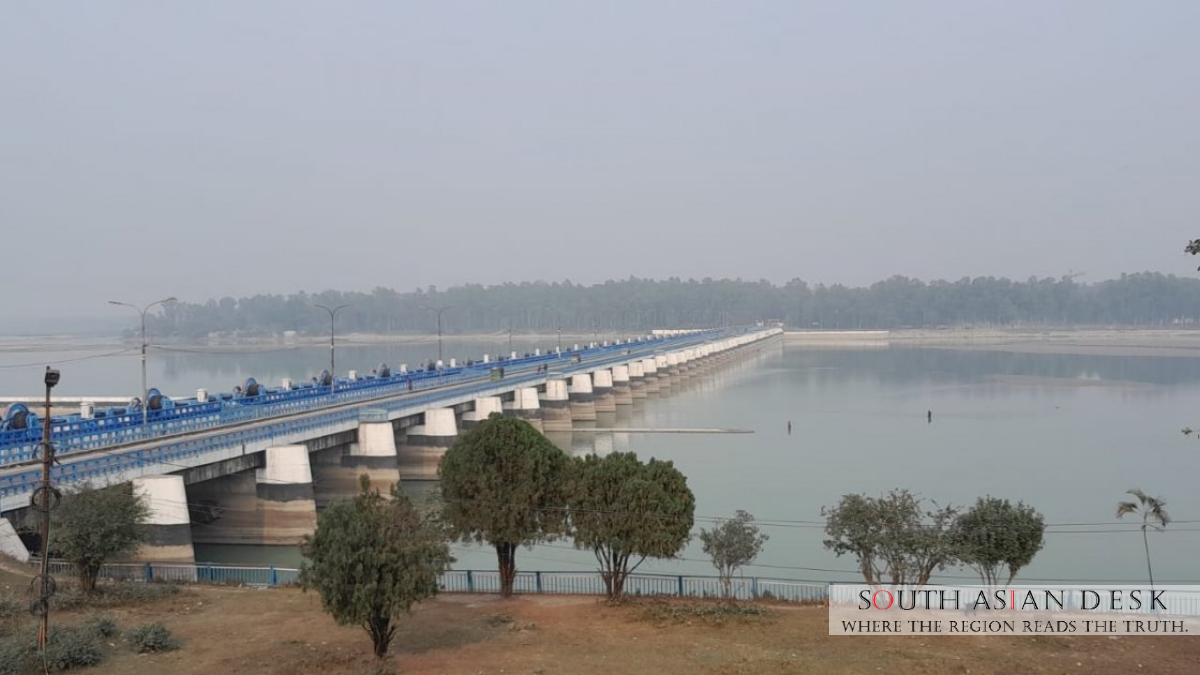
Bangladesh is set to embark on an ambitious plan to manage the Teesta River, following the government’s approval of the Padma Barrage project. The Teesta Mega Plan is poised to become the next significant step in the country’s river management strategy, focusing on flood control, irrigation expansion, and economic revitalization in northern Bangladesh.
The Teesta River, vital to over two crore people in regions like Rangpur and Kurigram, faces severe seasonal challenges. During dry spells, the riverbed turns into barren land, disrupting agriculture and forcing reliance on costly irrigation. Conversely, the monsoon season brings devastating floods and erosion, affecting thousands.
The Padma Barrage project’s first phase, valued at over Tk33,000 crore, has shifted focus to the Teesta basin. Officials describe the plan as multi-dimensional, potentially integrating hydropower generation. A senior Ministry of Planning official confirmed that the initiative is under strategic development and will be implemented in phases.
Feasibility studies are underway, with a Chinese technical team involved in the second phase, expected to conclude by December 2026. However, uncertainties remain regarding financing and cross-border coordination, particularly with upstream water regulation influenced by India’s Gajoldoba barrage.
Experts emphasize the need for a basin-wide management approach. Dr. Anika from BUET cautions against viewing the issue merely as an engineering challenge, while Dr. Nazrul Islam highlights the project’s potential for regional transformation. The Teesta Mega Plan is seen as a crucial step for Bangladesh, but its success will depend on comprehensive planning and international cooperation.
Published in SouthAsianDesk, May 31, 2026
Follow SouthAsianDesk on X, Instagram and Facebook for insights on business and current affairs from across South Asia.