Cheap Chinese steel imports have revived concerns among Indian producers despite safeguard duties aimed at limiting low-priced shipments.
Cheap Chinese steel imports return to India’s market
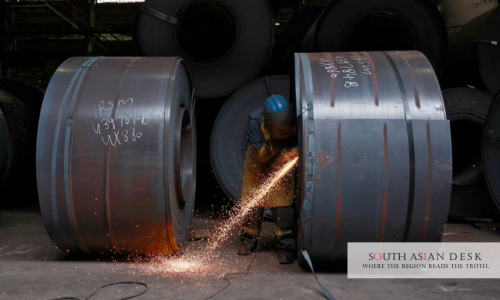
Cheap Chinese steel imports more than doubled into India in April 2026, putting pressure on domestic mills despite recent safeguard duties, as buyers turned to lower-priced shipments and some products remained outside the tariff net.
Provisional government data cited in the report showed that China shipped about 232,000 tonnes of finished steel to India in April, making it the largest supplier of finished steel to the country for the month.
The increase has sharpened concerns among Indian steelmakers that tariff measures imposed to protect local producers may not be enough to prevent price pressure in a market where domestic demand remains strong. The latest imports were led by hot-rolled coils and stainless steel products, according to the cited data.
Hot-rolled coils are covered by India’s safeguard duty framework, but stainless steel products are not covered in the same way. That has left part of the domestic market exposed to cheaper overseas material, particularly where importers can source finished steel at prices below local levels.
A senior industry executive cited in the report said Chinese hot-rolled coil shipments were cheaper than local steel by USD 11 to USD 37 per tonne. Another executive said some cargoes had been diverted to India after they could not reach the Middle East because of the Iran conflict.
Indian steelmakers face pricing pressure
Indian steelmakers have repeatedly warned that cheap imports can distort domestic pricing, discourage investment and weaken manufacturing competitiveness. The concern is particularly strong in segments where imported material is close to locally produced steel and buyers can shift quickly based on price.
Jindal Stainless chief executive Tarun Khulbe said such imports were “distorting fair market practices, impacting investments into the industry and affecting long-term manufacturing competitiveness in India”, according to the report.
Vietnam also emerged as a notable route in April. Shipments from Vietnam to India rose more than four times to 59,000 tonnes, placing the country among the top five finished steel suppliers to India for the month. Industry executives have raised concerns that some steel may be entering India through countries covered by preferential trade arrangements.
The issue is commercially significant because India’s domestic demand is expanding. Finished steel consumption reached 13 million tonnes in April, up 8.2 percent from a year earlier, according to the data cited in the report. Strong demand from infrastructure, automobiles and manufacturing has supported production, but it has also made India an attractive destination for overseas steel.
Safeguard duty has slowed but not stopped imports
India imposed a 12 percent safeguard duty on certain non-alloy and alloy steel flat products in April 2025 after a surge in imports. The Ministry of Steel said at the time that the measure was intended to protect domestic manufacturers from the adverse impact of import surges and ensure fair competition in the market.
Union Steel and Heavy Industries Minister H. D. Kumaraswamy welcomed the decision on Monday, April 21, 2025, saying it would provide relief to domestic producers, especially small and medium-scale enterprises facing pressure from rising imports.
The Directorate General of Trade Remedies had earlier found prima facie evidence of a recent, sudden, sharp and significant increase in imports, serious injury or threat of serious injury to domestic industry, and a causal link between the two. It recommended a provisional safeguard duty of 12 percent for 200 days before the government moved to impose the measure.
However, the latest rise in Chinese shipments suggests that the structure of imports has changed. Tariff-covered products may still enter where price gaps are large enough, while tariff-exempt products, such as some stainless steel categories, can continue to affect local market conditions.
Background
India is the world’s second-largest crude steel producer. Official data released by the Ministry of Steel showed that the country produced 144.3 million tonnes of crude steel in FY 2023-24. The same official release said India was a net importer of finished steel in FY 2023-24, with imports of 8.32 million tonnes and exports of 7.49 million tonnes.
The pressure from China had been building before the latest April figures. Official data placed finished steel imports from China at 1.13 million tonnes during April to August 2024-25, compared with 0.86 million tonnes in the same period of 2023-24 and 0.47 million tonnes in April to August 2022-23.
In a later parliamentary reply, the Ministry of Steel said India’s overall steel imports increased from 6.022 million tonnes in 2022-23 to 9.55 million tonnes in 2024-25. It said imports in the first quarter of FY 2025-26 stood at 1.38 million tonnes.
The government has listed several measures to reduce import dependence and support domestic manufacturers. These include the Domestically Manufactured Iron and Steel Products policy for government procurement, the Production Linked Incentive scheme for specialty steel, and quality control orders aimed at keeping sub-standard steel products out of the domestic market.
At the same time, recent official data also points to a stronger domestic industry. The Ministry of Steel said finished steel production stood at 160.9 million tonnes in FY 2025-26, up 9.7 percent from the previous year, while consumption stood at 163.7 million tonnes, up 7.6 percent.
What’s next
Indian producers are expected to watch May import data closely to assess whether April’s rise was temporary or the start of a broader resurgence in low-priced shipments. A further increase could intensify industry calls for tighter trade remedies, stricter rules-of-origin checks and wider product coverage.
The government may also face a balancing act. While producers want protection from underpriced imports, downstream industries need reliable access to competitively priced raw material. Any further action will have to weigh the interests of steel mills, small manufacturers, infrastructure users and exporters.
Cheap Chinese steel imports will remain a key test for India’s trade policy as the country seeks to expand domestic steel capacity while keeping its manufacturing supply chain competitive.
Published in SouthAsianDesk, June 2, 2026
Follow SouthAsianDesk on X, Instagram and Facebook for insights on business and current affairs from across South Asia.