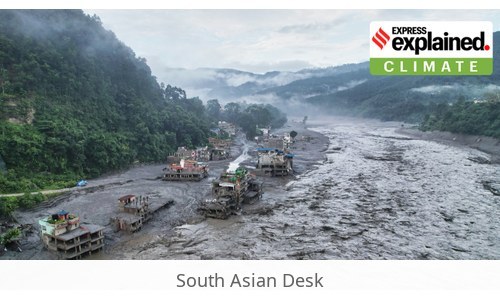
Chilime hydropower tunnel recovery efforts intensified on August 30, 2026, as an Indian team of tunnel experts and the Nepali Army recovered two bodies from the Chilime Hydropower Project tunnel in Rasuwa. This operation, part of a broader humanitarian response to catastrophic Nepal floods, highlights the region’s vulnerability to climate-induced disasters. The recovery effort underscores the complex interplay between infrastructure resilience, cross-border collaboration, and the escalating challenges posed by climate change impacts on infrastructure in the Himalayan region.
Chilime hydropower tunnel recovery: Impact of Flooding on Infrastructure
The Nepal floods have raised critical questions about the safety and sustainability of hydropower projects in Nepal. According to The Indian Express, the disaster underscores the risks of infrastructure development in geologically sensitive areas. The Indian team’s involvement reflects growing international cooperation in disaster response, though concerns remain about regulatory frameworks for such projects. Nepal’s hydropower sector, which accounts for a significant portion of the country’s energy production, has long been a double-edged sword—offering renewable energy potential but also posing risks in regions prone to seismic activity and glacial melt. The Chilime hydropower tunnel recovery has reignited debates about the adequacy of safety protocols and environmental impact assessments for large-scale projects in the Himalayas.
The Chilime Hydropower Project, located in Rasuwa District, is one of Nepal’s largest infrastructure undertakings. Designed to generate 1,200 megawatts of electricity, the project has faced scrutiny over its potential to exacerbate flood risks in the region. The recent Nepal floods, which submerged entire villages and disrupted critical infrastructure, have exposed the limitations of current engineering standards in the face of unpredictable climate patterns. Experts note that while Nepal has made strides in adopting modern construction techniques, the rapid pace of development often outstrips the capacity for rigorous risk mitigation.
International Cooperation in Disaster Response
The joint rescue operation between India and Nepal exemplifies regional solidarity in crisis management. The Hindu reported that over 3,000 individuals remain missing following the floods, which have claimed 781 lives in Nepal and Tibet. Such incidents reinforce the need for multilateral disaster preparedness strategies, particularly in the Himalayan region, where transboundary water systems and shared ecosystems complicate emergency response efforts. India’s participation in the Chilime hydropower tunnel recovery operation aligns with broader bilateral agreements on disaster management in Nepal, including the 2021 India-Nepal Joint Statement on Climate Resilience and Infrastructure Safety.
The collaboration also highlights the strategic importance of hydropower infrastructure in South Asia. Nepal’s energy projects, often funded by Indian and Chinese investors, are critical to regional energy security. However, the result has prompted calls for greater transparency in project oversight and the establishment of regional disaster response protocols. The Indian team’s expertise in tunnel engineering, combined with the Nepali Army’s local knowledge, underscores the value of integrating technical and operational capabilities in crisis scenarios.
Long-term Climate Change Impacts
Climate change is intensifying natural disasters in South Asia, as noted in a report by The Indian Express. The result underscores the urgency of reevaluating infrastructure development practices to align with climate resilience standards. With glacial melt and monsoon variability increasing, Nepal’s hydropower sector faces mounting pressure to adopt adaptive engineering solutions. The Himalayan region, home to some of the world’s most unstable glaciers, is particularly vulnerable to abrupt climate shifts, which can trigger flash floods, landslides, and infrastructure failures.
Recent studies indicate that Nepal’s glaciers are retreating at an accelerated rate, with some losing up to 15% of their mass since the 1980s. This phenomenon, coupled with erratic monsoon patterns, has led to more frequent and severe flooding events. The result serves as a stark reminder of the need for integrated climate adaptation strategies, including the redesign of infrastructure to withstand extreme weather conditions. Such measures could include reinforced tunnel linings, improved drainage systems, and real-time monitoring of glacial activity.
The implications extend beyond Nepal’s borders. The Himalayas are a critical water source for millions in South Asia, and disruptions in this region can have cascading effects on downstream countries like India and Bangladesh. As climate change continues to reshape the region’s hydrological systems, the the result may serve as a catalyst for regional cooperation on climate resilience, energy security, and disaster preparedness.
Follow SouthAsianDesk on X, Instagram and Facebook for insights on business and current affairs from across South Asia.
Sources
- Two bodies recovered from Chilime hydropower tunnel – english.onlinekhabar.com
- Nepal floods: The red flags in dam-building in the Himalayas – indianexpress.com
- Nepal flash floods LIVE: Death toll reaches 781; rescuers drill through debris towards trapped tunnel workers – thehindu.com
Image: images.indianexpress.com