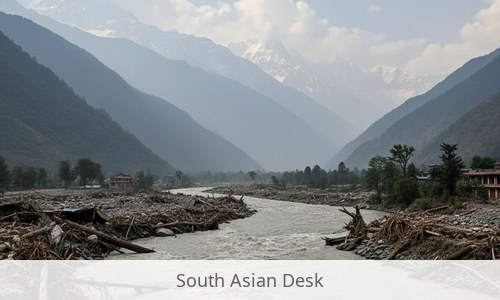
On August 26, 2026, a catastrophic flood in the Bhote Koshi–Trishuli river area triggered by a destructive sequence of ice, rock, debris, and water has been described as one of the worst mountain disasters in recent times. The event has intensified calls for improved cross-border warning systems to mitigate risks in the Himalayan region, where Himalayan disasters increasingly threaten transnational communities. This disaster underscores the critical need for regional cooperation and robust disaster management South Asia frameworks to address the escalating environmental challenges Himalayas.
The Need for Cross-Border Warning Systems
Experts emphasize that the Himalayan region’s cascading hazards—triggered by glacial melt, landslides, and monsoon rains—require coordinated early warning systems across national borders. Current mechanisms, while functional in isolated contexts, lack the regional integration needed to address transboundary risks. As the Bhote Koshi–Trishuli flood demonstrated, delays in alerting downstream communities can amplify human and economic tolls. Cross-border warning systems remain a critical gap in disaster management South Asia, where environmental challenges Himalayas are intensifying. For instance, the 2026 flood displaced over 100,000 people and caused billions in damages, highlighting the urgency of systemic improvements.
Regional Geopolitical Implications
The disaster has underscored the necessity for enhanced cooperation among South Asian nations. Nepal’s proximity to India and China means that Himalayan hazards can rapidly affect multiple countries. While regional bodies like the South Asian Association for Regional Cooperation (SAARC) have discussed disaster preparedness, concrete frameworks for cross-border alerts remain underdeveloped. This gap highlights the need for multilateral agreements on data sharing, infrastructure, and emergency response protocols. Regional cooperation is essential to address the growing risks of Himalayan disasters and ensure effective cross-border warning systems. For example, India and Nepal have initiated joint flood monitoring projects, but broader integration remains elusive.
Environmental Factors and Future Risks
Climate change is exacerbating the frequency and intensity of such events. Rising temperatures are accelerating glacial retreat, increasing the likelihood of glacial lake outburst floods (GLOFs). Proactive measures—such as satellite monitoring, community-based early warning systems, and transboundary environmental assessments—are critical to building resilience. Regional governments must prioritize these initiatives to prevent future catastrophes. The environmental challenges Himalayas face demand urgent attention, particularly in the context of disaster management South Asia. Studies predict that by 2030, the risk of GLOFs could increase by 30%, necessitating immediate action.
Case Studies and Global Lessons
The 2026 Nepal floods are not isolated. Similar events in 2017 and 2021 in the region revealed systemic weaknesses in early warning infrastructure. For example, the 2017 Kedarnath flood in India, which killed over 6,000 people, exposed gaps in cross-border communication. These cases reinforce the need for the result that integrate real-time data from multiple countries. International models, such as the European Flood Awareness System (EFAS), offer a blueprint for regional collaboration, though adapting them to the Himalayas requires tailored solutions.
The Path Forward
To address these challenges, South Asian nations must adopt a multi-pronged approach. This includes investing in technology, fostering political will, and engaging local communities. For instance, Nepal’s recent pilot program for community-based early warning systems has shown promise, but scaling it requires cross-border coordination. Additionally, international funding mechanisms, such as the Green Climate Fund, could support infrastructure upgrades. The Nepal floods serve as a stark reminder that Himalayan disasters are not confined to national borders and demand collective action.
The recent floods in Nepal highlight the critical need for improved the result to mitigate the impact of natural disasters in the region. As the climate crisis continues to evolve, the urgency for effective disaster management strategies becomes increasingly clear.
Follow SouthAsianDesk on X, Instagram and Facebook for insights on business and current affairs from across South Asia.
Sources
- The Nepal floods question: When the Himalayas collapse, who gets warned? – aljazeera.com
- Bhotekoshi flood reveals the growing danger of Himalayan cascading hazards – english.onlinekhabar.com