Delhi Data Centre Fire Disrupts Recovery Efforts
Delhi data centre fire at a facility linked to Tata Communications and Singapore’s ST Telemedia has left some clients fearing the loss of years of business records, while also disrupting Google Cloud network traffic in India.
The blaze broke out on June 5 at an STT Global Data Centres India facility in New Delhi. The company is a joint venture involving ST Telemedia and Tata Communications, part of India’s Tata Group. According to Reuters, a Tata Communications unit told a client that the fire caused “extensive damage” to parts of the site, making recovery of affected data and systems difficult.
The incident has raised questions over data-centre resilience, backup arrangements and the risks faced by companies that rely on third-party infrastructure for critical records, customer information, billing systems and network operations.
Tata Communications had informed Indian stock exchanges on June 5 that it had activated business continuity plans after an early morning fire at the facility. However, Reuters reported that some customers were still struggling with the impact nearly three weeks later.
STT Global Data Centres India said it was supporting affected customers and moving them to alternate capacity where possible. It also said an independent technical root-cause analysis was under way. The company’s initial assessment found that the fire was limited to one data hall and associated infrastructure, while the rest of the facility continued to operate.
Tata Communications said services had been restored for customers who had subscribed to recovery and backup services, while further recovery efforts were continuing where possible.
Google Cloud India Services Hit by Disruption
The fire also affected Google Cloud services in India. Google said earlier this month that some customers experienced intermittent network disruptions after a fire at a third-party data centre forced an emergency shutdown of networking equipment.
Reuters reported that the Google Cloud disruption was linked to the same STT-Tata facility, citing a source with direct knowledge of the matter. Google had said the shutdown isolated a local point of presence in Delhi and reduced network capacity across the metropolitan area, affecting traffic from Delhi, Chennai, Mumbai and nearby regions.
The disruption caused periods of elevated latency, which can affect websites, applications, enterprise systems and other digital services that depend on cloud infrastructure. Google later warned customers that latency issues could continue until the affected facility was fully restored.
The incident shows how damage at one physical site can create wider digital disruption. Data centres are often treated as invisible infrastructure, but they sit underneath cloud computing, telecom networks, internet services, enterprise databases and artificial intelligence workloads. When they fail, the effects can move quickly across sectors.
Clients Fear Data Loss and Business Damage
Some clients have reported severe consequences. Matrix Cellular, an Indian company that sells international SIM cards, told Reuters it was struggling to recover more than 20 years of operational and business data stored at the affected Tata data centre.
The company said the lost material included customer data, usage records, support history, billing details and vendor-related information. Its chief executive, Gaurav Khanna, questioned why backup restoration had not taken place if backups were available.
Another affected client, internet service provider R2 Net, estimated losses of around $2 million and warned that the outage could cost it customers. Its chief executive, Sanjay Singh, told Reuters that the fire affected tracking data stored on servers and used by law enforcement to monitor illegal internet activity.
The full list of affected companies has not been identified. Reuters reported that Tata Communications says 300 Fortune 500 companies are among its clients and that it connects businesses to 80% of the world’s cloud giants.
That wider customer base makes the incident significant beyond the immediate fire. Even if the physical damage was confined to one data hall, the commercial and operational effects appear to have reached multiple clients with different levels of backup protection.
Cause Still Under Investigation
The cause of the fire has not been finally determined. Delhi fire authorities said the blaze broke out in lithium battery units. Such batteries are commonly used in backup power systems, including uninterruptible power supply infrastructure, which is critical for data centres but can present serious fire risks if not managed properly.
STT Global Data Centres India has said a detailed independent assessment is being conducted. Reuters reported that the company told one client the root-cause analysis could take five to seven weeks.
The facility had been described by the joint venture as having a “state-of-the-art” fire protection and suppression system. That detail is likely to draw scrutiny because data centres are designed around redundancy, fire containment, power resilience and environmental controls. A fire severe enough to damage servers, electrical infrastructure and recovery operations raises questions over compartmentalisation, battery safety, suppression systems and disaster-recovery planning.
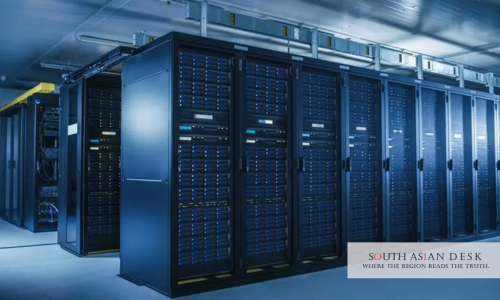
Television footage from inside the facility on the day of the fire showed server racks and electrical infrastructure that appeared badly burned, with debris and collapsed ceiling panels visible.
A Test of Data-Centre Resilience
For Indian businesses, the Delhi data centre fire is a reminder that cloud and colocation services do not eliminate operational risk. They shift part of that risk to specialised infrastructure providers, but customers still need clear backup, replication and recovery plans.
The most exposed companies are those that rely on a single site or a limited recovery arrangement for critical data. If backups are not regularly tested, geographically separated and contractually guaranteed, a physical incident can become a business continuity crisis.
The episode also matters for India’s growing data-centre industry. Demand for cloud services, artificial intelligence, streaming, fintech, telecoms and enterprise digitisation has made data centres a major investment category. But as the sector expands, customers and regulators are likely to pay closer attention to fire safety, power systems, audit standards and disaster-recovery obligations.
For Tata Communications and STT Global Data Centres India, the immediate challenge is restoring affected customers and completing the investigation. For clients, the harder task may be rebuilding lost systems, assessing legal and commercial exposure, and reviewing whether their backup arrangements were sufficient.
The fire may have been confined to one part of one facility, but its impact has reached far beyond the building. It has exposed how dependent modern businesses are on physical infrastructure that most users never see until something goes wrong.
Published in SouthAsianDesk, June 25, 2026
Follow SouthAsianDesk on X, Instagram and Facebook for insights on business and current affairs from across South Asia.