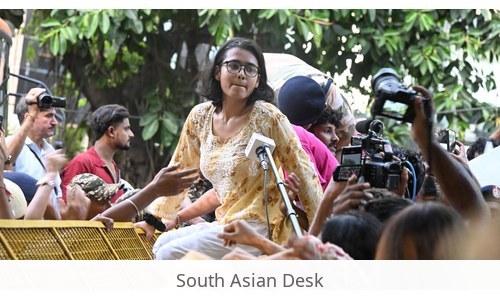
Delhi protests have escalated as Delhi Police detained 500 protesters on October 4, 2026, during a march toward Jantar Mantar demanding the resignation of Chief Election Commissioner Gyanesh Kumar. The demonstrations, which began on October 2, 2026, have grown into a significant movement reflecting growing public discontent with the Election Commission’s handling of electoral processes in India. The protests also intersect with broader themes of political activism in India and women’s safety concerns amid large gatherings.
Delhi Protests: Political Leadership and Public Sentiment
Uddhav Thackeray, leader of the Shiv Sena, referred to the Chief Election Commissioner (CEC) as a “weapon” of the Bharatiya Janata Party (BJP) during a Thackeray rally in Mumbai. His remarks coincided with the Delhi protests, where demonstrators called for the CEC’s resignation. Raj Thackeray, Uddhav’s brother, further amplified the political rhetoric by advocating for the use of ballot papers instead of electronic voting machines (EVMs), a proposal that has sparked debate over electoral transparency and the role of the Election Commission of India.
Broader Context and Implications
The Delhi protests highlight broader concerns about political accountability and the integrity of India’s electoral system. An investigation into allegations of sexual harassment against police officers during the protests has been launched, adding another layer of complexity to the situation. This incident has reignited discussions around women’s safety protests and the need for stricter protocols during large-scale demonstrations. The Election Commission has not yet commented on the specific demands or the allegations of misconduct, but the protests have underscored the growing tension between political activism in India and institutional governance.
The Gyanesh Kumar resignation demands have become a focal point of the Delhi protests, with critics accusing the Election Commission of bias and inefficiency. Meanwhile, the Thackeray rally in Mumbai has drawn attention to regional political dynamics, as the Shiv Sena’s stance on electoral reforms aligns with the protesters’ calls for transparency. These developments have further polarized public opinion, with some viewing the protests as a legitimate expression of dissent and others as a challenge to the Election Commission’s authority.
The Role of Political Activism in India
The Delhi protests are emblematic of a broader trend in political activism in India, where citizens increasingly use public demonstrations to voice concerns about governance, electoral integrity, and social issues. The movement has drawn parallels to past protests, such as those related to the Citizenship Amendment Act (CAA) and the Farmers’ Movement, which also highlighted the power of collective action in shaping policy. However, the current protests are unique in their focus on the Election Commission, an institution central to India’s democratic framework. This has raised questions about the balance between political dissent and the need for institutional stability.
The protests have also sparked debates about the role of the Election Commission of India in ensuring fair and transparent elections. Critics argue that the Commission’s perceived alignment with the ruling party undermines its neutrality, while supporters emphasize its role in maintaining electoral order. The demand for Gyanesh Kumar’s resignation has thus become a litmus test for the Commission’s independence and the public’s trust in its leadership.
Women’s Safety and the Delhi Protests
The recent allegations of sexual harassment against police officers during the Delhi protests have brought the issue of women’s safety to the forefront. These incidents have not only raised concerns about the conduct of law enforcement but also highlighted the risks faced by women participating in large-scale demonstrations. The protests, which initially focused on electoral reforms, have now taken on an additional dimension as advocates for women’s rights demand stricter measures to protect participants from harassment and violence.
This intersection of political activism in India and women’s safety protests underscores the complex challenges faced by organizers and participants. While the primary goal of the result remains the resignation of Gyanesh Kumar, the broader implications for gender equality and public safety cannot be ignored. The situation has also prompted calls for the Election Commission to address these concerns, emphasizing the need for a holistic approach to electoral reform that includes safeguarding the rights of all citizens.
Follow SouthAsianDesk on X, Instagram and Facebook for insights on business and current affairs from across South Asia.
Sources
- 500 detained in Delhi on Day 3 of protests seeking CEC’s exit; Thackerays lead Mumbai march – thehindu.com
- ‘We need freedom’: New Delhi women protest sexual violence – aljazeera.com
- AISA Claims Neha Bora Detained During Protest, Released Without Phone, Bag – ndtv.com
- India police investigate sexual harassment allegations during protests against election commission – english.onlinekhabar.com
Image: th-i.thgim.com