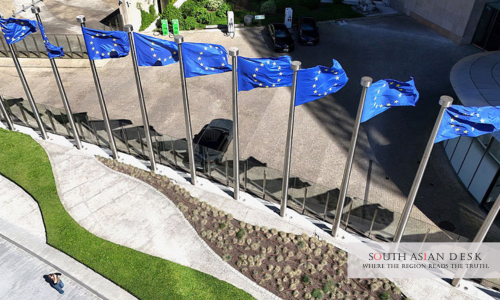
EU-Taliban talks were held in Brussels for the first time on Tuesday, marking a rare direct engagement between European officials and Afghanistan’s Taliban authorities as the European Union seeks cooperation on the return of Afghan nationals with no legal right to remain in the bloc.
The meeting brought together officials from the European Commission, Sweden and representatives of 15 EU member states, according to Reuters. It followed earlier discussions held in Kabul in January and focused on “return and readmission” arrangements for Afghan citizens, including rejected asylum seekers and those considered security risks by European governments.
The EU has not recognised the Taliban government since the group returned to power in Afghanistan in 2021. Brussels has described the contact as technical rather than political, arguing that limited engagement with Afghanistan’s de facto authorities is necessary to address migration and deportation issues.
EU-Taliban talks focus on return and readmission
The Taliban delegation in Brussels was led by Abdul Qahar Balkhi, a spokesperson for Afghanistan’s Foreign Ministry, according to AP. Belgium issued five short-term visas for the visit, restricted to Belgium and valid for one day only.
European officials framed the meeting as part of EU migration talks aimed at managing the return of Afghan nationals who do not have the right to stay in Europe. The discussions come as several EU countries face domestic pressure to speed up deportations, particularly in cases involving people convicted of serious crimes or assessed as potential security threats.
The Taliban side, however, described the agenda more broadly. Afghanistan’s Foreign Ministry said the talks also covered possible consular representation in Europe, resumption of consular services for Afghans and wider trust-building measures.
Rights groups warn against Taliban recognition
The Taliban delegation Brussels visit has drawn criticism from human rights groups and some European lawmakers, who argue that hosting Taliban officials risks normalising a government accused of severe restrictions on women and girls.
Rights organisations have warned that Afghan deportations could expose returnees to persecution, detention or other harm, particularly given the Taliban’s record on human rights in Afghanistan. Critics have also argued that cooperation on migration could be seen as a step toward Taliban recognition, even if the EU insists the meeting does not amount to formal diplomatic acceptance.
Since taking power, the Taliban have barred girls from secondary and higher education, restricted women’s work and public life, and faced international condemnation over their treatment of minorities, activists and former government-linked individuals.
For the EU, the Brussels meeting reflects a difficult balance: pursuing migration enforcement while maintaining its official position that the Taliban remain unrecognised. For Afghans in Europe, the talks may deepen uncertainty over asylum protections, deportation policy and future consular access.
Published in SouthAsianDesk, June 24, 2026
Follow SouthAsianDesk on X, Instagram and Facebook for insights on business and current affairs from across South Asia.