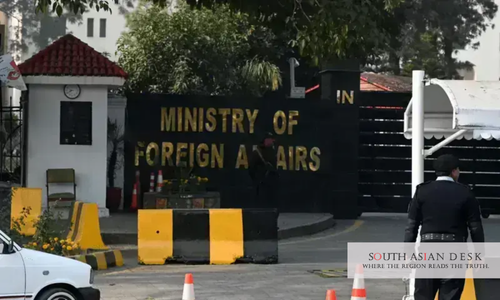
The Foreign Ministry accounting rules came under sharp criticism on Wednesday, when a parliamentary committee directed the ministry to streamline and tighten its financial procedures after reviewing a series of audit findings. The Public Accounts Committee (PAC) faulted the ministry for having no effective control over its management of funds and instructed its new secretary, Asim Iftikhar Ahmad, to frame revised rules and share them with the panel.
Why the Public Accounts Committee Demanded Reform
The directive followed the committee’s review of audit objections raised against the Ministry of Foreign Affairs for the 2024-25 period. During the discussion, members observed that staff posted in foreign missions were embezzling and mismanaging public money without being held to account. The committee described the ministry’s accounting procedures as lax and said the problem pointed to a wider failure of oversight rather than isolated lapses.
Alleged Fraud at Missions in Vienna and Sofia
Among the cases examined, one caused particularly heavy losses to the public exchequer. According to the audit findings, a former accountant posted at the Pakistan embassy in Vienna, Austria, fraudulently drew 442,256 euros and $134,292 over a period of two years. Officials from the office of the Auditor General of Pakistan told the committee they suspected the accountant was not acting alone. They said the public money had been transferred into personal accounts, including one belonging to his wife, and that senior officials at the mission may also have been involved.
The PAC expressed strong dissatisfaction with the Federal Investigation Agency (FIA), which has failed to recover the money despite a case being registered against the former accountant six years ago. Members were further surprised to learn that he is currently in Pakistan and out on bail. Committee chairman Naveed Qamar directed that the FIA director general be summoned to provide a better response.
A second case concerned another accountant posted at the embassy in Sofia, Bulgaria, who allegedly withdrew 56,499 Lev and $74,415 fraudulently between 2018 and 2023. Audit officials said the misappropriated sum has not been recovered. They also noted that after the accountant was dismissed from service, he approached the courts, which reinstated him. In response to the recovery failures, Mr Qamar directed that officials investigating such fraud be exempted from travel bans introduced under austerity measures.
Scrutiny of Higher Education Commission Funds
The committee also examined the retention of a large balance belonging to the Higher Education Commission (HEC) in an account meant for overseas scholarships in the United States. The sum, amounting to $4.5 million, had not been disbursed among needy students, a fact that surprised the panel. Mr Ahmad said the Pakistani mission had not received clear instructions from the HEC on the matter. Mr Qamar responded that the HEC itself should be held accountable.
In a related matter, the committee took up the unauthorised borrowing of 360,000 euros from the HEC’s account. Mr Ahmad told members that his office was in the process of returning the funds to the commission.
Unauthorised Suspense Account in Dhaka
Another audit objection concerned the blockage of government funds in an unauthorised suspense account in Dhaka, Bangladesh, where $1.143 million was found parked idle. Audit officials observed that holding such a large amount in a suspense account without the approval of the finance division was a clear violation of rules, which require inevitable payments to be settled at the earliest.
They also pointed out that the mission maintained a US dollar account under the suspense head to pay the rent of a chancery whose ownership remains disputed, an issue that has yet to be resolved. The PAC referred this matter to the departmental accounts committee for further examination.
What Revised Foreign Ministry Accounting Rules Must Address
The committee’s central demand is that the ministry produce a clear, enforceable framework governing how missions handle, record and report public money, and that it share the framework with the panel. The cases discussed on Wednesday suggest several areas that such rules would need to cover, including supervision of accounts staff, approval requirements for suspense accounts, and timely recovery of funds when irregularities are found.
For the PAC, the episode underlines a recurring concern that audit findings are raised, discussed and then left unresolved for years. With a new secretary now at the ministry’s helm, the committee appears intent on seeing whether revised Foreign Ministry accounting rules can finally close the gaps that the Auditor General’s office has repeatedly identified.
Follow SouthAsianDesk on X, Instagram and Facebook for insights on business and current affairs from across South Asia.
Read More: