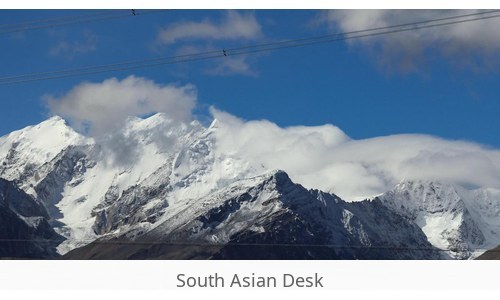
Recent studies indicate that Himalayan glaciers are melting at an alarming rate, posing significant risks to water security for millions in South Asia. The phenomenon, known as ‘peak water,’ could occur by mid-century, leading to severe implications for river flows and regional ecosystems. This accelerating melt is a critical climate change impact, with cascading effects on agriculture, infrastructure, and natural disaster patterns across the region.
Himalayan glaciers melting: Implications for Water Security
Melting glaciers are critical for water supply in South Asia, with millions dependent on glacier-fed rivers for agriculture and drinking water. The Hindu reports that peak water—the point when river flows stop rising and start declining—could happen by mid-century, affecting river flows across the region. This shift threatens the livelihoods of communities reliant on consistent water availability, particularly in downstream areas of India, Pakistan, and Bangladesh. The water security South Asia faces is increasingly precarious as glacial retreat accelerates.
The dependence on glacier-fed rivers is profound. In India, the Ganges, Brahmaputra, and Indus rivers sustain agricultural systems that feed over a billion people. Similarly, in Pakistan, the Indus River basin supports critical irrigation networks. Bangladesh, with its low-lying geography, is especially vulnerable to disruptions in river flow. As glaciers shrink, the seasonal availability of water for irrigation and domestic use will become increasingly erratic, exacerbating existing water scarcity challenges. This situation could lead to increased competition over dwindling water resources, further straining regional relations.
Increased Natural Disasters
Glacier collapse can lead to catastrophic landslides and flash floods. NDTV highlights that the collapse of a Himalayan glacier in late August 2026 along the Nepal-Tibet border caused cascading landslides and flash floods, underscoring the immediate risks of glacial instability. Historical examples, such as the 2013 Kedarnath disaster in India, demonstrate the potential for glacier-related events to disrupt communities and infrastructure. These natural disasters in the Himalayas are becoming more frequent and severe as climate change impacts intensify.
The 2026 glacier collapse in the Nepal-Tibet border region serves as a stark reminder of the dangers posed by glacial instability. The event triggered landslides that blocked river channels, leading to sudden and severe flooding downstream. Such occurrences are not isolated; the 2013 Kedarnath disaster, which killed over 5,000 people, was also linked to glacial melt and heavy rainfall. As temperatures rise, the frequency and intensity of such events are expected to increase, placing additional strain on disaster response systems and infrastructure in the region. The need for robust disaster preparedness and response strategies has never been more urgent.
Government Responses to Climate Change
South Asian governments are increasingly addressing climate challenges through policy frameworks and regional collaboration. However, implementation remains uneven. Current initiatives include the South Asian Association for Regional Cooperation (SAARC)’s climate resilience programs and national-level investments in water management infrastructure. Challenges persist, including funding gaps, cross-border coordination, and the need for more robust disaster preparedness strategies. The government response to climate change varies across the region, with some nations prioritizing adaptation while others lag behind.
India has taken steps to address glacial melt through the National Action Plan on Climate Change, which includes measures for water resource management and disaster risk reduction. Pakistan has launched initiatives to improve flood forecasting and infrastructure resilience, while Bangladesh has focused on coastal and riverine adaptation strategies. Despite these efforts, regional coordination remains fragmented, and the scale of the challenge requires more comprehensive and integrated approaches. The urgency of the situation calls for a unified response to mitigate the impacts of climate change on water security and disaster resilience.
Published in SouthAsianDesk, September 15, 2026.
Follow SouthAsianDesk on X, Instagram and Facebook for insights on business and current affairs from across South Asia.
This report focuses on Himalayan glaciers melting and the verified developments surrounding it.
Sources
- Himalaya approaching tipping point, report says – thehindu.com
- Fast-Melting Himalayan Glaciers Threaten Water Security For Millions: Study – ndtv.com
Image: th-i.thgim.com