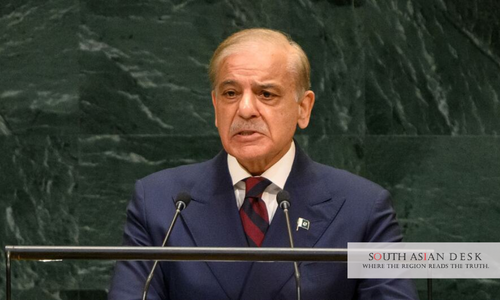
Pakistan’s Prime Minister Shehbaz Sharif issued a stern warning during his UN speech, stating that a Houthi attack on Mecca or Medina would cross a significant ‘red line.’ This declaration comes amid escalating regional tensions and growing discussions on the Mecca Pact military cooperation among Pakistan, Saudi Arabia, and Turkey. The warning underscores the gravity of the situation, as the holy cities of Mecca and Medina hold immense religious and geopolitical significance for the Muslim world.
Houthi attack on Mecca: Military Cooperation in the Region
During a recent high-level meeting, military leaders from Islamabad, Riyadh, and Ankara convened to discuss the Mecca Pact, a strategic framework aimed at bolstering regional security South Asia through enhanced military coordination. The pact focuses on countering threats from non-state actors, including the Houthi movement in Yemen. The discussions emphasized the symbolic and strategic importance of Mecca and Medina, with any Houthi attack on Mecca potentially triggering a broader regional conflict that could destabilize the Middle East and South Asia.
The Mecca Pact military cooperation initiative reflects a shift in regional alliances, as Pakistan, traditionally aligned with China and the U.S., now seeks closer ties with Saudi Arabia and Turkey. This move is seen as a response to the growing influence of Iran-backed groups like the Houthis, who have repeatedly targeted Saudi interests. The pact also aims to address shared security concerns, including the threat of terrorism and cross-border instability.
Response from the Taliban
Mujahid, a spokesperson for the Taliban, accused Pakistan of conducting military operations in Afghanistan to avoid assuming responsibilities related to the Mecca Pact. This claim highlights the complex dynamics between Pakistan and Afghanistan, particularly regarding regional security in South Asia. The Taliban’s response to Pakistan has raised concerns about the stability of Afghanistan, which could have ripple effects on Pakistan’s foreign policy and its ability to engage in multilateral security arrangements.
The Taliban’s criticism of Pakistan’s involvement in the Mecca Pact underscores the challenges of maintaining regional stability. With Afghanistan still grappling with internal conflicts and external pressures, Pakistan’s dual role as a regional power and a neighbor to the Taliban-led government adds another layer of complexity. The situation also raises questions about the effectiveness of the Mecca Pact and military cooperation in addressing cross-border threats without exacerbating tensions with Afghanistan.
Implications for Pakistan’s Foreign Policy
Shehbaz Sharif’s UN speech reflects the broader implications of Pakistan’s foreign policy in the region. The Mecca Pact signifies a strategic pivot towards multilateral security arrangements, which could reshape Pakistan’s relationships with Saudi Arabia and Turkey. As a key player in regional security in South Asia, Pakistan’s alignment with these regional partners may influence the balance of power in the Middle East and South Asia.
The potential for increased military cooperation could have economic and strategic ramifications for the region. Enhanced military coordination might lead to joint exercises, intelligence sharing, and the development of regional defense infrastructure. However, it could also strain Pakistan’s relations with other countries, particularly those with differing views on the Houthi conflict or the role of Iran in the region.
The Houthi attack on Mecca remains a critical concern for Pakistan and its allies. Any such attack would not only be a violation of international norms but also a direct challenge to the stability of the region. Pakistan’s warning serves as a clear signal that the country is prepared to take decisive action to protect its interests and those of its regional partners.
Follow SouthAsianDesk on X, Instagram and Facebook for insights on business and current affairs from across South Asia.