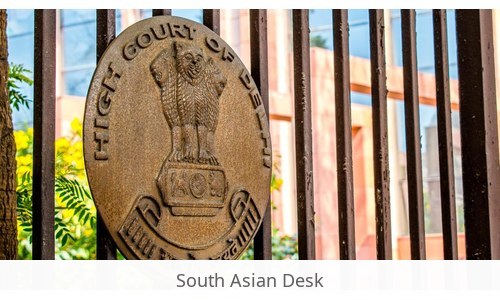
India fake site crackdown efforts have triggered a major legal and technology dispute after GoDaddy warned that sweeping court-ordered measures against fraudulent websites could expose legitimate domain owners, disrupt global internet governance and force domain registrars to rethink operations in India.
The warning follows a Delhi High Court order aimed at websites impersonating well-known brands. The case arose from lawsuits involving companies including Amazon, McDonald’s, Microsoft, Xiaomi and Colgate-Palmolive, which complained that fake websites were misusing their names to deceive consumers through bogus shopping portals, franchises, distributorships and other schemes.
The court blocked more than 1,100 allegedly fraudulent websites. But the dispute has widened because the order also introduced broader directions for domain registrars. These include restrictions on free privacy protection by default, disclosure of registrant details within 72 hours to anyone with a “legitimate interest,” and limits on domain names that resemble protected trademarks.
GoDaddy, the world’s largest domain seller, has challenged the directions before a larger bench of the Delhi High Court. The company argues that the rules could expose legitimate website owners to harassment, stalking, phishing and other security risks, while creating difficult compliance problems for domain registrars operating across borders.
India Fake Site Crackdown Raises Privacy Concerns
India fake site crackdown measures come at a time when online fraud has become a serious public policy concern. Reuters reported that India received 2.4 million complaints of alleged cyber fraud last year, involving losses of around $2.4 billion. With rapid growth in smartphones, online payments and digital commerce, fake websites have become a major risk for both consumers and brands.
The Delhi High Court’s concern is clear. Fraudulent sites often use brand names, similar-looking domains and hidden registrant details to mislead consumers before disappearing. In such cases, anonymity can make it difficult for companies, banks and law enforcement agencies to identify offenders quickly.
However, GoDaddy’s challenge focuses on whether the solution goes too far. The company says removing privacy-by-default protection would make names, addresses, phone numbers and email addresses of legitimate domain owners easier to expose. That concern is especially relevant for small businesses, journalists, activists, independent publishers and private individuals who may rely on domain privacy to avoid harassment or targeted abuse.
The issue is not whether fake websites should be tackled. The sharper question is how India can curb cyber fraud without weakening privacy protections for ordinary website owners.
Delhi High Court Domain Order Under Challenge
The Delhi High Court domain order has placed domain registrars at the centre of India’s anti-fraud strategy. According to reports, the court directed domain registrars to verify registrant details, disclose information within set timelines and stop automatically masking domain-owner identities.
The court has also pushed for stronger electronic Know Your Customer checks for domain name registrants. Earlier reporting on the order said the court linked lax identity verification to phishing websites, brand misuse and financial fraud. It also asked the government to explore a uniform e-KYC framework for domain registrars operating in India.
For brand owners, this type of order could make enforcement faster. If a fake domain is being used to impersonate a major company, quick access to registrant information may help stop consumer harm before losses grow.
For domain registrars, the order creates practical problems. GoDaddy argues that registrars may not be able to decide who has a genuine “legitimate interest” in someone’s registration details. The company also says domain names operate globally, not purely within national borders, making it difficult to apply India-specific restrictions without affecting global systems.
GoDaddy India Appeal Questions Trademark Limits
GoDaddy India’s appeal also challenges the trademark-related parts of the order. The company argues that a blanket restriction on domain names resembling protected marks could wrongly affect legitimate users.
This is a serious point because many trademarks overlap with common words, surnames or short expressions. GoDaddy reportedly cited “McDonald” as an example of a common surname, arguing that restrictions on all variations could give one brand excessive control over ordinary language.
The same concern applies to short marks and generic words. A company may have a valid trademark in a particular sector, but that does not always mean every similar domain is fraudulent. Trademark law usually depends on context, class of goods or services, likelihood of confusion and actual use. Domain registration systems, however, operate at scale and often cannot make such detailed legal judgments at the point of registration.
This is why the case matters beyond GoDaddy. If registrars are required to police domain names too broadly, they may overblock registrations to avoid liability. That could affect businesses and individuals whose domains are lawful but happen to resemble a brand name in some way.
Domain Privacy India Debate Deepens Under DPDP Act
The domain privacy India debate is also unfolding against the backdrop of India’s data protection framework. The government notified the Digital Personal Data Protection Rules, 2025, bringing the DPDP Act into operation. The framework is built around principles including consent, transparency, purpose limitation, data minimisation, security safeguards and accountability.
That creates a tension. On one side, anti-fraud enforcement may require faster access to domain registrant information. On the other, privacy law pushes organisations to limit unnecessary disclosure of personal data and protect individuals from misuse.
GoDaddy argues that weakening privacy-by-default could conflict with privacy expectations under Indian and international data protection standards, including the EU’s GDPR. Whether that argument succeeds will depend on how the larger bench views the balance between lawful disclosure, fraud prevention and personal data protection.
A workable system may need clearer categories. Law enforcement requests, court orders and verified brand-protection claims may be treated differently from broad private requests. Without such clarity, registrars may either disclose too much data or refuse requests out of caution.
Cyber Fraud India Problem Needs Targeted Enforcement
Cyber fraud India concerns are real and growing. Fake websites can damage consumers, banks, payment platforms and companies whose brands are misused. Victims may lose money through fake investment schemes, franchise offers, shopping portals or payment links that look credible because they borrow familiar names.
The Delhi High Court’s order reflects frustration with slow tracing and weak accountability. If fraudsters can hide behind privacy masking and fake registration details, enforcement becomes harder. Stronger KYC and faster response systems may therefore be necessary.
But targeted enforcement is different from broad exposure. If all domain owners lose privacy protection by default, the burden may fall most heavily on legitimate users, while sophisticated fraudsters shift to false identities, offshore services or other technical workarounds.
That is the core concern raised by critics of the order. The people easiest to expose may not be the scammers, but ordinary users who registered domains honestly.
Internet Governance India Case Could Have Wider Impact
The internet governance India implications are significant because domain registration is a global system. Domain registrars do not operate only within one country’s borders. A domain registered through a global platform may involve international registries, foreign users, cross-border hosting and multiple legal regimes.
If India’s rules require registrars to change global privacy settings or block trademark-similar names worldwide, the impact could extend beyond Indian consumers. GoDaddy has warned that the directives are commercially destabilising and could push some domain companies to exit India.
Rival registrars including Namecheap and Hosting Concepts have also challenged the ruling, according to court records cited in reports. The appeals are expected to be heard on July 16.
The outcome could shape how India handles fake websites in future. A narrower ruling may preserve strong anti-fraud tools while clarifying privacy safeguards. A broader ruling could increase compliance burdens across the domain industry and alter how registrars handle user data.
India Must Balance Brand Protection and Digital Rights
The India fake site crackdown shows how difficult online enforcement has become. Brand impersonation websites are not harmless. They can deceive consumers, steal money and undermine trust in digital commerce. Courts and regulators have strong reasons to demand faster action.
At the same time, domain privacy exists for legitimate reasons. It protects individuals from having personal details exposed in public databases and reduces risks of harassment, phishing and doxxing. Removing that protection too broadly may make the internet less safe for many users.
The better balance may lie in verified disclosure systems, strong KYC, fast action on clearly fraudulent domains, and judicial or regulatory safeguards for access to registrant data. India’s challenge is to build an enforcement model that catches fraudsters without turning every domain owner into a privacy risk.
For now, the Delhi High Court appeal has become a test case. It will determine not only how India fights fake websites, but also how far courts can go in reshaping the responsibilities of domain registrars in a global internet system.
Published in SouthAsianDesk, July 4, 2026
Follow SouthAsianDesk on X, Instagram and Facebook for insights on business and current affairs from across South Asia.