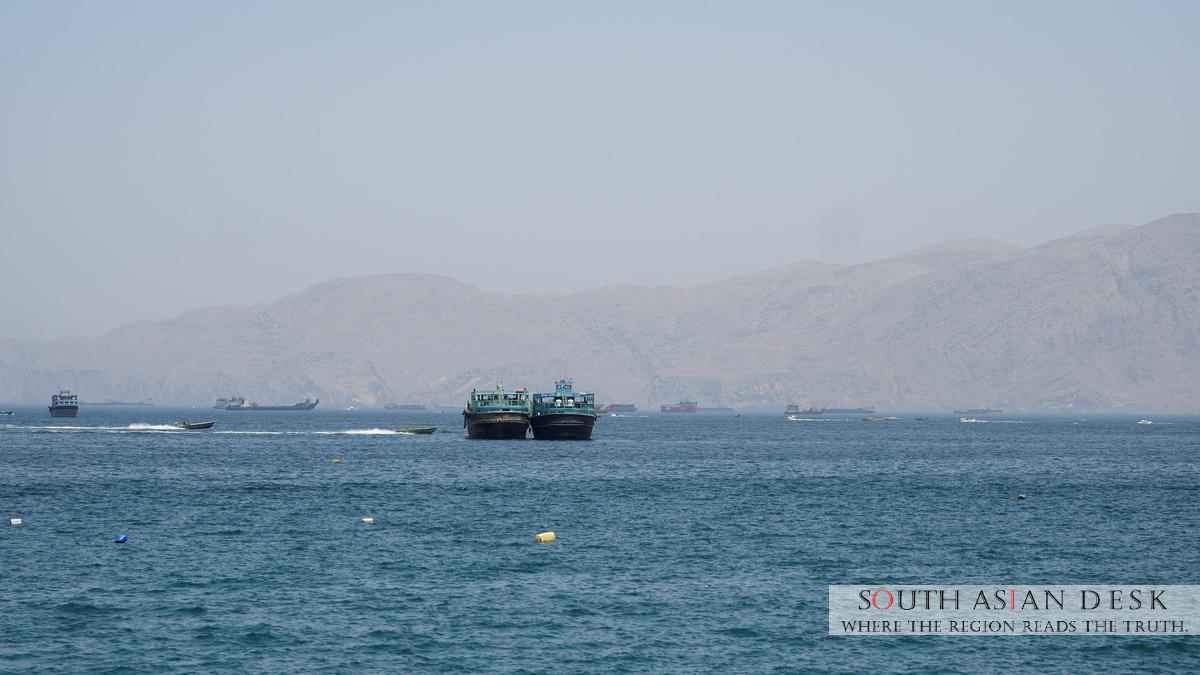
Sixteen India-bound fertiliser ships remain stuck near the Strait of Hormuz, the government confirmed on Monday, as part of a broader group of 41 priority vessels stranded in the Persian Gulf region since the West Asia conflict closed the strait to normal commercial traffic in late February, even as the Department of Fertilisers asserted that domestic stocks are currently running well above the traditional buffer threshold for the kharif sowing season.
The India fertiliser ships stuck at the Strait of Hormuz form the agricultural dimension of a supply chain emergency that also includes 18 vessels carrying energy products and seven carrying other essential goods. Of the 41 priority vessels formally identified by the Indian government, 13 are Indian-flagged. The situation has eased somewhat following Sunday’s announcement of a US Iran peace deal, with Strait of Hormuz shipping expected to resume after the formal signing ceremony in Geneva on 19 June, but the blocked India fertiliser ships have already tested the government’s contingency planning across several months of sustained disruption.
India Kharif Season Fertiliser Supply: How the Stocks Stand
The Department of Fertilisers said on Monday that India currently holds approximately 195.79 lakh metric tonnes of fertilisers against a total kharif season requirement assessed by the Agriculture Ministry at 383.9 lakh metric tonnes, representing availability of just over 51 percent of full season demand. The government described this as unprecedented advance availability, far exceeding the traditional buffer standard of 33 percent.
Since the West Asia crisis began, India has added approximately 163.01 lakh metric tonnes of fertilisers through a combination of imports and increased domestic production, and has secured more than 50 lakh metric tonnes of urea and phosphatic and potassic fertilisers. In June alone, more than 25 lakh metric tonnes of imported urea, DAP, and NPK are expected to reach Indian ports. A global tender for the procurement of an additional 17 lakh metric tonnes of urea is also in progress.
The kharif sowing season, which covers staple crops including rice, pulses, oilseeds, and cotton, typically commences between June and July, with fertiliser needing to reach agricultural distribution networks before planting begins. The 16 India fertiliser ships still stuck near the Strait of Hormuz carry cargo whose delayed arrival has compressed the distribution window, even if the government maintains that overall stock levels remain comfortable.
How India Diversified Fertiliser Imports Around the Hormuz Blockade
With the Strait of Hormuz effectively closed since the US naval blockade came into force on 13 April, and with commercial transit severely disrupted from late February onwards, India coordinated supply diversification across 28 overseas missions. Urea has been secured from Oman, Malaysia, Vietnam, Georgia, Nigeria, Russia, Finland, Egypt, Algeria, Turkey, and the Netherlands. DAP and NPK fertilisers have been sourced from Russia, Morocco, Egypt, the United States, Jordan, South Korea, Tunisia, and Saudi Arabia, with shipments routed via the Red Sea to circumvent the choked strait entirely.
The diversification has carried cost penalties and logistical complexity. India is fully import-dependent for Muriate of Potash, and alternative routing via the Red Sea adds transit time and freight costs compared to the normal Persian Gulf supply relationship. Increased domestic urea production has partially offset import shortfalls: the government secured an additional 7.31 million metric standard cubic metres per day of natural gas on a spot basis in March, boosting gas supply to domestic urea plants by 23 percent.
India’s wider food security exposure from the Strait of Hormuz disruption extends beyond fertilisers. Agriculture employs approximately 58 percent of India’s population and contributes a significant share of GDP, meaning that any pressure on input availability for the kharif season carries implications for household incomes, rural consumption, and export volumes in crops such as rice and cotton in which India holds significant global market positions.
The Peace Deal and What Comes Next for the Stranded Ships
Sunday’s announcement of a US Iran peace deal, to be signed in Geneva on 19 June, has materially changed the outlook for India’s fertiliser and energy supply chains. President Trump ordered the removal of the US naval blockade of the Strait of Hormuz alongside the announcement, though he subsequently clarified that the strait would reopen physically only after the signing ceremony, pending mine removal operations. Commerce Secretary Rajesh Agarwal said on Monday that trade-related supply challenges could ease significantly if the deal holds and proves sustainable.
For the India fertiliser ships stuck near the Strait of Hormuz, the reopening would allow those cargoes to finally move, though the 16 vessels represent supply that was already needed weeks ago for optimal kharif season distribution. The Department of Fertilisers’ assertion that stocks exceed the 33 percent buffer is intended to reassure farmers that planting can proceed normally, but agricultural economists have noted that headline stock figures do not always reflect the granular district-level distribution picture, particularly in areas dependent on supplies that have been disrupted across several successive months.
The Indian Navy has been actively involved in escorting priority vessels through the strait where possible, deploying six ships to the region and successfully facilitating the transit of at least one priority vessel since the crisis began. The Directorate General of Shipping has maintained a 24-hour control room since the crisis began, handling nearly 5,000 calls and more than 10,000 emails, and has facilitated the repatriation of over 1,130 Indian seafarers from the Gulf region.
Published in SouthAsianDesk, June 16, 2026
Follow SouthAsianDesk on X, Instagram and Facebook for insights on business and current affairs from across South Asia.