India home-based workers are renewing calls for equal labour rights, fair wages and social protection as the International Labour Organization’s Home Work Convention marks 30 years since its adoption.
ILO Convention 177, adopted in Geneva on June 20, 1996, recognises homeworkers as workers entitled to treatment comparable with other wage earners. The convention calls on governments to promote equality in areas including remuneration, occupational safety and health, social security, training, maternity protection, minimum age safeguards and the right to organise.
However, India has not ratified the convention, leaving millions of workers who produce goods from their homes outside full labour protection. Many of them are women working in informal supply chains, including garment stitching, embroidery, food processing, packaging, craft work, toy assembly and other piece-rate activities.
India Home-Based Workers Remain Largely Invisible
Home-based work in India is often hidden because the workplace is also the worker’s home. Labour advocates say this makes workers harder to count, harder to organise and easier to exclude from protections available to factory or office-based employees.
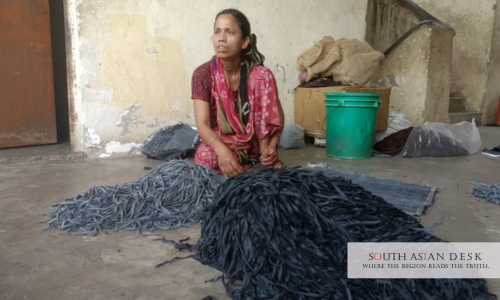
Al Jazeera reported that workers such as Shehnaz Bano and Putul Devi in New Delhi continue to work from small homes, often without formal contracts, predictable wages or social security benefits. Their work supports larger supply chains, but they are frequently treated as informal earners rather than recognised workers.
Shalini Sinha, a home-based work specialist at Women in Informal Employment: Globalizing and Organizing, told Al Jazeera that women home-based workers in India continue to face invisibility because the home is still seen mainly as a place of residence rather than a place of work.
That invisibility has practical consequences. Many home-based workers are paid by the piece, depend on contractors or middlemen, and have little bargaining power over rates, deadlines or rejected work. Because they are outside regular workplaces, labour inspections and occupational safety protections rarely reach them.
ILO Convention 177 Sets Equality Standard
ILO Convention 177 requires ratifying states to adopt a national policy on home work and promote equality of treatment between homeworkers and other wage earners.
The convention covers the right to form or join organisations, protection against discrimination, occupational safety and health, fair remuneration, social security coverage, access to training, minimum age protections and maternity protection.
Supporters say ratifying the convention would help India formally recognise home-based workers and bring them within the labour rights framework. It could also improve data collection, support collective bargaining and create clearer accountability for employers, contractors and supply chains that rely on home-based labour.
HomeNet International says the convention is important because it recognises home work as a form of work and provides a framework for fair treatment and social protection.
Women Informal Workers Face Added Burdens
The demand for equal rights is especially significant for women, who make up a large share of home-based workers globally and across South Asia.
ILO estimates show there were around 260 million home-based workers worldwide before the COVID-19 pandemic, representing 7.9% of global employment. About 56% of them, or 147 million, were women.
For many women in India, home-based work offers a way to earn while managing unpaid care duties, household responsibilities and social restrictions on mobility. But that flexibility often comes at the cost of low pay, irregular work and lack of recognition.
Workers may bear production costs themselves, including electricity, tools, space and materials. They may also face health risks from long hours, poor lighting, cramped rooms, repetitive tasks and exposure to dust or chemicals, depending on the nature of the work.
India Yet to Ratify Home Work Convention
India’s non-ratification of ILO Convention 177 remains central to workers’ demands. Ratification would not automatically solve all problems, but it would require the government to align domestic policy with the convention’s standards.
Campaigners argue that India’s labour framework still does not adequately account for home-based workers, particularly those linked to informal subcontracting chains. Without stronger legal recognition, workers often struggle to claim minimum wages, social security, maternity benefits, occupational safety protections or compensation for workplace harm.
The issue also intersects with global supply chains. Many products made or finished in homes eventually enter domestic and international markets, but the workers behind them often remain absent from formal compliance systems.
Calls Grow for Recognition and Social Security
As Convention 177 turns 30, labour organisations are pressing for home-based workers to be counted, recognised and protected.
Their demands include formal worker status, fair piece rates, access to social security schemes, safer working conditions, maternity protection, childcare support, skill training and the right to organise collectively.
Advocates also say better statistics are essential. If home-based workers are not properly counted in labour data, policy responses will remain weak and fragmented.
For India home-based workers, the anniversary of ILO Convention 177 has become more than a symbolic date. It is a renewed demand that work done inside the home should be treated as real work, and that workers producing for markets should receive the same dignity, protection and rights as those employed in formal workplaces.
Published in SouthAsianDesk, June 21, 2026
Follow SouthAsianDesk on X, Instagram and Facebook for insights on business and current affairs from across South Asia.