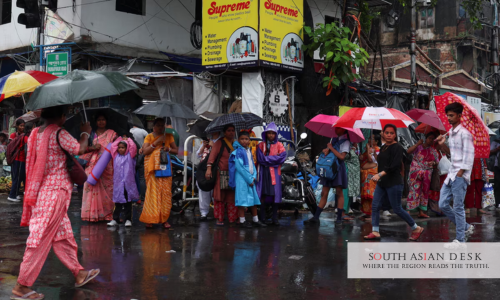
India July monsoon rainfall is expected to remain below normal after the country recorded one of its driest Junes in more than a century, raising concerns over crop sowing, rural incomes and food-price pressures.
The India Meteorological Department has forecast July rainfall at less than 94% of the long-period average. The warning comes after June rainfall was 39.8% below normal, making it the fifth-driest June since records began in 1901.
The monsoon is critical for India’s economy because it delivers around 70% of the country’s annual rainfall. It replenishes reservoirs, supports groundwater recharge and provides essential moisture for farms, especially in areas where irrigation remains limited.
July is particularly important because it is the main sowing month for kharif crops such as rice, cotton, corn, pulses and soybeans. A weak July could therefore have a much larger impact than a poor start in June.
India July Monsoon Rainfall Outlook Comes at a Critical Sowing Stage
The India July monsoon rainfall outlook has arrived at a sensitive point in the agricultural calendar. Farmers normally begin sowing summer crops in June and July once the southwest monsoon advances across the country.
This year, the monsoon reached Kerala three days late and then stalled across parts of western India for about two weeks. That slow start has already delayed sowing in several crop-growing regions.
Farmers had planted summer crops on 18.27 million hectares by June 25, nearly 23% lower than the same period last year. Rice planting was also behind last year’s pace, while soybean, cotton and corn acreage showed significant declines.
A recovery is still possible if rains improve in early July. However, the window is narrow. Delayed sowing can reduce yields, force farmers to switch crops or increase dependence on later rainfall.
Why a Dry June Matters
A dry June does not automatically mean a failed monsoon, but it raises the stakes for July. June rainfall helps prepare soil moisture, supports early sowing and determines how quickly farmers can move into the main planting season.
This year’s June deficit was unusually severe. India received only 99.5 mm of rainfall in June against a normal of 165.3 mm. That shortfall intensified heat in parts of northern India and slowed agricultural activity.
The concern now is that below-average monsoon rains in July could compound the damage. If July rainfall also disappoints, farmers may struggle to recover lost sowing time, and crop yields could come under pressure later in the season.
El Niño Adds to the Monsoon Risk
The IMD has linked the weak monsoon outlook to El Niño conditions, which are expected to strengthen during the southwest monsoon season. El Niño refers to unusually warm sea surface temperatures in the central and eastern Pacific Ocean, a pattern that can disturb global weather systems.
India has often seen below-normal monsoon rainfall during El Niño years. Not every El Niño causes drought, but the pattern increases uncertainty for agriculture and water management.
The IMD has also said neutral Indian Ocean Dipole conditions are expected to persist. That matters because the Indian Ocean Dipole can sometimes offset or amplify El Niño’s effect on the monsoon. With no strong positive Indian Ocean Dipole signal currently expected, El Niño remains a key risk factor.
Food Inflation and Crop Prices Under Watch
The monsoon outlook is closely tied to food inflation. A weaker monsoon can affect crop output, raise feed costs, reduce vegetable supply and increase pressure on food prices.
Rice is especially important because India is the world’s largest rice exporter and a major producer for domestic consumption. Delayed rice planting can affect market sentiment even before final production estimates are available.
Soybean planting is also being watched because India imports large quantities of edible oil. If domestic oilseed output weakens, the country may become more dependent on imported palm oil, soyoil and sunflower oil.
Cotton matters for India’s textile sector, while corn is important for animal feed and processed food supply chains. A broad-based sowing delay therefore has consequences beyond farmers alone.
Water Availability Is Another Concern
The monsoon is not only about crops. It also fills reservoirs, supports hydropower generation and replenishes drinking-water sources. Below-normal rainfall can put pressure on urban water supply, rural drinking-water systems and irrigation availability.
The IMD has warned that below-normal rainfall can create challenges for agriculture, water resources, hydropower, ecosystems and drinking-water availability. These risks are greater in rain-fed regions where farmers have limited access to canals, borewells or stored water.
If rainfall improves in the coming days, soil moisture may recover enough for sowing to pick up. But if the deficit persists through July, state governments may need to rely more heavily on contingency crop plans, water conservation measures and local advisories for farmers.
A Weak Start, Not Yet a Failed Season
The latest India monsoon forecast is worrying, but the season is not over. The southwest monsoon runs from June to September, and rainfall distribution can change quickly.
A strong spell in early or mid-July could help farmers recover part of the sowing delay. High government rice stocks may also soften immediate market pressure if rice output concerns increase.
Still, the warning from IMD is clear: July rainfall is expected to stay below normal, and that makes the coming weeks crucial for Indian agriculture.
For now, India’s dry June has turned July into the decisive month of the monsoon season. Farmers, traders and policymakers will be watching whether rains arrive in time to protect sowing, stabilise crop expectations and reduce the risk of renewed food inflation.
Published in SouthAsianDesk, July 1, 2026
Follow SouthAsianDesk on X, Instagram and Facebook for insights on business and current affairs from across South Asia.