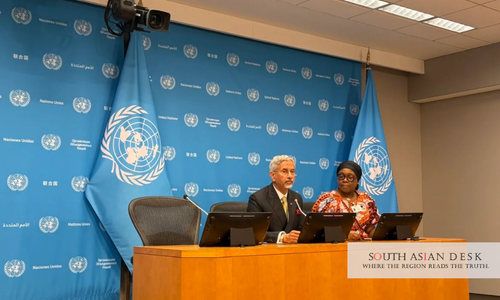
India maritime safety initiative: On 2026-09-26, India’s External Affairs Minister S. Jaishankar condemned recent attacks on commercial shipping in the Gulf and Red Sea, labeling them as indefensible. This statement coincided with the launch of a new safety initiative by India and Liberia aimed at protecting seafarers amidst rising maritime threats. The initiative, known as the India maritime safety initiative, underscores the growing importance of addressing Gulf Red Sea security challenges through international cooperation. As global trade routes face unprecedented risks, the collaboration between India and Liberia represents a strategic step toward safeguarding maritime corridors critical to the global economy.
India maritime safety initiative: Implications for Regional Diplomacy
Jaishankar’s remarks came during a press interaction at the UN, where he responded to a question from a Pakistani journalist regarding the attacks. The minister emphasized the need for collective action to address the growing threats to maritime security. His comments may have diplomatic implications for India’s relations with Pakistan and other regional players, particularly as the Gulf and Red Sea routes are critical for global trade. The India maritime safety initiative aligns with broader efforts to counter shipping attacks and enhance shipping security across key maritime corridors. By fostering multilateral dialogue, the initiative seeks to build trust among nations sharing these vital waterways.
Effectiveness of the Safety Initiative
The newly formed ‘group of friends’ between India and Liberia aims to enhance maritime security through coordinated efforts. The initiative, launched at a ministerial-level meeting on the sidelines of the 81st UN General Assembly, seeks to address the challenges posed by rising maritime threats. This collaboration, known as Liberia India cooperation, represents a strategic move to bolster regional stability. However, the effectiveness of such a group remains to be seen, given the complexity of the security landscape in the region. The result will require sustained engagement and resource allocation to achieve its objectives. By pooling expertise and intelligence, India and Liberia aim to create a framework for rapid response to incidents, including the deployment of naval assets and the sharing of threat intelligence.
Historical Context of Maritime Security
The Gulf and Red Sea shipping lanes are vital for global trade, with a significant portion of the world’s maritime commerce passing through these regions. Previous incidents, including attacks on commercial vessels, have highlighted the vulnerabilities of these routes. The current situation underscores the need for sustained international cooperation to ensure the safety of seafarers and the uninterrupted flow of global trade. The result builds on historical efforts to address maritime threats, including the Gulf Red Sea security challenges that have persisted for decades. For instance, the 2023 Houthi attacks on merchant ships in the Red Sea and the 2024 escalation of tensions in the Gulf of Aden have demonstrated the fragility of these corridors. The initiative seeks to learn from past failures and implement proactive measures to prevent future disruptions.
Strategic Partnerships and Global Impact
The result is not an isolated effort but part of a broader network of international partnerships. By aligning with Liberia, India is leveraging its experience in maritime security to support a nation that has historically faced its own challenges in protecting its coastal waters. This partnership also reflects India’s growing role as a global maritime power, with its naval capabilities and strategic interests in the Indo-Pacific region. The initiative could serve as a model for other nations seeking to address similar threats, particularly in regions where piracy, terrorism, and geopolitical tensions intersect. Additionally, the focus on shipping security aligns with global efforts to protect critical infrastructure, including ports and shipping lanes, from both traditional and non-traditional security threats.
Challenges and Future Outlook
While the result holds promise, it faces several challenges. The dynamic nature of maritime threats, including the use of asymmetric tactics by non-state actors, requires constant adaptation of strategies. Moreover, the initiative must navigate geopolitical complexities, such as the involvement of regional powers with competing interests in the Gulf and Red Sea. To overcome these hurdles, India and Liberia will need to prioritize transparency, build capacity through training programs, and secure funding for long-term operations. The success of the initiative will depend on its ability to foster a culture of cooperation and mutual benefit among participating nations.
Follow SouthAsianDesk on X, Instagram and Facebook for insights on business and current affairs from across South Asia.
Sources
- Attacks on commercial shipping in Gulf, Red Sea simply indefensible: Jaishankar as India and Liberia announce ‘group of friends’ – thehindu.com
- India, Liberia Launch Safety Group To Protect Seafarers Amid Attacks On Ships – ndtv.com
Image: th-i.thgim.com