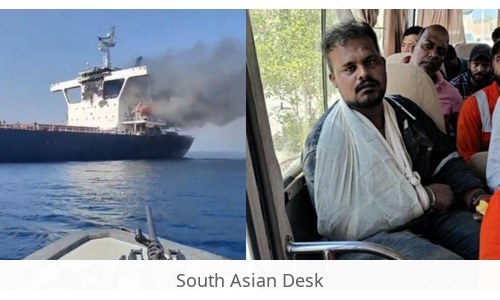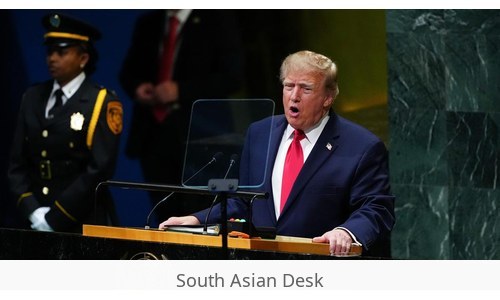
On September 23, 2026, U.S. President Donald Trump expressed strong support for the proposed India-Middle East-Europe economic corridor, emphasizing its potential to enhance connectivity and trade while addressing security concerns related to Iranian influence in the region. The corridor aims to boost connectivity, trade, and sustainability across South Asia, the Middle East, and Europe, according to statements made during Trump’s speech. This initiative aligns with broader regional geopolitics and could reshape South Asia trade dynamics by diversifying energy routes and reducing reliance on Iranian-controlled infrastructure. As part of a strategic effort to counter Iranian influence in West Asia, Trump highlighted how Iran’s recent terrorist attacks on commercial shipping underscore the urgency of shifting energy infrastructure away from Iranian checkpoints. The corridor, he argued, represents a critical step toward securing alternative trade and energy pathways that bypass Iranian-controlled zones, thereby enhancing regional stability and economic resilience.
India-Middle East-Europe Economic Corridor: Implications for U.S.-India Relations
Trump’s endorsement of the corridor highlights a strategic shift in Iran energy infrastructure away from Iranian checkpoints. The initiative aligns with historical U.S.-India relations on energy security and trade diversification, particularly in light of shared concerns over Iranian influence in the region. Analysts note that increased U.S. involvement in South Asian infrastructure could reshape regional dynamics, particularly in relation to existing partnerships with Gulf states. The corridor’s implementation may also require navigating complex diplomatic negotiations involving multiple stakeholders, including Gulf nations, European partners, and South Asian countries. This development underscores the corridor’s potential to redefine regional geopolitics and strengthen U.S.-India relations through shared strategic interests in energy security and trade. The corridor could also serve as a counterbalance to China’s Belt and Road Initiative, offering an alternative framework for infrastructure development in the region that aligns with U.S. and Indian strategic priorities.
Economic Benefits for South Asia
The India-Middle East-Europe economic corridor could significantly enhance South Asia trade dynamics by creating new commercial routes and reducing reliance on traditional shipping lanes. For countries like India, the initiative presents opportunities for increased investment in infrastructure projects and deeper economic integration with Europe. The corridor’s proposed routes would connect India’s western ports with Middle Eastern energy hubs and European markets, facilitating the movement of goods, energy, and services across continents. However, challenges remain in securing funding, ensuring regional cooperation, and addressing logistical hurdles in transit corridors spanning multiple jurisdictions. This development also reflects evolving regional geopolitics, as nations seek to balance economic growth with strategic security interests. The corridor’s success will depend on sustained collaboration among stakeholders, including private sector participation and multilateral agreements. By fostering closer economic ties between South Asia, the Middle East, and Europe, the corridor could catalyze a new era of regional cooperation and mutual prosperity.
Energy Supply Chains and Security
By shifting Iran energy infrastructure away from Iranian checkpoints, the the result aims to reduce regional dependency on routes vulnerable to disruption. This aligns with broader U.S. strategic interests in stabilizing energy markets and countering Iranian influence in West Asia. The initiative could also strengthen energy security for European markets by diversifying supply routes and reducing exposure to geopolitical tensions in the Persian Gulf. Such a shift underscores the corridor’s role in redefining regional geopolitics and fostering new alliances. Analysts suggest that the corridor may also serve as a counterbalance to China’s Belt and Road Initiative, offering an alternative framework for infrastructure development in the region. Trump’s emphasis on the corridor as a solution to Iran’s disruptions highlights the U.S. commitment to ensuring energy security through diversified and resilient supply chains that bypass Iranian-controlled zones.
Challenges and Future Outlook
While the the result holds significant promise, its implementation faces several challenges. Securing funding for large-scale infrastructure projects remains a critical hurdle, requiring collaboration between governments, international financial institutions, and private investors. Additionally, ensuring seamless coordination across multiple jurisdictions will be essential to avoid delays and inefficiencies. The corridor’s success will also depend on maintaining stable diplomatic relations among participating nations, particularly in light of ongoing tensions in the Middle East. As the initiative progresses, it will be crucial to address these challenges while leveraging the corridor’s potential to enhance economic connectivity and regional stability. The corridor’s development will require sustained political will, robust multilateral agreements, and a commitment to inclusive and sustainable infrastructure projects that benefit all participating nations.
Follow SouthAsianDesk on X, Instagram and Facebook for insights on business and current affairs from across South Asia.
Sources
- Donald Trump voices strong support for India-Middle East-Europe economic corridor – thehindu.com
- Trump Pitches India-Middle East-Europe Corridor As Solution To Iran Problem – ndtv.com
Image: th-i.thgim.com