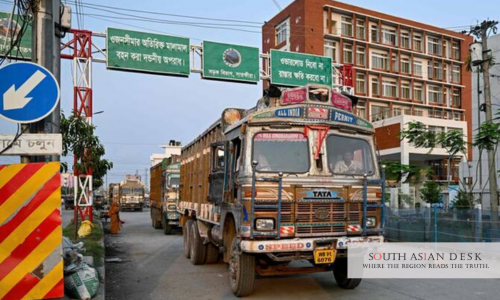
India migrant evictions are creating fear and uncertainty in Bangladesh’s border communities, where residents say a growing deportation drive has left families anxious about sudden pushbacks, disputed identities and possible violence along the frontier.
The concern is especially sharp in southwestern Bangladesh, including areas near Khulna, Jessore and Satkhira, where villages sit close to the India-Bangladesh border. The two countries share a long and porous boundary of more than 4,000 kilometres, and communities on both sides have historically been connected by family ties, informal labour migration and shared language.
That history has made the current crackdown more sensitive. India says it is acting against undocumented migrants, while Bangladeshi officials insist that no one should be forced across the border without proper nationality verification.
India Migrant Evictions Raise Alarm Along the Border
The latest tensions follow India’s stepped-up efforts to identify and remove undocumented migrants, particularly in West Bengal, the Indian state bordering Bangladesh. The campaign has intensified since political change in the state, where authorities have moved to set up holding centres and increase action against people described as illegal Bangladeshi migrants.
Critics say the campaign risks targeting Bengali-speaking Muslims, including people who may have lived in India for years or who lack formal documents because of poverty, migration, illiteracy or broken family records.
For many border residents, the problem is not simply whether migration is legal or illegal. The worry is that people may be pushed across without a transparent process to verify who they are and where they belong.
Bangladesh has said it is willing to accept its own citizens, but only after proper verification by both countries. Officials have also warned that unidentified people cannot be allowed to enter simply because Indian authorities claim they are Bangladeshi.
Bangladesh Border Towns Fear Sudden Pushbacks
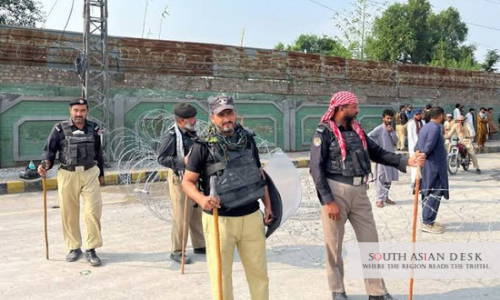
In Bangladeshi border towns, residents fear that any escalation could quickly become dangerous. Border areas are often heavily patrolled, and confrontations between security forces can place civilians at risk.
Bangladeshi border guards have increased patrols and used loudspeakers to warn that nobody should enter the country without verification. Officials have also reported thwarting several attempts to force people across the border.
The situation has left some families stranded in buffer areas between the two countries. Reports from the border describe women and children spending days near the “zero line”, dependent on nearby villagers for food and water while officials on both sides argue over responsibility.
These scenes have deepened public concern in Bangladesh, where many people view forced entry as a violation of sovereignty and due process.
Humanitarian Concerns Grow
The human cost of the crackdown is becoming increasingly visible. Some migrants say they have faced violence while trying to cross into Bangladesh. Others remain separated from relatives who are detained in India.
Children are among those affected. In some cases, Bangladeshi children have reportedly been repatriated while their parents remain in Indian jails on illegal entry charges. Such separations raise difficult questions about documentation, citizenship, family unity and the treatment of minors.
Rights groups say the issue highlights the vulnerability of poor migrant families who move for work and often lack legal protection. They argue that even undocumented migrants must be treated according to due process and should not be expelled through informal or coercive methods.
There are also concerns that Rohingya refugees could become caught in the crackdown. Bangladesh already hosts more than one million Rohingya refugees from Myanmar, and officials are wary of any move that could push additional vulnerable populations into the country.
India-Bangladesh Relations Face Another Strain
The migrant eviction dispute has added pressure to India-Bangladesh relations at a time when both sides are already navigating political and diplomatic tensions.
For India, undocumented migration has become a major domestic political issue, particularly in border states. For Bangladesh, the priority is to prevent unverified push-ins and avoid absorbing people whose nationality has not been formally established.
The dispute is difficult because both countries have legitimate concerns. India wants to enforce immigration laws and address undocumented migration. Bangladesh wants proof before accepting people sent across the border. The challenge is ensuring that enforcement does not become arbitrary, communal or violent.
Verification Is the Key Test
The central issue is verification. If a person is proven to be a Bangladeshi national, repatriation can take place through legal and diplomatic channels. But if people are pushed across without documents, hearings or proper bilateral confirmation, the process risks creating statelessness, family separation and further border instability.
The India-Bangladesh border has always been more than a line on a map. It cuts across communities, histories and families. That is why any migration crackdown must be handled with care.
For now, Bangladesh’s border towns remain tense. Residents fear more pushbacks, officials are watching the frontier closely, and undocumented families are left wondering whether they will be treated as migrants, citizens, foreigners or simply people with nowhere safe to go.
Published in SouthAsianDesk, June 28, 2026
Follow SouthAsianDesk on X, Instagram and Facebook for insights on business and current affairs from across South Asia.