Abstract
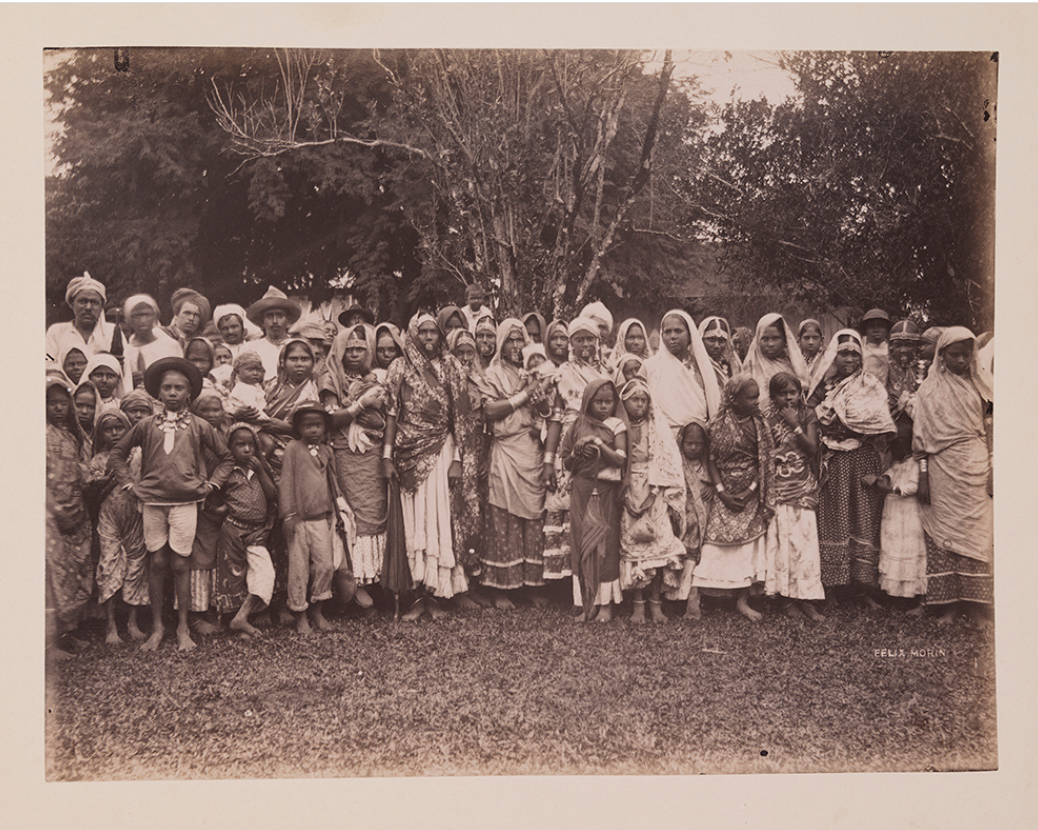
Between the eighteenth and twentieth centuries, over four million Indians were displaced across the oceans as enslaved and indentured labourers. Departing primarily from Eastern and Southern India, this massive diaspora presents a critical counter-narrative to dominant historical discourses that overwhelmingly associate colonial forced migration with the transatlantic slave trade of African populations. Yet, while nations like Ghana and various Caribbean countries actively demand formal apologies and reparations from former European powers, India’s narrative remains conspicuously absent from the global discourse on colonial subjugation.
This paper investigates the profound institutional amnesia surrounding this migratory era within India’s contemporary public memory and museological landscape. While major metropolitan museums remain silent on the subject—with only a singular, brief gallery existing in Patna, Bihar—the physical remnants of this history endure in four specific coastal regions: Kerala, Tamil Nadu, West Bengal, and Puducherry. Three of these locations explicitly link the Indian subcontinent to broader transatlantic slavery networks.
Utilising a historical-spatial framework, this study examines these four domestic transit points as the primary material witnesses to an unprecedented global displacement. Driven by colonial deceit or physical coercion, these migrations ultimately laid the foundations for a resilient, global Indian diaspora. This paper argues that these sites represent not only the tyranny of European maritime exploitation but also the foundational geography of a forgotten legacy. By contextualising these neglected landscapes, this research seeks to bridge the gap between global subaltern history and Indian national consciousness, advocating for the critical integration of these transit points into mainstream historical discourse.
Keywords: Indentured Labour, Forced Migration, Colonialism, Indian Diaspora, Sites of Memory, Transatlantic Slavery.
Introduction
कैसे मैं गाऊँ पूर्वजों की कहानियां,
अँखियाँ में आंसू भरे आये रे बिदेसिया!
(How do I sing the song of the tales of my ancestors,
My eyes get filled with tears, O Migrant!)
These lines from the song ‘Bidesia ’ present the struggles of indentured labourers, who took arduous ship voyages to an unprecedented future from India to the Caribbean, Indian Ocean and Pacific regions. It also stands as one of the rare and old artistic examples of documenting the indentured and forced migrations of Indians. The Irony? While it was sung in the Indian language(s), it is NOT from India.
It is impossible to imagine India’s rich history without its peninsula, a landmass that has played a monumental role in shaping the country’s heritage, culture, and cuisine. From its coastal forts to its sweeping beaches, nearly every spot along the Indian peninsula has a story to tell. Yet, from a historical perspective, there remains a largely unrecognised chapter during which approximately two million people from the Indian subcontinent were transported across the globe as slaves and indentured labourers. Between the mid-16th century CE and the early 20th century CE, these mass migrations were systematically carried out—often through coercion or false promises—by the British, Portuguese, French, and Dutch East India companies. A significant portion of these movements was deeply intertwined with the transatlantic slave trade.
Today, only five primary locations in India stand as physical witnesses to this forgotten era: Kochi (Kerala), Karwar (Karnataka), Pulicat (Tamil Nadu), Pondicherry, and Kolkata (West Bengal). Remarkably, examining the history of these sites collectively offers a comprehensive overview of European colonialism in India. To uncover the realities of these voyages and territories, we must turn back the pages of history.
The Tale of ‘Godly’ Africans?
Historically, India’s first encounter with transatlantic slavery occurred during the 16th century. The Portuguese were the first to initiate this trade, consolidating their influence along India’s western coast following the arrival of explorer Vasco da Gama in 1498 CE. However, they had been operating slave markets as early as the 1440s in regions south of the Sahara Desert. Native Africans were forcibly uprooted from their villages and families, only to be sold in the markets of the Mediterranean. These tragic events, accompanied by forced conversions to Christianity, were celebrated by the Portuguese as victories for the faith, framed ideologically as a “journey to salvation.” (Magalhaes, 1997, p. 143)
Upon arriving in India, the Portuguese actively countered the influence of Arab merchants, who held a monopoly on maritime trade at the time and dominated local politics along the western coast. (Sanyal, 2016, pp. 158-175) This strategy led to the establishment of key regional headquarters, with Goa serving as the administrative hub for their eastern colonies. From here, the Portuguese not only brought African slaves into India but also exported Indian slaves from Goa, Calicut (modern-day Kozhikode in Kerala), and Bengal to their other Asian colonies, as well as to Lisbon. (Ghosh, 2012) (Forbes, 1993)
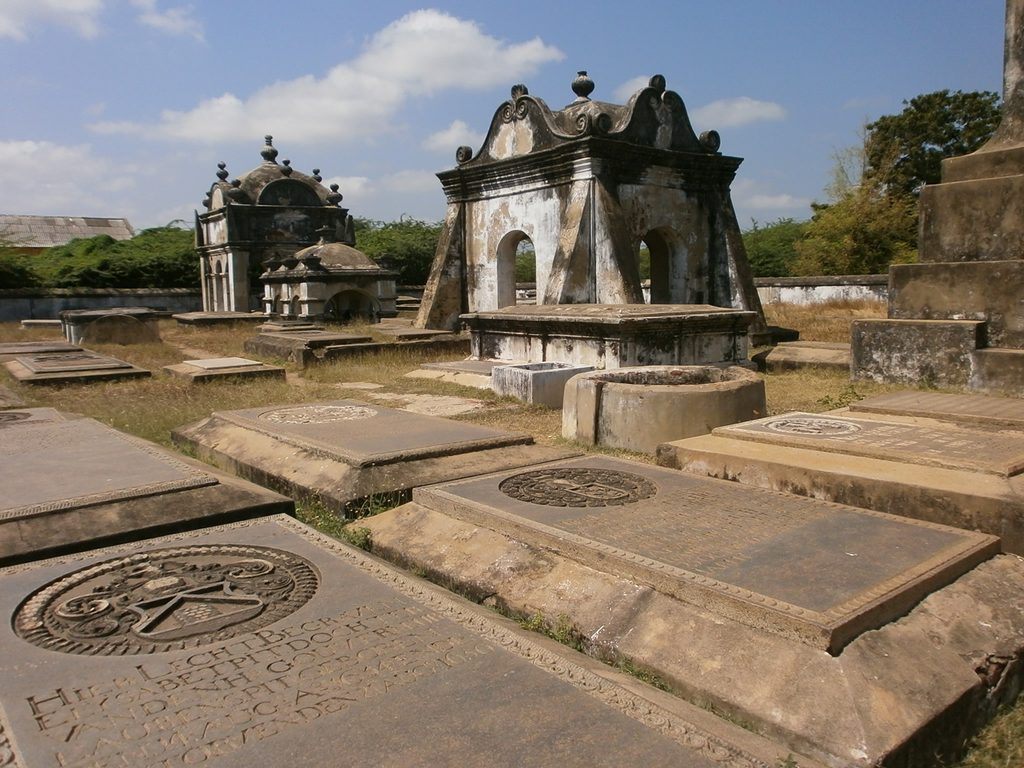
While the history of Indian slaves transported by the Portuguese remains sparsely documented, the burial sites of some African slaves brought to the Malabar Coast can still be seen at Mangattumukku in Mattancherry (Fort Kochi, Kerala). In 1663 CE, when the Dutch attacked the Portuguese settlement of Fort Kochi, retreating Portuguese forces reportedly carved out niches in their thick stone walls, chained African slaves inside them, and placed treasures beneath their feet. The slaves were made to promise to guard the wealth until the descendants of the Portuguese returned to claim it. The niches were then sealed with mortar—an act paradoxically viewed by residents as a sacred “sacrifice.” (Lucy, 2020, pp. 872-876) It is associated with the ages-old myth and practice of maritime sailors and voyagers to “sacrifice” a soul to protect the ship, which spread to the mainland.
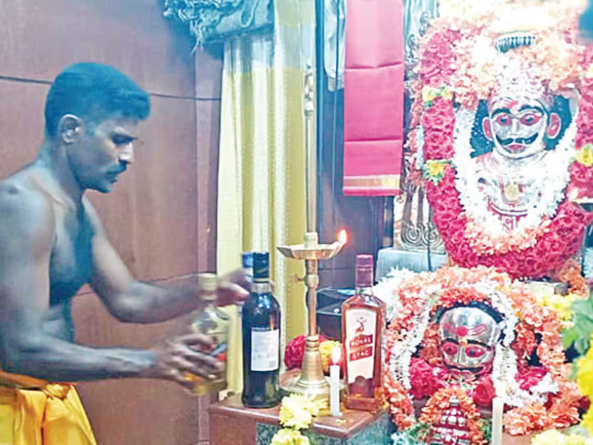
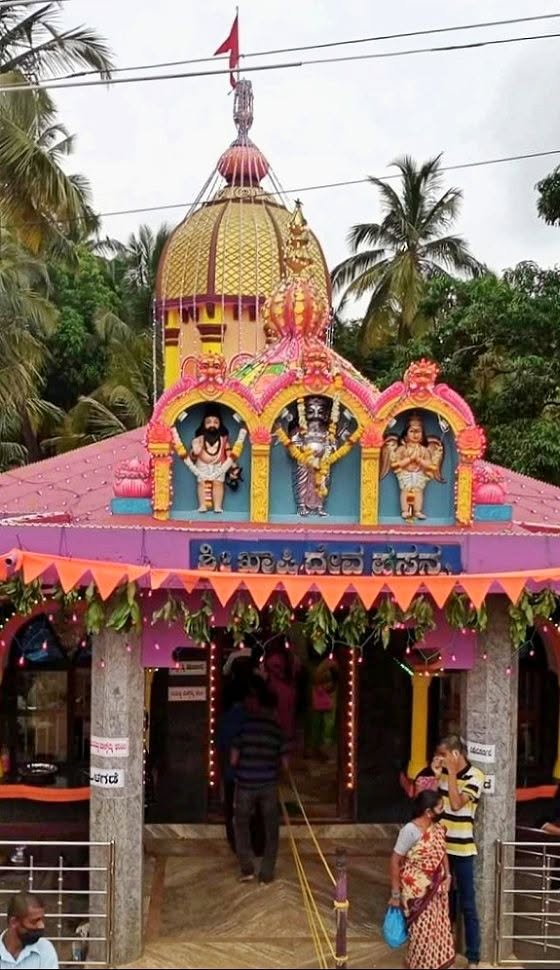
Following India’s independence in 1947, renovation work in Fort Kochi led to the demolition of an old building near the Dutch cemetery at Mangattumukku, where the skeletal remains of these chained African slaves were discovered. (John, 2016) While the legendary treasure remains missing, the remains of these slaves became the focus of local folklore and veneration. Locals believe their spirits transformed into a protective deity known as Kappiri Muthappan—a name combining the Malayalam words Kappiri (a derivative of Kaafir, used locally to denote an outsider or African) and Muthappan (meaning grandfather). Today, devotees offer items such as toddy, cigars, fried fish, meat, and eggs to the deity.
Similarly, the shrine Shri Khapri Deva Temple at Karwar, in North Karnataka, is dedicated to the holy Kappiri. There are multiple myths revolving around it that identify him as a slave who met the same fate as in Kerala or as the one who escaped the Portuguese shackles and healed the local fishermen folk. Despite having disappeared after some years, his veneration remains to ward off negativity in the area. The common factor in them stands as the same Khapri or Kappiri, who came from Africa. The offerings here too remain the same.
During a 2009 visit to Mattancherry as a teen, I came across the Kappiri Muthappan shrine—a place where people made traditional offerings of alcohol and tobacco to a mysterious “African.” The impression was quickly eclipsed by my visit to the Mattancherry Palace, and it took over a decade to connect the dots. Only years later did I realise I had stood before a poignant reminder of African slavery in India.
The Lost Chapter of the Mighty Dutch
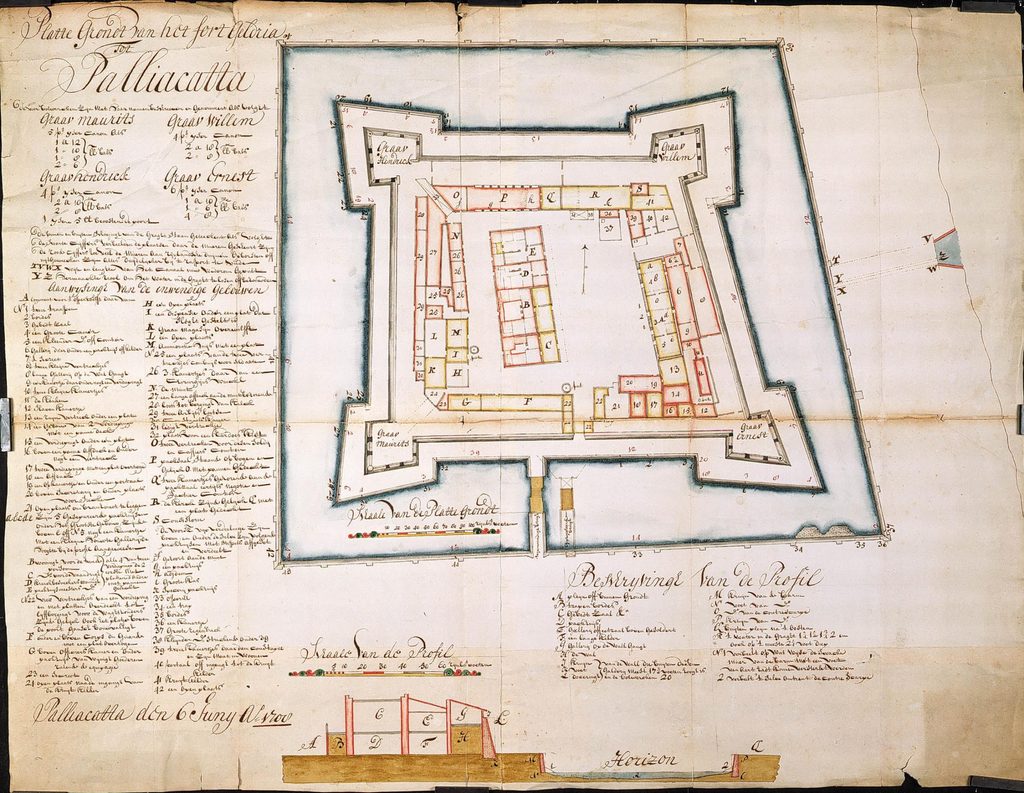
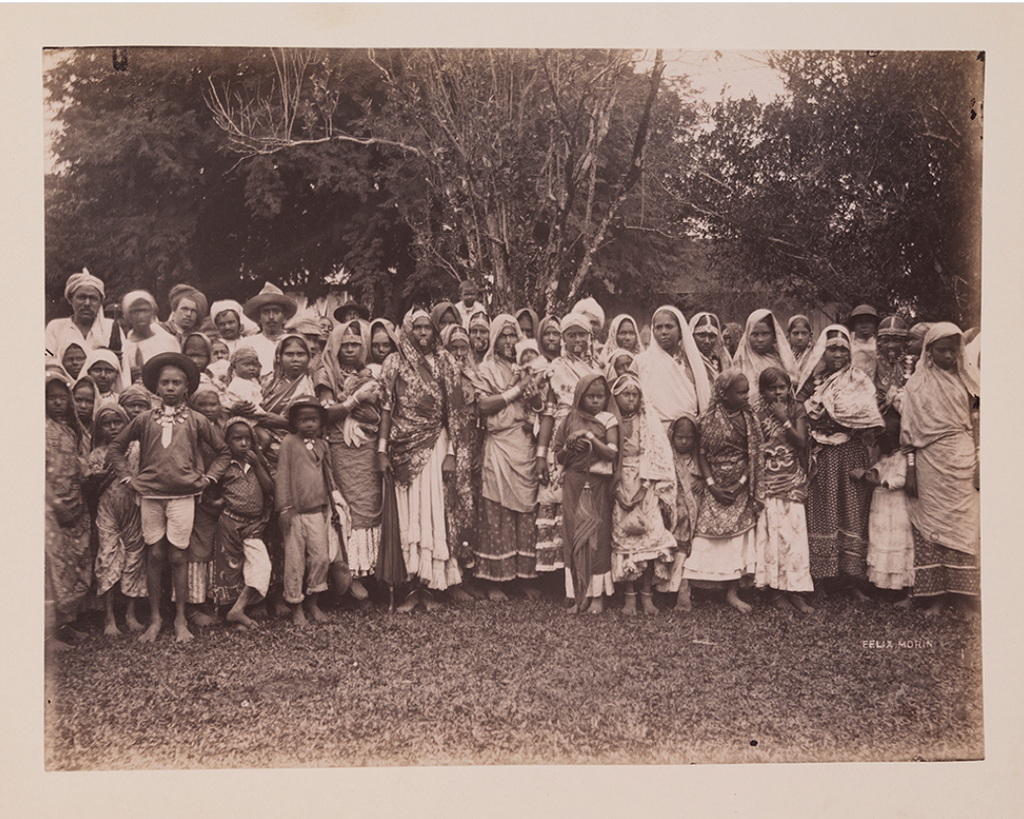
By the mid-17th century, intense conflicts with local rulers and the rising power of the Dutch forced the Portuguese to cede ground. As the Dutch East India Company (VOC) grew more powerful, it established colonies in India and further east, notably at Batavia (present-day Jakarta, Indonesia), where the indigenous population was expelled following the city’s capture. (Wink, 2003, pp. 139-141) Facing an acute shortage of manpower for their factories, plantations, and colonial infrastructure, the Dutch initially negotiated with the Portuguese to supply slaves from Mozambique. However, due to high mortality rates during the long voyage, the Dutch turned to India for its geographic proximity. Leveraging their strong presence at Fort Geldria in Pulicat (built in 1613 CE) and its surrounding areas, they began trafficking local Tamils to Batavia as slaves. (Chavan, 2019)
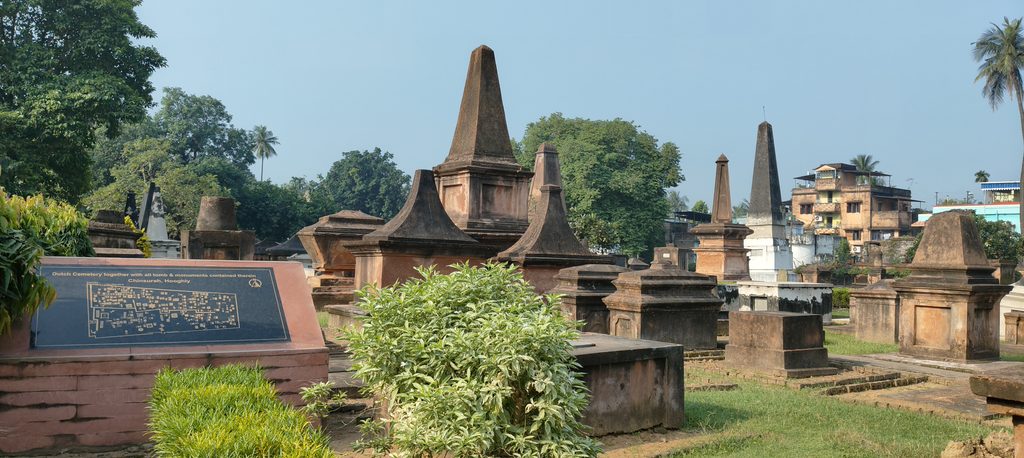
By the 1650s, when the Dutch influence expanded northwards to their colony at Chinsurah in Bengal, the slave migrations weren’t limited to Batavia, but also expanded to Mauritius long before the French and the British came into the picture. The slaves were brought from the Bengal hinterland and even Arakan in Myanmar. This also gave way to the development of an active Dutch settlement at present-day Baranagar (now in North 24 Parganas), which not only had a small harbour and a factory, but also a red-light area which consisted of women from Bengali and Malay ethnicities.
There is an interesting aspect of the Dutch slave trade in Bengal. Among the women who were initially sent from Bengal to Batavia was one Maai Angela Van Bengale, who was then transported to the Cape of Good Hope in present-day South Africa. Her daughter Anna de Coningh went on to become the wife of early Swedish explorer Olof Bergh, who was not only one of the first owners of a wine estate in South Africa, but also among the first Europeans to write about the country.
Over time, Indian slaves were distributed across other VOC territories, including Ceylon (Sri Lanka) and various East Indies outposts. (Wink, 2003, p. 141) More than 50,000 Indians were transported to Batavia by the early 1800s, with many of their descendants eventually assimilating into the local Indonesian population. (Chavan, 2019)
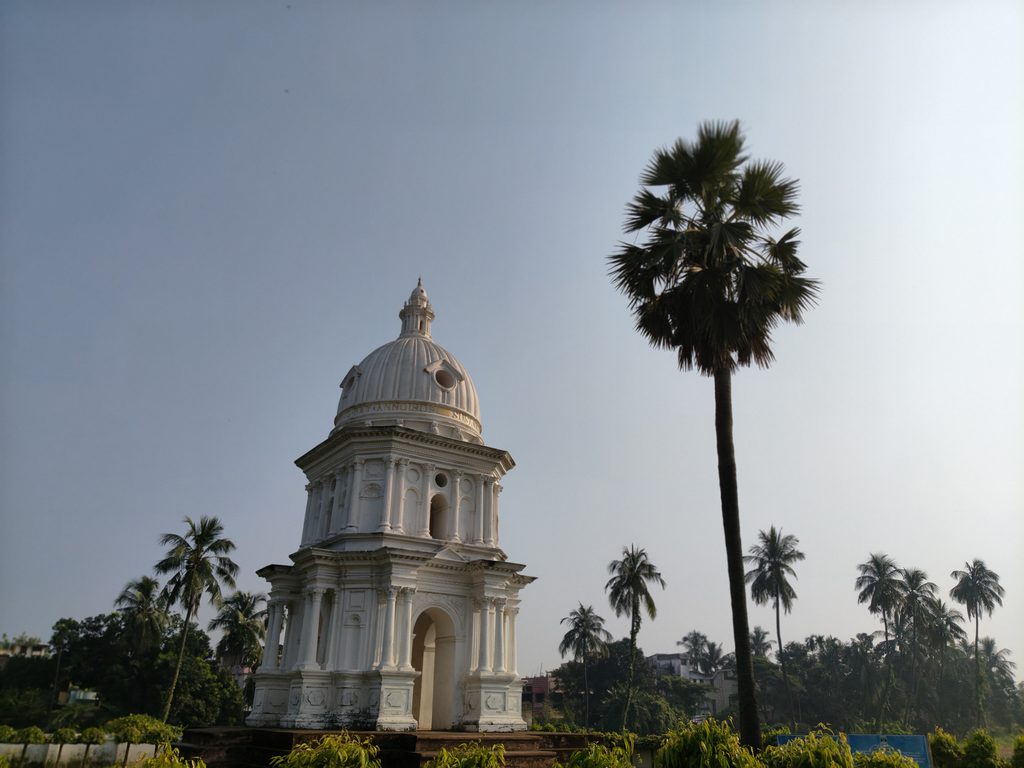
As Dutch influence in India waned and finally vanished by the 1840s, this specific system of human trafficking faded away. Today, the imposing ruins of Fort Geldria stand as the sole silent witness in India to this overlooked epoch of Dutch colonial peak power. Now managed by the Archaeological Survey of India (ASI), the fort serves as a tourist destination, offering a picturesque view of the Bay of Bengal.
While the slavery migrations under the Dutch had ended in India, its other aspect was about to take place in less than a century.
Slaves to Labourers: The French System
By the early 18th century, the Dutch began losing their footing in India after notable military defeats by local rulers like Marthanda Varma, coupled with the rising aggression of the French and British during the Seven Years’ War.
The French had established a formidable strategic presence in eastern India at Chandannagore (West Bengal) and in southern India at Pondicherry, Karaikal, Mahe (now in Kerala), and Yanam (now in Andhra Pradesh). They also expanded into the southwestern Indian Ocean, establishing control over a territory they named Isle de France (comprising modern-day Mauritius and its surrounding islands). This region held immense strategic value, situated dead centre along the major maritime trade routes linking Europe and the Atlantic to India, the East Indies, and broader Asia. To develop the infrastructure of these islands, the French required a massive influx of labour. (Parsuramen, 2023)
Following the precedents set by the Portuguese and Dutch, the French began recruiting Tamils as labourers, sailors, carpenters, and slaves. In 1728 CE, the first cohort of Tamil labourers arrived in Mauritius from Pondicherry. (Parsuramen, 2023) By the late 19th century, workers from other French enclaves like Karaikal, Mahe, and Yanam were being systematically shipped to Réunion Island and Mauritius. (Pillai, 2010)
As overt chattel slavery faced global legal bans, the French adapted by introducing structured labour contracts. Before departure, workers appeared before a local magistrate to formally declare that they were travelling voluntarily. Under the framework established for Réunion Island, workers signed on for five years of labour in exchange for a monthly wage of $4 alongside fixed food rations. (Maharaj, 2018)
By 1860, the French not only abolished slavery from their end, but also signed a treaty with the British that enabled them to bring more indentured labourers from British-ruled colonies and take them to the Caribbean islands of Guadeloupe and Martinique (the French Antilles). (Northrup, 2000)
As the Tamil population grew in Mauritius, a steady stream of merchants, businessmen, and traders from Tamil Nadu settled there permanently, laying the foundation for today’s prominent Indo-Mauritian community. (Parsuramen, 2023)
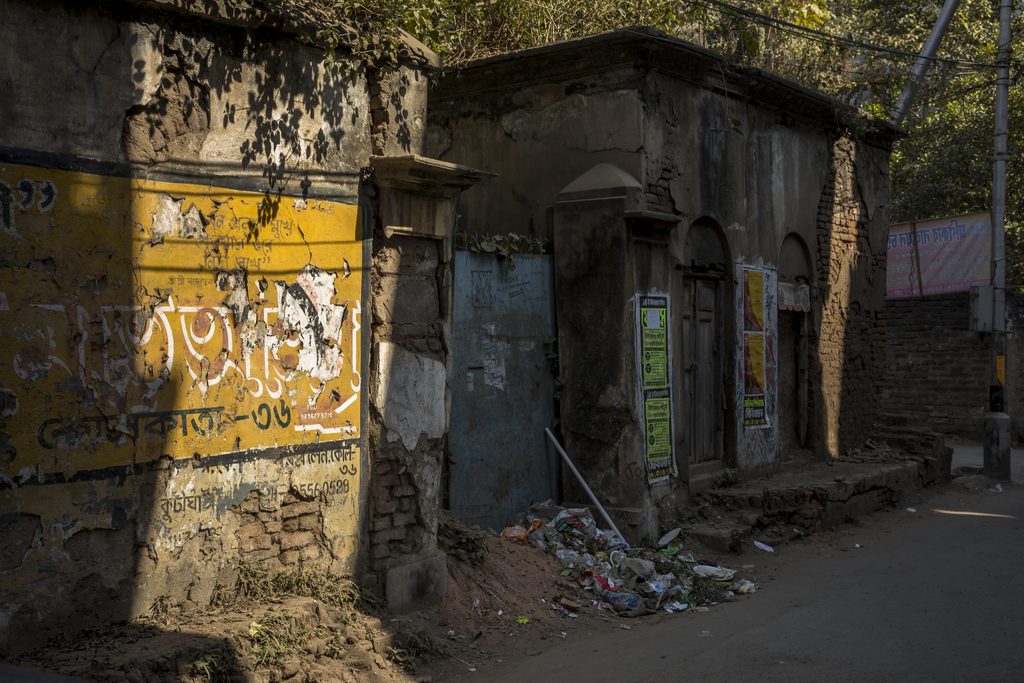
The primary modern physical marker of this French-era migration is the Memorial for Indian Indentured Workers in Pondicherry. Validated under UNESCO’s “Route of Slavery and Indenture” project, and championed by the Global Organisation of the People of Indian Origin (GOPIO, Réunion Chapter) and the HISTORUN Association, the memorial features the Stèle de Mémoire (commemorating the 16th to 19th centuries), installed in January 2010. (Varma, 2022) Unfortunately, this monument remains largely unnoticed by standard tourists, visited primarily by the descendants of the indentured labourers who return annually to pay their respects.
The Legacy of Eastern India
By the early 19th century, having successfully outmanoeuvred the French and Dutch, the British Empire emerged as the dominant global superpower. Amid growing international and domestic political pressure, Britain abolished the slave trade in 1807 CE, culminating in the Slavery Abolition Act of 1833. (Mukherjee, 2023, pp. 2-4) While a victory for human rights, the abolition caused widespread panic among colonial plantation owners reliant on manual labour for sugar, tea, coffee, cotton, and cocoa production across the Caribbean, the Indian Ocean, and the Pacific. Colonial experiments with Irish, emancipated African, and Chinese indentured labourers proved largely unsustainable due to climate mismatches or demands for higher wages by the late 1820s. Consequently, the focus shifted heavily toward India.
Once a core driver of global trade, India’s economic output had been severely hollowed out by exploitative British fiscal and commercial policies. These structural changes left traditional artisans and agrarian communities impoverished, stripping millions of their livelihoods. Once a premier exporter of refined textiles, India was reduced to a captive consumer market for finished British goods manufactured during the Industrial Revolution using raw materials extracted from India itself. Agrarian lands historically dedicated to food grains were forcibly converted to cash crops like opium and indigo under highly oppressive land revenue systems. This structural collusion between the British administration and local landlords (Zamindars) triggered devastating man-made famines, systemic poverty, and destitution across rural India. (Mukherjee, 2023, pp. 12-21) Simultaneously, the social landscape was weighed down by regressive practices like Sati and rigid untouchability, leaving women and lower-caste communities particularly vulnerable to economic and social exploitation.
By 1810 CE, Mauritius fell under British control, and the colonial government began experimenting with small groups of Indian labourers as early as 1830 CE. (Kauleshwar Rai, 1983) However, brutal corporal punishment and unrestricted working hours initially discouraged large-scale migration. Following regulatory adjustments to transport and accommodation, a formal “experiment” was launched in 1834 CE, when 36 Dhangar tribal labourers from the Chhota Nagpur region of eastern India were transported to Mauritius. These individuals appeared before a British colonial officer to sign a written contract binding them to work on sugarcane plantations for a period of five to ten years, marking the formal dawn of the Indian indentureship system. (Jha, 2019, pp. 27, 72)
These labourers were labelled “Coolies”—a term derived from the Tamil word Kuli (or potentially Telugu) meaning daily wages. As the system proved highly profitable in Mauritius, it was expanded to the Caribbean in 1838 CE. The inaugural group, known as the “Gladstone Coolies,” was sent to work on plantations owned by John Gladstone (father of the future British Prime Minister William Gladstone) in British Guiana. (Thomas, 1985) These workers were primarily recruited from modern-day Uttar Pradesh and Bihar.
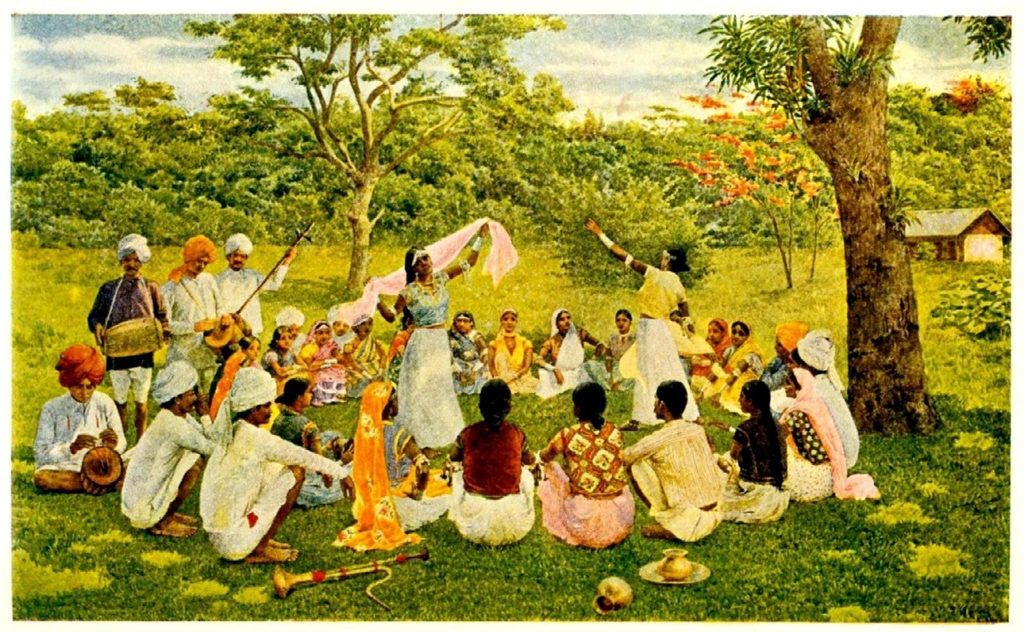
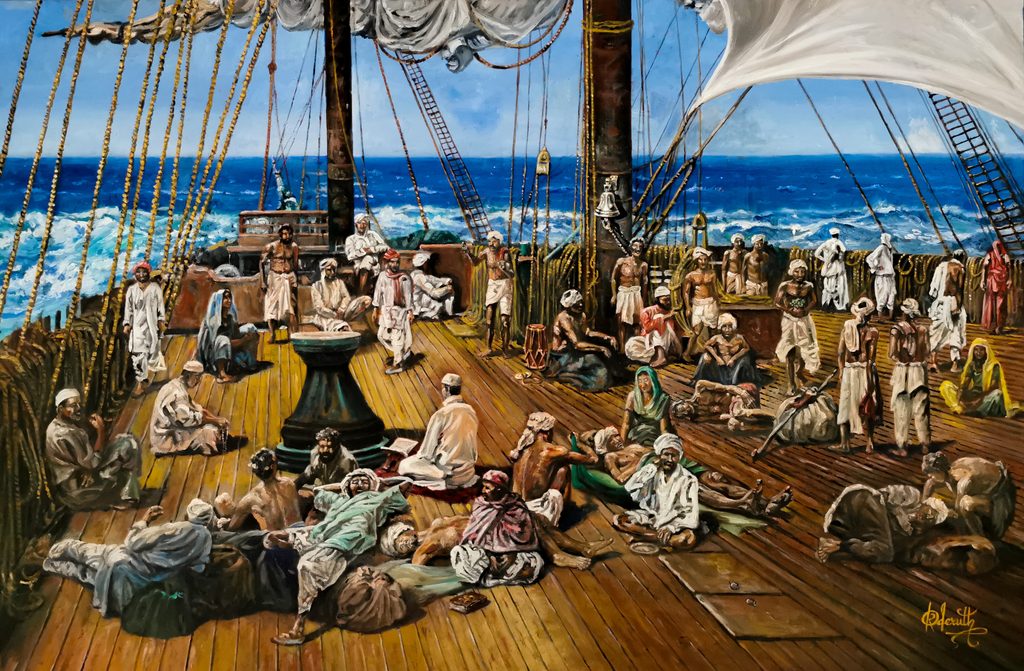
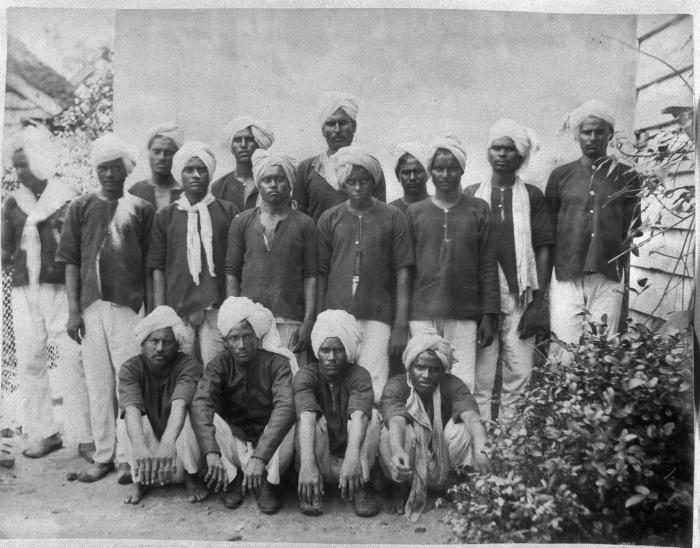
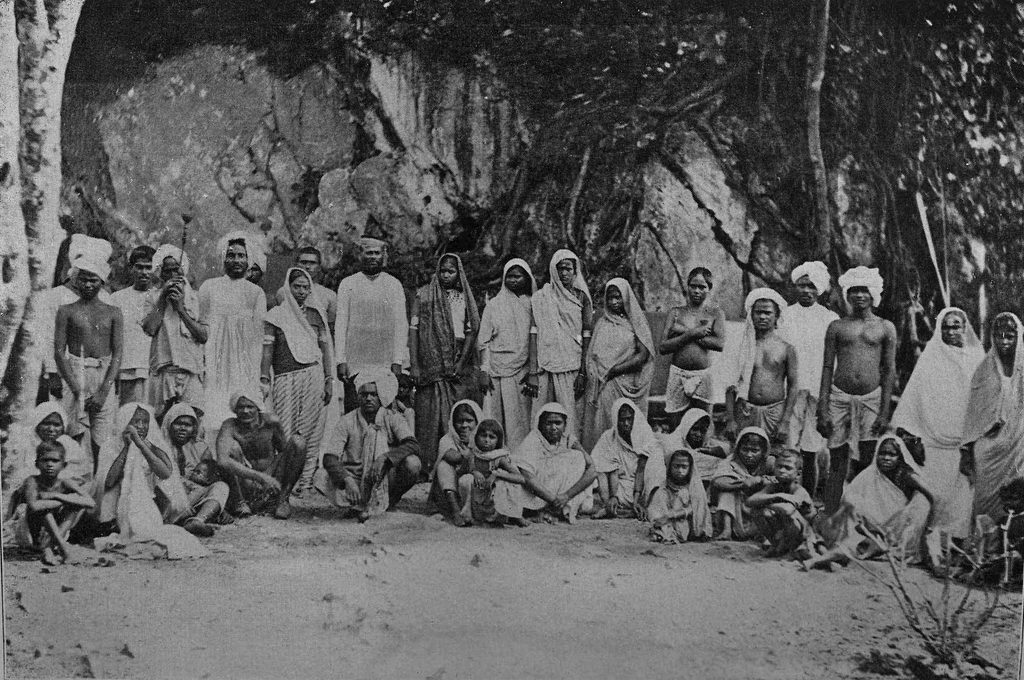
By the early 1900s, the recruitment apparatus extended across western Uttar Pradesh, Punjab, and as far north as Peshawar (in modern-day Pakistan), alongside southern networks in Tamil Nadu and Andhra Pradesh. Locally, these labourers came to be known as Girmitiyas (a linguistic corruption of the English word “Agreement”) or Kantrakis (derived from “Contract”). They were gathered by local recruiters known as Arkatis (from the English word “Recruiter”) and processed through specialised depots in urban centres like Delhi, Lucknow, Kanpur, Ghazipur, and Patna. (Jha, 2019) From there, they were transported via riverboat or rail to Calcutta (now Kolkata) and Madras (now Chennai), where they were housed in sprawling depots categorised by their final overseas destination. Following mandatory medical examinations and bureaucratic documentation by colonial authorities, the workers were stripped of traditional caste markers and boarded onto ships bound for distant lands. (Mohan, 2007)
Following the Anglo-Dutch Treaty of 1870, the Dutch entered the migration picture again. They also adopted this exact operational model to supply Indian indentured labourers to Suriname’s sugarcane fields. Between 1873 and 1916, 34,300 Indians were sent to Suriname as indentured labourers. (Mishra, 2023)
Crossing the Kalapani (black waters) meant a ritual loss of caste for many orthodox Hindus, as outlined in ancient texts like the Baudhayana Dharmasutra. Due to the extreme lengths and harsh conditions of these sea voyages, many never reached their destinations. Outbreaks of diseases like cholera, coupled with onboard unrest, claimed numerous lives mid-transit. (Mukherjee, 2023)
Colonial legal frameworks frequently leveraged widespread illiteracy to subject indentured labourers to harsh, exploitative working conditions, forcing them to work long hours in extreme heat. While protective labour welfare laws existed on paper, they were rarely enforced. This shared suffering forged a distinct, resilient kinship among the labourers, who referred to one another as Jahazi Bhais and Jahazi Behans (Ship Brothers and Sisters).
Colonial authorities and local recruiters (arkatiyas—both men and women) relied on deception to transport indentured labour, often weaponising Hindu mythology. They reframed distant colonies using familiar cultural touchstones: Mauritius became Mareech Dweep, Suriname was christened the Land of Sri Ram, and Trinidad became Chini Dad—promising a land overflowing with sugar. Recruiters lured vulnerable villagers with false guarantees of quick wealth, even colluding with local fortune tellers and mendicants at rural fairs who were paid to prophesy prosperous futures across the black waters (Kala Pani).
Women faced distinct challenges, including domestic violence, honour killings driven by social isolation, and institutional abuse by colonial overseers. Authorities frequently blamed high infant mortality rates during the early phases of the system on a perceived lack of “maternal instinct” rather than structural deprivation. Despite these adverse conditions, many women found opportunities for economic and social mobility outside the rigid structures of rural India (Pande, 2020, pp. 3, 9, 10, 11), playing an indispensable role in preserving Indian cultural traditions and religious practices in the diaspora. (Bahadur, 2013)
Despite sustained criticism from certain British politicians, humanitarians, and writers, the indentured labour system persisted for nearly a century. In the early 1900s, nationalist leaders like Mahatma Gandhi, Madan Mohan Malaviya, Gopal Krishna Gokhale, and Sarojini Naidu launched a coordinated mass movement against it. (Mukherjee, 2023, pp. 145-159) Returning labourers shared accounts of the realities of the system, while local folk literature, vernacular press outlets, and traders from industrial hubs like Calcutta and Kanpur rallied public opposition. Activists distributed informational booklets, put up posters, and physically intervened at railway stations to rescue recruits bound for the Calcutta depots. (Kumar A., 2014) The onset of World War I (1914–1918) further disrupted the recruitment pipeline due to shifting imperial priorities.
Faced with military strains, including defeats in the Mesopotamian campaign and German naval threats to merchant shipping lanes, the British government found the logistics of labour transport increasingly untenable. As the war concluded, intense legislative debate and sustained pressure from Indian political organisations, alongside international bodies like the Anti-Slavery Society, forced a definitive policy shift. On January 1, 1920, the Indian indentured labour system was officially and permanently abolished. (Mukherjee, 2023)
While some Indians repatriated to their homeland as late as 1955 (Jha, 2019), the vast majority remained in their adopted countries, spanning from Suriname to Fiji. Over generations, they became integral to these multicultural societies, embedding Indian cuisine, festivals, and language into the local fabric, while rising to prominence in fields ranging from governance to international cricket. Later geopolitical challenges, including institutional racism and military coups in certain regions, prompted secondary migrations to countries like the United States, the United Kingdom, and Canada, deeply shaping the modern global Indian diaspora.
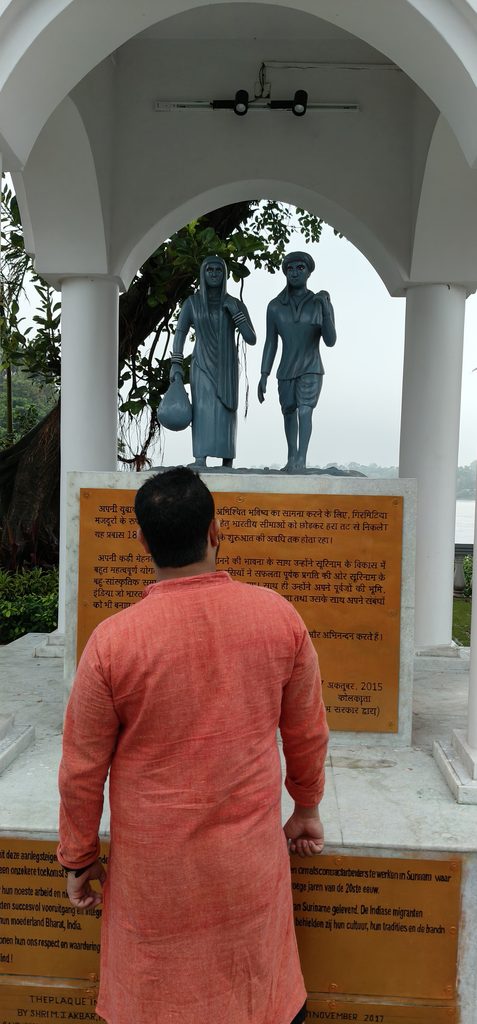
My growing passion for indentured history led me to Suriname Ghat in 2022, 2025, and 2026, where I witnessed a long-overdue transformation. For years, the iconic Mai-Baba statue was casually encroached upon by daily joggers using it as a prop for their belongings. That changed in 2025 with a full renovation featuring secure gating, dedicated seating, and a perimeter pathway that safeguards the monument’s sanctity.
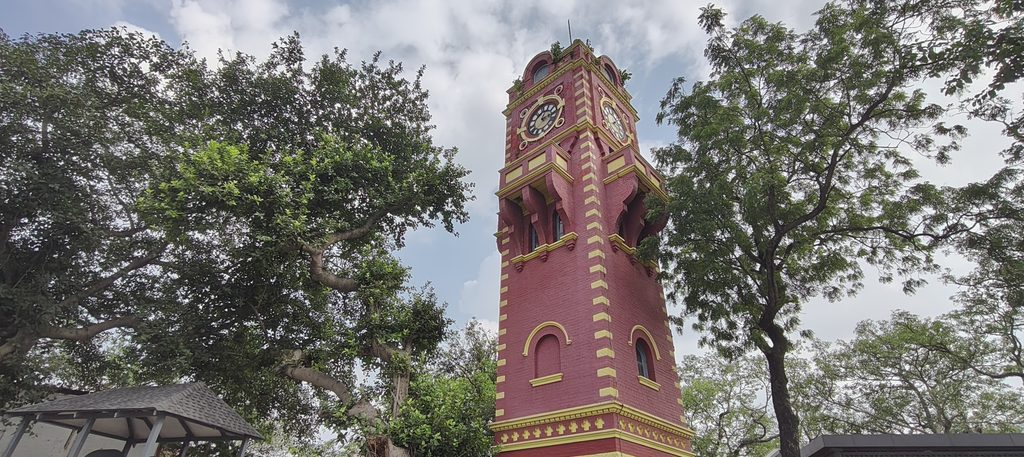
Gaining access to the Indentured Memorial was once its own ordeal. During my 2022 visit, Kolkata Port Trust officials required formal permissions, with one asking, “It’s just a piece of stone—what’s so special about it?” Media coverage in outlets like The Telegraph helped highlight this neglect. Public access finally improved when the Ambuja Neotia group opened The Dockyard & Co. Cafe, making the Memorial and adjacent Clock Tower easily accessible.
These experiences later allowed me to assist a Canadian documentary crew tracing their family’s voyage from Kolkata to Trinidad and Canada. Sadly, historic awareness remains low; the cafe manager shared that only about two per cent of visitors come to honour the indentured labourers. It is a poignant statistic for a port that served as the point of departure for both indentured diaspora and political convicts bound for the Cellular Jail in Sri Vijaya Puram.
Growing awareness on social media offers hope that more descendants will visit this site, reconnecting with the historical roots that forged their global present.
The Musical Effect
Across the regions where the Girmitiyas were taken—particularly in the Caribbean—unimaginable pain and struggle were ultimately transmuted into music, giving birth to the world-famous Chutney genre. Many of these songs, performed in Bhojpuri by indentured artists, echo a deep sense of agony and longing. A poignant example is Indo-Surinamese singer Raj Mohan’s “Girmitiya Song,” which paints a grim picture of the journey from India to Suriname. Its lyrics capture the profound psychological disorientation felt by a labourer after five long years in exile:
कुछ दिन सरनाम में रही के धीरे – धीरे आदत पड़ जाय,
अब इतना दिन मेहनत कर के सब छोड़ – छाड़ वापस के जाय |
जियु (दिल) बोले अब हिहे रही जाय, सरकार के बल पर खेत मिल जाय ||
मन के कोना में इ सपना आवेके रहीगे एक दिन गाँव आपन जाइ के |||
(After staying in Suriname for a few days, one gradually gets used to it.
Now, after working so hard for all these days, who would leave everything behind and go back?
The heart says to stay right here, hoping to get land with the government’s support.
Yet, in a quiet corner of the mind, the dream remains of returning to one’s own village one day.)
Yet in the regions from which they departed, these musical expressions evolved differently. Eastern Uttar Pradesh and Bihar still echo with poignant folk traditions like Birha and Kajri, whose Bhojpuri lyrics carry deep themes of separation and grief. Contemporary artists like Chandan Tiwari actively keep this memory alive through songs about the indentured experience. Her rendering of “Jahaazi Geet” captures the heartbreaking departure of labourers sailing away from the ports of Kolkata (formerly Calcutta).
धीरे चलो भैय्या धीरे चलो
कलकत्ता से छूटा जहाज़, पंवरिया धीरे चलो
(Go Slow My Brother, As the ship leaves Calcutta/ Kolkata…)
Through The Bidesia Project, filmmaker Simit Bhagat archives endangered Bhojpuri folk songs centred on indentured migration. Building on his documentary In Search of Bidesia, the initiative highlights songs like “Le Gaile Humrake,” whose opening lines set a haunting premise for the struggles of indentured labourers.
देशवा गुलाम रहे भारत वतनवा
रहे अंग्रेज के सासनवा हो…
लेई गईले हमरा के पापी बेईमनवा
अंग्रेज अपने वतनवा हो।
(Our country, India, was enslaved Under the oppressive rule of the British… The wicked and deceitful ones took us away The British took us to their own land.)
The Road Ahead
Following the arrival of the final repatriation ships, the Indian port cities and processing depots that served as the gateways for this migration faded from public memory. It took nearly half a century before concerted preservation efforts began. In the 2000s, Ashook K. Ramsaran, a third-generation Indo-Guyanese descendant, former Executive Vice President of the Global Organisation of People of Indian Origin (GOPIO), and President of Ramex Inc., initiated talks with the Government of India and the State Government of West Bengal to establish formal memorials commemorating the struggles of these labourers. (Ramasaran, 2013)
Utilising historical British maps, archival records, and urban land surveys of Kolkata, the Indentured Memorial was inaugurated at Khidderpore in 2011, followed by the Suriname Ghat at Garden Reach in 2015. Located along the banks of the Hooghly River, the Khidderpore memorial honours the collective memory of all indentured workers who sailed from India under the British system between 1834 and 1920. The Suriname Ghat specifically commemorates those bound for Dutch plantations in Suriname between 1873 and 1916. (Mishra, 2023)
The Indentured Memorial at Khidderpore, currently managed by the Kolkata Port Trust, features commemorative plaques in English, Hindi, and Bengali. The English inscription reads:
From Here They Set Forth……
This memorial commemorates the thousands of indentured Indian workers who sailed from Kolkata Port between 1834 and 1920 to lands far away, seeking better livelihoods for themselves and their families.
This is a celebration of their pioneering spirit, endurance, determination and resilience.
They made significant contributions to their adopted countries, yet cherished and passed on the spirit of Indianness – culture, values, traditions – to their descendants.
We salute them!
Jai Hind
January 11, 2011
Kolkata
The site also features the Clock Tower, built in 1899, which was once named ‘Demerara Clock Tower’, after the prominent river and sugar-producing region in coastal British Guiana where many labourers were dispatched. (Datta, 2017) Once out of bounds and stuck in administrative formalities, the memorial can now be accessed with the opening of the Dockyard and Co. Cafe under the Ambuja-Neotia Group.
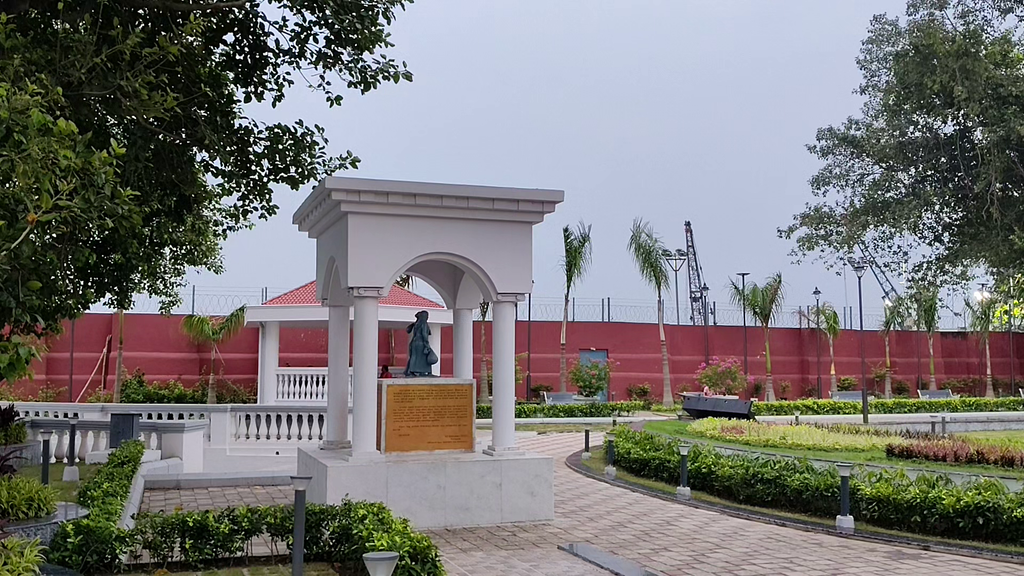
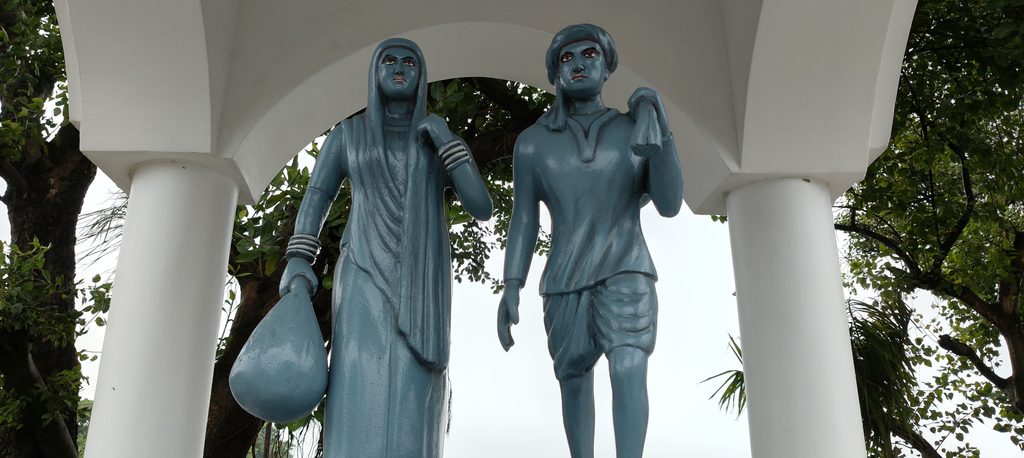
Suriname Ghat: Situated within the southern generating station compound of the Calcutta Electric Supply Corporation (CESC), the Suriname Ghat features a commemorative sculpture modelled after the iconic Mai-Baba (Mother and Father) monument in Paramaribo, Suriname. Due to its location, the surrounding plaza functions primarily as a neighbourhood jogging park, accessible to the public only during specific morning and evening hours. It displays plaques in five languages: Bhojpuri (in Roman script), Hindi, English, Bengali, and Dutch. The English inscription reads:
From this jetty, several people, in the prime of their youth, left Indian shores as indentured labourers to work in Suriname, to face an uncertain future. The migration spanned between the periods from 1873 to the early 20th century.
With their hard work and undying spirit, they contributed substantially to the development of Suriname. The Indian migrants successfully progressed and integrated into the Suriname’s multi-cultural society. They at the same time preserved the culture, traditions and ties with their ancestral land, India that is Bharat.
We respect and felicitate their spirit of courage, determination & endurance.
Jai Hind.
7th October 2015
Kolkata
(Jointly by Governments of India and Suriname)
Further recognition can be found at the Bihar Museum in Patna, established in 2015, which features a dedicated “Diaspora Gallery” honouring the millions of Bihari labourers who migrated to various British and Dutch sugar colonies.
Conclusion
It remains a historical irony that the foundational chapters of early colonial slavery and indentured labour have been largely sidelined in mainstream Indian historical discourse. This omission is particularly striking given the modern availability of digital archives, historical mapping tools, and transnational research networks. While internal awareness in India remains low, the heritage of the Girmitiyas is actively preserved overseas—as demonstrated by the UNESCO World Heritage designation of Aapravasi Ghat in Mauritius and major monuments like the Janey Tetary and Mai-Baba statues in Suriname. Beyond these monuments, indentured labourers deeply shaped the multicultural fabric of their host nations, leaving a lasting impact on agriculture, cuisine, music, language, and everyday lifestyle. Yet, India itself remains largely blind to this vast legacy.
On the civil society front, diaspora organisations, web portals, and research foundations are actively working to document this history. Within India, certain institutions and annual state-led initiatives like the Pravasi Bharatiya Divas conventions continue to advocate for greater recognition, though widespread public awareness remains limited.
While Mangattumukku draws local religious devotees rather than history enthusiasts, sites like Fort Geldria and the Pondicherry Indentured Workers Memorial require structural upkeep and broader academic attention. Conversely, the Kolkata memorials have recently garnered renewed attention within civic and bureaucratic circles, precisely because their historical significance had been overlooked for so long.
Revisiting, exploring, and documenting these physical spaces is essential to bridging historical memory with the contemporary reality of the global Indian diaspora. In closing, the sentiment expressed by David Sheoraj, a descendant of the indentured labour community, underscores the importance of this work:
“We are the forgotten children of Mother India. Mauritius, Trinidad, Suriname, Guyana and Fiji celebrate Indian Arrival Day and have memorials for the Indian workers. But in India no one remembers them.”
BIBLIOGRAPHY
Pinto, Mark Sebastian, The Forgotten Community, “the Siddis of Uttara Kannada”: How the Portuguese Indian Ocean slave trade produced a community of Indians of African descent, 2019
Ghosh, Amitav, More on Goa’s Slave: There were also many Bengalis (Web Article, 2012)
https://amitavghosh.com/more-on-goas-slaves-there-were-also-many-bengalis
Lucy CA, Sonia, Legend Of Kappiri Muthappan In Kochi: A Counter-Discourse Against Portuguese Colonial Domination, Psychology And Education (2020), Christ University, Bengaluru
http://psychologyandeducation.net/pae/index.php/pae/article/view/1023/836
Magalhaes, Joaquim Romero, Africans, Indians, and Slavery in Portugal (Journal Article), 1997, Portuguese Studies, Vol. 13 (1997) https://www.jstor.org/stable/41105067?read-now=1&seq=1#page_scan_tab_contents
Forbes, Jack D., Africans and Native Americans: The Language of Race and the Evolution of Red-Black Peoples (Second Edition), University Of Illinois Press, 1993
Sanyal, Sanjeev, The Ocean of Churn, Penguin Viking, 2016
Naik, Suryakiran, Khapri Temple (blog), 10 December, 2016
https://thebluedrive.com/tag/khapri-temple
Bernard, K.L., The History of Fort Cochin, 1995
Bhat, Gurudatta, for Vijaya Karnataka Web, Pray for the prevention of Corona, offer alcohol and cigarette incense to the Khapri God of Karwar! (published on 16 March 2020)
Pattanaik, Devdutt, Kappiri, Habshi and African Slave Gods (published on 27 May 2023)
https://devdutt.com/kappiri-habshi-and-african-slave-gods/
John, Haritha, African slaves and spirit of Kappiri Muthappan: Kochi’s culture under Portuguese-Dutch rule (published in The News Minute on 15 June 2016)
Wink, Markus, The World’s Oldest Trade: Dutch Slavery and Slave Trade in the Indian Ocean in the Seventeenth Century, 2003, Journal of World History, Vol. 14, No. 2, University of Hawai’i Press, (Jun., 2003) https://www.jstor.org/stable/20079204?read-now=1&seq=11#page_scan_tab_contents
Chavan, Akshay, for Peepul Tree World. Pulicat and the Forgotten Indian Slave Trade (published on 28 July 2019)
https://www.peepultree.world/livehistoryindia/story/eras/pulicat-the-forgotten-indian-slave-trade
Temple, Richard, The Diaries of Streynsham Master (1675-1680) Indian Records Series, 1911
Anna de Koningh (1656 – 1733) & Maai Angela van Bengale (1640 – 1720) at Camissa Museum
Northup, David, Indentured Indians in the French Antilles, Boston University (2000)
Pillai, Suresh, Hindu/Indian cultural Diaspora in French Caribbean islands of Guadeloupe and Martinique (2010)
Campbell, Gwyn, Labour Migration to the French Islands of the Western Indian Ocean, 1830-60 (January 2019)
Parsuramen, Armoogum, In Search For Our Ancestors: The Builders of Ile de France: The Genesis of the Tamil South Indian Migration to Ile de France, c.1728-1806, 2023
Maharaj, Nandini, Indian Indentured Labour System, 2018
https://player.uacdn.net/slides_pdf/RLFGCXOY52EGPXNG46FC/Indian_Indentured_Labour_no_anno.pdf
Kumar, Pratap. Indian Diaspora: Socio-Cultural and Religious Worlds. Leiden: BRILL, 2015
Varma, Dinesh, Reunion Island with shared roots to Puducherry looks to forge tourism, cultural ties (published in The Hindu on 23 August, 2022)
Rai, Kauleshwar and Rai Kayleshwar, Role Of Indian In Mauritius, Proceedings of the Indian History Congress, Vol. 44, 1983
https://www.jstor.org/stable/44139914
Mukherjee, Bhaswati, The Indentured And Their Route: A Relentless Quest For Identity, Rupa Publications, 2023
Mohan, Peggy, Jahajin, Harper Collins, 2007
Thomas, Timothy N., Indians Overseas: A guide to source materials in the India Office Records for the study of Indian emigration 1830-1950, 1985
Praveen Kumar, Coolie Lines (Hindi), Vani Prakashan, 2019
Mishra, Yash, for Peepul Tree World, Suriname Ghat: Tracing the Journey of Suriname Indians, (published on 18 January, 2023)
Pande, Amba, Indentured and Post-Indentured Indian Women: Changing Paradigms and Shifting Discourses, Springer, 2020
Bahadur, Gaiuitra, Coolie Woman: The Odyssey of Indenture, Hachette India, 2013
Kumar, Ashutosh, Contribution of Indian Nationalists in the Abolishing of Indian Indentured Slavery System, Nehru Memorial Museum and Library, 2014
https://www.academia.edu/6985283/Indian_Nationalists_and_the_End_of_Indentured_Emigration
Ramsaran, Ashook K., The Kolkata Memorial: History, Perspectives and Significance to People of Indian Origin, 2013
Datta, Rangan, Indentured Indian Labourers Memorial and Kolkata Port Trust Clock Tower (Web article, 15 March 2017)
FILMOGRAPHY
Coolies: How The British Re-invented Slavery, BBC Documentary Film, 2002
https://www.youtube.com/watch?v=oxl4q_jfDPI&t=790s
Yatra: The Journey of the Indian Presence in Trinidad and Tobago, Anita Chandradath Singh, Documentary Film, 1995
https://www.youtube.com/watch?v=M-Ck3CHGzbA&t=155s
MUSIC REFERENCES Bidesia (Singer: Maha Devi/ Lyricist: R Shiu Prasad) Girmitya (Singer: Raj Mohan) Jahazi Geet (Singer: Chandan Tiwari) The Bidesia Project