The Jaishankar and Rubio talks will take place in Mumbai on October 20, an Indian foreign ministry spokesperson said on Friday. India’s Foreign Minister S. Jaishankar will host US Secretary of State Marco Rubio for discussions on a broad range of issues in the relationship between the two countries.
What Is Known About the Jaishankar and Rubio Talks
Spokesperson Randhir Jaiswal announced the meeting to reporters during a briefing, according to Reuters. He said the discussions are expected to cover key areas of bilateral cooperation, including energy, trade and investment, defence, and critical and emerging technologies.
The ministry did not release further details in the report, such as a detailed schedule, the format of the meeting or any planned joint statements. Whether the two ministers will hold additional engagements in Mumbai has also not been stated.
Key Areas of Bilateral Cooperation on the Agenda
The four areas named by the ministry cover much of the substance of India-US relations. Each reflects a field in which the two governments have an interest in closer coordination.
Energy is the first item listed, followed by trade and investment, which remains a live subject between the two capitals. Reuters has reported that New Delhi is negotiating a trade deal with Washington, although the report on the Mumbai meeting does not say whether that negotiation will be addressed directly.
Defence and critical and emerging technologies complete the list. The ministry offered no specifics under either heading, and it would be speculative to anticipate particular announcements. The framing nonetheless indicates that the talks are intended to be wide-ranging rather than focused on a single dispute.
A Relationship Built on Regular Contact
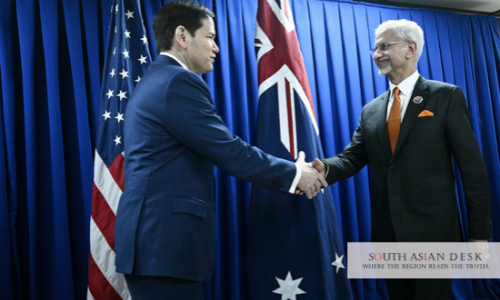
The two ministers are no strangers to one another. They most recently met on July 22, 2026, on the sidelines of the Association of Southeast Asian Nations (ASEAN) Foreign Ministers’ Meeting in Pasay, Metro Manila, according to a Reuters photograph from that occasion.
Their contacts extend further back. In 2025, Jaishankar and Rubio met in New York in September on the sidelines of the United Nations General Assembly and again in Kuala Lumpur on October 27, on the margins of the ASEAN and East Asia summits. The frequency of these encounters suggests that senior-level dialogue between the two governments has become routine, even when there is no formal bilateral visit on the calendar.
The Mumbai meeting differs from those multilateral sideline conversations because it is a dedicated bilateral engagement hosted in India. Such meetings generally allow more time for substantive discussion than a brief exchange at an international gathering, though the ministry has not said how long the Mumbai talks are expected to last.
Why Mumbai and Why Now
The choice of Mumbai as the venue is notable. India’s financial and commercial capital is an apt setting for a conversation that places trade, investment and technology alongside defence and energy. The foreign ministry did not explain the choice of city, and no reason was given in the report.
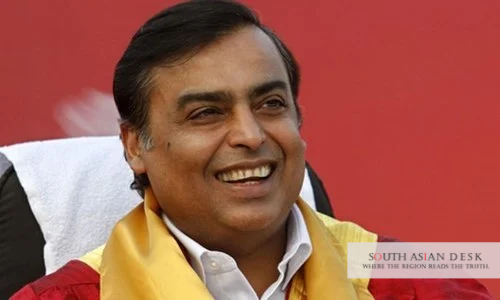
The timing falls amid a busy period in Indian public life. Domestic political demonstrations have drawn attention in recent weeks, and corporate and commercial developments, including a record initial public offering by Reliance’s Jio Platforms, are also under way. None of these matters was linked to the talks by the ministry, and the agenda it described is confined to the four areas of cooperation.
What Happens Next
The meeting on October 20 will be the next opportunity for both sides to set out their priorities. Readers should watch for statements from the foreign ministry and the US State Department after the discussions, which may provide detail on any agreements or commitments. Neither government has said that formal outcomes are expected.
For now, the Jaishankar and Rubio talks offer a view of how both governments characterise their shared agenda. The emphasis on energy, trade and investment, defence, and critical and emerging technologies points to a relationship that officials in New Delhi wish to present as broad and forward-looking.
Follow SouthAsianDesk on X, Instagram and Facebook for insights on business and current affairs from across South Asia.
This article is based on reporting by Reuters.