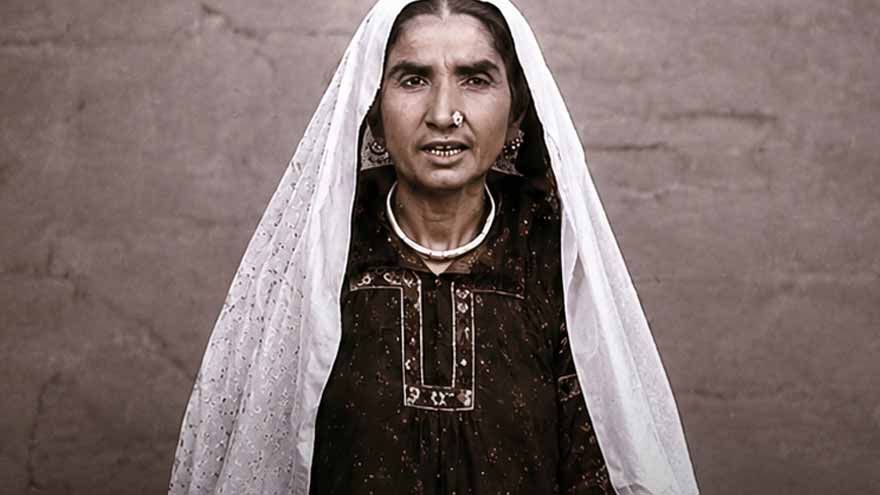
A story from years past was suddenly presented as a fresh killing, and within no time, it spread rapidly across social media, digital platforms, and mainstream news outlets alike. This was the story of Balochi folk singer Mai Subhai, whose alleged killing in Dera Bugti began making headlines.
The claim first surfaced as breaking news, and social media users picked it up quickly. Several mainstream and local media outlets soon carried it too, pushing the claim far beyond its original source.
Dawn published a report titled “Female folk singer killed in Dera Bugti,” citing police officials. The News carried a similar report, identifying her as a folk singer from the Bugti tribe. Whether these outlets subsequently corrected or updated their reports could not be independently confirmed at the time of writing.
The claim also spread across social media, including an Instagram post that carried it to an even wider audience. Local news platforms in Balochistan picked it up as well — and just like that, a claim that had never been properly verified had taken the shape of a widely reported news story.
Then came the clarification
In a statement issued on Thursday, September 3, 2026, the Deputy Commissioner of South Dera Bugti officially clarified that the reports circulating across television channels, newspapers, and social media about Mai Subhai’s alleged killing were incorrect and misleading. He urged media organizations to verify sensitive information with authorized officials before publishing, and to issue proper corrections so the facts could reach the public clearly.
Who was Mai Subhai?
Available records indicate that Mai Subhai was a folk singer from an earlier era, who had risen to fame through her appearances on Pakistan Television, and had died decades earlier. She was not the woman recently reported killed in Dera Bugti.
In other words, a decades-old death had been incorrectly presented as a recent incident.
How did an old story become new news?
Once the first report appeared, others followed suit. Social media users shared it, digital news pages reproduced it, mainstream and local outlets carried it forward. With every repetition, the story felt more credible — but repetition is not verification. Ten outlets echoing the same unverified claim do not become ten independent sources.
The race to be first
Today’s digital media landscape pushes newsrooms to publish as fast as possible. But speed can just as easily magnify mistakes. In Mai Subhai’s case, the claim travelled across multiple platforms within hours — while a basic verification step could have stopped the misinformation in its tracks.
Why corrections often arrive too late
Corrections rarely travel as far or as fast as the original claim. By the time a false report is corrected, screenshots have already been taken, and messages have already been forwarded across social media. Publishing corrections prominently, updating original headlines and posts, and clearly labelling the initial report as incorrect can help narrow this gap.
A wider problem
Mai Subhai’s case reflects a much larger challenge in today’s information landscape. According to data compiled by iVerify Pakistan, around 1,026 claims flagged as potentially misleading were recorded on social media platforms across the country between December 2023 and November 2025, of which nearly half were separately confirmed to be false on verification — a reminder of how quickly unverified claims can reach millions before anyone has the chance to check them.
Breaking news, or verified news?
Mai Subhai’s story began as a report of a fresh killing. It spread from social media to television channels and newspapers, before an official clarification revealed the reports were false and misleading. What looked like breaking news turned out to be tied to a death from years long gone.
Being first may draw attention — but being right is what builds trust. In the end, Mai Subhai’s case leaves every newsroom and every journalist with one lingering question: are we racing to be first, or making sure the truth comes first?