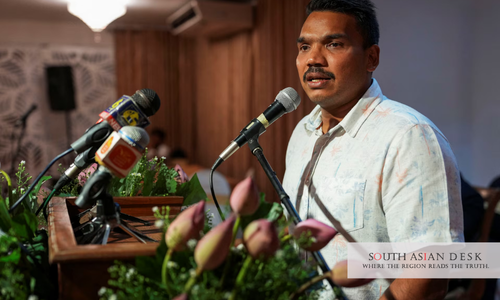
Namal Rajapaksa was arrested on graft charges on Friday, marking a significant escalation in a long-running investigation into a controversial purchase of Airbus aircraft by Sri Lanka’s national carrier more than a decade ago. Rajapaksa, the 40-year-old son of former president Mahinda Rajapaksa and a sitting lawmaker with the opposition Sri Lanka Podujana Peramuna party, was taken into custody after more than five hours of questioning by the country’s principal anti-corruption body.
Colombo Chief Magistrate Asanga S. Bodaragama ordered that Rajapaksa be remanded until September 18, according to court officials. His lawyer, Nishantha Dayananda, confirmed the arrest, which stems from allegations that he received payments connected to SriLankan Airlines’ purchase of Airbus jetliners in 2013. Rajapaksa has consistently denied any wrongdoing, and his legal team was not immediately available for further comment.
Airbus Bribery Investigation Sri Lanka Traces Back Over a Decade
The Airbus bribery investigation in Sri Lanka centres on a $2.3 billion transaction in which the state-owned carrier agreed to purchase aircraft from the European manufacturer in 2013. The deal was eventually cancelled by a new government in 2016 amid mounting allegations of impropriety surrounding its terms. According to the Commission to Investigate Allegations of Bribery or Corruption, known locally as CIABOC, Rajapaksa is alleged to have received approximately $800,000 as part of funds that Airbus is accused of channelling to senior Sri Lankan officials and politicians in order to secure the contract.
The origins of the current investigation trace back to a joint inquiry conducted by authorities in the United States, Britain and France, which found that Airbus had agreed to pay roughly $16 million in bribes connected to deals in Sri Lanka. Of that sum, investigators determined that approximately $1.7 million had been routed to Kapila Chandrasena, the former chief executive of SriLankan Airlines, before the scheme was uncovered. Airbus reached a settlement with the three governments in 2020, following a three year investigation into allegations of bribery and corruption tied to jetliner sales worldwide, and was ultimately fined $4 billion to resolve the case.
Commission to Investigate Allegations of Bribery or Corruption Leads the Probe
The Commission to Investigate Allegations of Bribery or Corruption has played the central role in advancing the case against Rajapaksa, summoning him for questioning over the Airbus transaction before proceeding with his arrest. A commission official said that Rajapaksa was arrested following the questioning session and would be taken before a magistrate, a process that concluded with his remand for a period of two weeks pending further investigation.
The commission’s inquiry gained fresh momentum earlier this year after Chandrasena told investigators in March that he had personally handed nearly half a million dollars in kickbacks to Rajapaksa. Chandrasena’s testimony represented a significant development in the case, though he did not live to see its latest phase. He was found dead at a relative’s home in May, shortly before he had been due to be rearrested, and the cause of his death has not been established.
CIABOC had separately questioned former president Mahinda Rajapaksa himself in May over allegations that he too had received kickbacks connected to the aircraft purchase, indicating that the investigation has extended beyond his son to encompass other senior figures who held office during the period when the deal was negotiated and finalised.
Rajapaksa Family Corruption Allegations Continue to Mount
Rajapaksa family corruption allegations have persisted for years, spanning multiple members of what was once one of Sri Lanka’s most politically dominant dynasties. The family has repeatedly and consistently denied any involvement in bribery or financial misconduct, characterising the various investigations against them as politically motivated efforts by successive governments to discredit their political legacy.
Namal Rajapaksa’s arrest nonetheless represents one of the most significant legal developments involving the family in recent years, given his continued prominence as a sitting member of parliament and his standing as the eldest son of a former head of state who governed Sri Lanka for a decade. The Airbus case has drawn considerable international attention in part because of Airbus’s own admissions in its 2020 settlement with Western authorities, which lent external corroboration to allegations that had circulated within Sri Lanka for years regarding the aircraft deal’s true cost and beneficiaries.
What Happens Next
With Rajapaksa now remanded until September 18, the coming weeks are expected to bring further clarity on the specific charges he ultimately faces, as authorities have not yet publicly detailed the full scope of the allegations against him. The Commission to Investigate Allegations of Bribery or Corruption is continuing its broader inquiry into the Airbus transaction, and further questioning of other individuals connected to the 2013 purchase remains possible as the investigation proceeds.
The case is likely to remain a significant point of political and public interest in Sri Lanka, both for its implications regarding accountability for a transaction that was ultimately unwound by a subsequent government, and for what it may reveal about the broader question of how the country’s institutions handle corruption allegations against figures with deep and enduring political influence.
Published in SouthAsianDesk, September 5th, 2026
Follow SouthAsianDesk on X, Instagram and Facebook for insights on business and current affairs from across South Asia.