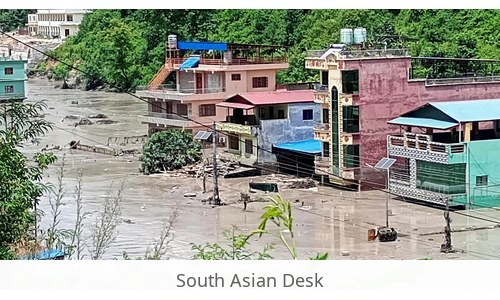
Nepal flash floods have left a trail of devastation in the Rasuwa district, with at least eight confirmed dead and nearly 400 individuals reported missing, including 105 Indians and 291 foreigners. The Hindu reports that the floods have caused severe infrastructure damage Nepal, including roads and energy facilities, while local authorities have declared disaster crisis zones in affected areas. The Bhote Koshi river area, particularly Timure Bazaar, has seen significant destruction, according to NDTV. The event underscores the vulnerability of Nepal’s mountainous terrain to sudden hydrological surges, a recurring challenge in regions where glacial melt and monsoon rains converge.
Nepal flash floods: Government Response
Local units in flood-affected districts have been mobilized for rescue operations, as reported by OnlineKhabar. Emergency services are coordinating with international agencies to assist foreign nationals, with the Indian Express noting heightened alert status in Bihar due to swelling of the Gandak River. Al Jazeera confirms that at least eight people have been killed, with rescue efforts ongoing in remote villages near the Tibet border. The declaration of disaster crisis zones has triggered the deployment of Nepal’s National Emergency Operations Centre, which has activated protocols for inter-agency coordination. This includes the use of drones for aerial surveys in inaccessible areas and the establishment of temporary shelters for displaced communities. The Indian government has also initiated diplomatic channels to facilitate repatriation of the 105 Indian nationals, while the Nepali Ministry of Home Affairs has issued advisories to foreign embassies for coordinated evacuation plans.
Impact on Tourism
The Nepal flash floods have raised concerns among tourists about safety and travel plans, disrupting Nepal’s tourism impact, a critical component of its economy. The Indian Express highlights the vulnerability of foreign tourists missing, with 291 missing, including a significant number of international travelers. Tourism officials have not yet released formal statements on long-term recovery plans, but the incident underscores the sector’s exposure to natural disasters. Nepal’s tourism industry, which contributes approximately 12% to its GDP, relies heavily on trekking and adventure tourism in the Himalayan regions. The Bhote Koshi river area, a popular route for trekkers heading to Mount Everest, has been particularly affected. The destruction of trails, bridges, and lodges could have cascading effects on seasonal revenue, with potential ripple impacts on local economies dependent on hospitality and guide services. Industry analysts suggest that recovery may take months, depending on the scale of infrastructure damage Nepal and the resumption of international travel advisories.
Long-term Implications
Natural disasters like these highlight the vulnerability of South Asian infrastructure, particularly in regions bordering Tibet, where topography amplifies flood risks. The economic impact on local communities could be profound, with reconstruction efforts likely to strain public resources. The incident also raises questions about cross-border disaster response Nepal and the need for regional cooperation in infrastructure resilience. Nepal’s proximity to the Tibetan Plateau, combined with its fragile glacial systems, makes it a hotspot for climate-induced disasters. Recent studies by the South Asian Association for Regional Cooperation (SAARC) have emphasized the need for transboundary water management frameworks to mitigate risks from glacial lake outburst floods (GLOFs). The current crisis has reignited calls for a regional early warning system, particularly for areas along the Koshi and Gandak river basins, which span multiple South Asian nations. Additionally, the high number of foreign nationals affected underscores the necessity for standardized emergency protocols involving neighboring countries, including India, China, and Bhutan, which share hydrological and ecological linkages with Nepal.
Contextualizing the Crisis
The flash floods in Rasuwa district are not isolated; they are part of a broader pattern of increasing climate-related disasters in the Himalayan region. Over the past decade, Nepal has experienced a 30% rise in extreme weather events, according to the Nepal Climate Change Policy 2023. This trend is linked to rising temperatures, which accelerate glacial melt and increase the frequency of heavy monsoon rains. The Bhote Koshi river, which flows through Rasuwa and into the Koshi basin, has historically been prone to flooding due to its steep gradient and sediment-laden flow. The destruction of infrastructure in Timure Bazaar, a key trading hub, further complicates recovery efforts, as it disrupts supply chains for essential goods and services in the region. Local officials have warned that without immediate international aid, the affected communities may face prolonged displacement and food insecurity.
Regional and Global Considerations
The crisis has drawn attention from global climate bodies, including the United Nations Office for Disaster Risk Reduction (UNDRR), which has called for increased investment in climate-resilient infrastructure in vulnerable regions. The floods also highlight the interconnectedness of South Asian economies, as the Gandak River’s swelling in Bihar has prompted India to reinforce its flood defenses. This underscores the need for integrated disaster management strategies that transcend national borders. Meanwhile, the tourism sector’s disruption has broader implications for South Asia’s economic stability, as Nepal’s neighbors—particularly India—rely on cross-border tourism flows. The incident may also influence future policy discussions at SAARC summits, where climate adaptation and disaster mitigation are increasingly prioritized.
Follow SouthAsianDesk on X, Instagram and Facebook for insights on business and current affairs from across South Asia.
Sources
- Nepal flash floods: Many killed and 384 travellers, including 291 foreigners, missing – thehindu.com
- Flood-affected local units declared disaster crisis zones – english.onlinekhabar.com
- Nepal Flood Live Updates: Bihar on alert after Nepal flash floods lead to swelling of Gandak River – indianexpress.com
- Bridge, Houses Gone In Seconds: Videos Capture Horror Of Nepal Flash Floods – ndtv.com
- At least eight killed as Nepal flash flood damages roads, energy facilities – aljazeera.com
Image: th-i.thgim.com