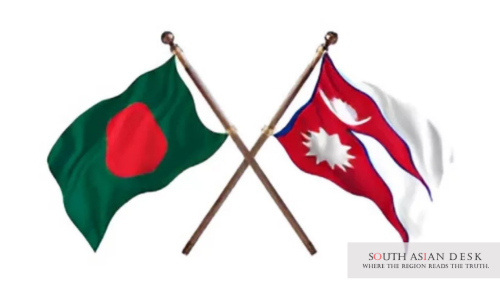
Nepal’s electricity export to Bangladesh: Nepal resumes its seasonal hydropower supply to Bangladesh on Monday, June 15, 2026, under a five-year tripartite arrangement, even as India’s refusal to approve an additional 20 megawatts caps the volume for a second consecutive year and keeps formal negotiations for a significant expansion in limbo.
KATHMANDU/DHAKA — Nepal’s electricity export to Bangladesh commences its second full seasonal cycle starting Monday, June 15, 2026, with 40 megawatts (MW) of hydropower flowing through India’s cross-border transmission infrastructure until Saturday, November 15. Officials on both sides acknowledge the volume is modest relative to Bangladesh’s scale of demand but describe it as a foundational step in a partnership that both governments are working to expand considerably.
The supply resumes against a backdrop of a setback: India’s Central Electricity Authority (CEA) has declined to approve an additional 20MW that Nepal had sought to add to the existing arrangement following a bilateral agreement reached in November 2025. Nepal’s plans to raise the annual export to 60MW during the current season have consequently been shelved, with the process now pending a further round of technical and regulatory review.
Nepal’s Electricity Export to Bangladesh: Second Season Under the Tripartite Framework
The annual seasonal supply is governed by a tripartite Power Sales Agreement (PSA) signed on Thursday, October 3, 2024, in Kathmandu by the Nepal Electricity Authority (NEA), the Bangladesh Power Development Board (BPDB) and India’s NTPC Vidyut Vyapar Nigam Limited (NVVN). The agreement provides for the export of 40MW from Nepal to Bangladesh between June 15 and November 15 each year for a period of five years — the window corresponding to Nepal’s wet monsoon season when run-of-river hydropower stations produce a surplus.
The electricity is sourced from the Trishuli and Chilime hydropower stations in Nepal. It travels from Nepal’s Dhalkebar substation via a 400 kilovolt (kV) cross-border transmission line to Muzaffarpur in India, and then enters Bangladesh through the 400kV Baharampur-Bheramara interconnect. Under the commercial terms of the agreement, the metering point is at Muzaffarpur. The NEA bears transmission losses up to that point, while the BPDB is responsible for losses from Muzaffarpur to the Bangladesh border. Nepal sells the electricity at USD 6.40 cents per unit at the Muzaffarpur delivery point, with the effective cost to Bangladesh rising to approximately USD 7.60 cents per unit by the time wheeling charges and downstream losses are factored in.
Nepal expects to earn approximately USD 9.4 million from the sale of electricity to Bangladesh over the five-month supply period. Electricity transactions with Bangladesh are settled in US dollars, while Nepal’s trade with India is conducted in Indian rupees.
Officials told reporters that while the 40MW volume is symbolic given the scale of Bangladesh’s power requirements, both countries see substantial potential to increase it in the future.
India Blocks Additional 20MW, Capping Exports at 40MW for a Second Year
Nepal had sought to raise its electricity export to Bangladesh to 60MW during the current season. The plan was agreed in principle at the seventh Nepal-Bangladesh Energy Secretary-level Joint Steering Committee (JSC) meeting held in Dhaka on Thursday, November 27, 2025, which was co-chaired by Nepal’s Energy Secretary Chiranjeevi Chataut and Bangladesh’s Power Ministry Secretary Farzana Momtaz. Following that decision, the NEA formally approached NVVN to process clearance for the additional 20MW through India’s regulatory channels.
However, NVVN subsequently notified the NEA that the 1,000MW-capacity India-Bangladesh cross-border transmission corridor could not accommodate the additional allocation, citing a determination by India’s CEA of insufficient grid capacity.
“This time, only 40MW of electricity will be exported to Bangladesh. Although a tripartite agreement for the additional 20MW had not yet been completed, like the earlier 40MW arrangement, we had initiated the process through NVVN at India’s CEA,” Tharka Bahadur Thapa, director of the NEA’s electricity trade department, told The Kathmandu Post. “But the response was that the transmission line does not have capacity for the additional 20MW.”
The same 6.40 US cents-per-unit tariff agreed for the existing 40MW would have applied to the additional volume. Officials noted that any future increase would require a revised tripartite agreement and further review by the Nepal-India Energy Secretary-level JSC, in addition to fresh regulatory clearance from India’s CEA.
Bilateral Framework and Institutional History
The current power supply arrangement is anchored in a broader bilateral partnership. Nepal and Bangladesh signed a Memorandum of Understanding (MoU) on Cooperation in the Field of Power Sector on Friday, August 10, 2018. Under the MoU, the JSC at the energy secretary level and a Joint Working Group (JWG) at the joint secretary level were established to facilitate collaboration and advance initiatives in the power sector. The seventh meetings of both bodies were held in Dhaka on Wednesday and Thursday, November 26-27, 2025.
The path to the current agreement involved several years of negotiation. Bangladesh’s Economic Affairs Committee approved a proposal to import 40MW from Nepal in December 2023. The tripartite PSA was originally scheduled for signing in July 2024 but was postponed following political unrest in Bangladesh. It was eventually signed in October 2024, with NEA Executive Director Kulman Ghising, BPDB President Rejul Karim and NVVN Chief Executive Officer Renu Narang executing the agreement in the presence of Nepal’s Energy Minister Deepak Khadka and Bangladesh’s Environment Minister Syeda Rizwana Hasan. India’s then-Ambassador to Nepal, Naveen Srivastava, was also present.
Nepal transmitted its first batch of electricity to Bangladesh on Saturday, November 15, 2024, for a 12-hour window — an inaugural symbolic delivery that generated 470,000 units of electricity and revenue of approximately USD 30,080 for Nepal. That delivery marked the first time in Nepal’s history that it had exported electricity to a country other than India. The first full seasonal supply then commenced on June 15, 2025. Under India’s CEA approval, the Trishuli and Chilime stations are certified to export electricity to Bangladesh until October 2, 2029, covering the full five-year term of the PSA.
Sunkoshi III and Long-Term Expansion Plans
Beyond the current seasonal arrangement, both countries are pursuing a substantially larger long-term energy partnership centred on the proposed 683MW Sunkoshi III multipurpose hydropower project, which the two sides are exploring on a joint-venture basis.
The project is proposed for construction across the Kavrepalanchok and Ramechhap districts of Nepal’s Bagmati Province on the Sunkoshi River. A dam measuring 160 metres wide and 180 metres high is planned at Lubhughat, on the confluence of the two districts. Nepal has completed both the feasibility study and an Environmental Impact Assessment (EIA) for the project. The seventh JSC meeting in November 2025 endorsed the formation of an expert committee to evaluate the project and expedite its investment process, including the finalisation of a joint-venture agreement. A survey licence from the Nepali government will be required before a new joint-venture company can commence.
Bangladesh’s strategic energy planning envisions importing 9,000MW of electricity from Nepal in pursuit of clean energy by 2040. The country has also finalised a power purchase agreement to import 500MW from the proposed 900MW Upper Karnali Hydropower Project being developed in Nepal by India’s GMR Group.
Both governments have also agreed to study potential additional cross-border transmission routes linking Nepal and Bangladesh, including lines running via Barapukuria, Panchagarh/Thakurgaon, Bheramara and Comilla, which could provide alternative corridors and reduce dependence on the current single-route arrangement.
Nepal’s Growing Hydropower Export Revenues
Nepal’s earnings from electricity exports have grown rapidly in recent years. In the first ten months of the current fiscal year, Nepal exported electricity worth approximately NPR 20.99 billion to India and Bangladesh combined. In the corresponding period of the previous fiscal year, total export revenues stood at NPR 13.10 billion, reflecting a significant year-on-year increase.
Nepal currently holds aggregate approvals to export 1,165MW of electricity to India and Bangladesh combined. Electricity sold to India flows through the Indian Energy Exchange in the day-ahead and real-time markets, as well as under medium-term agreements with NVVN. The NEA has set a long-term target of exporting 10,000MW of electricity.
Nepal exports its surplus hydropower during the wet monsoon season, running broadly from June to November, before reverting to power imports from India during the winter months when its run-of-river generation falls below domestic demand.
Background
Nepal’s cross-border power trade began in June 2022, when it first commenced electricity exports to India. India initially approved imports of 39MW from Nepal in October 2021; that ceiling has since grown to approximately 1,200MW. The drive to export electricity to Bangladesh required a further diplomatic breakthrough, as it depended on India’s agreement to allow Nepal to use its transmission infrastructure to reach a third country. A key enabling agreement was reached at the Nepal-India energy secretary-level JSC meeting on Friday, January 5, 2024, which gave Nepal in-principle approval to use India’s cross-border grid for exports to Bangladesh under India’s existing power trade guidelines. A further Nepal-Bangladesh JSC meeting on October 2, 2024 cleared the way for the tripartite PSA that was signed the following day.
The tripartite arrangement has been described by officials from all three countries as a landmark in South Asian energy cooperation. NEA Executive Director Ghising stated at the time of signing that the agreement would “open doors for subregional and regional cooperation.” India’s Ambassador to Nepal Naveen Srivastava described it as a “significant step forward” in promoting cross-border power trade and reflecting India’s commitment to deepening regional energy connectivity.
What’s Next
The 40MW seasonal supply will continue until Saturday, November 15, 2026, after which Nepal’s monsoon-driven hydropower surplus typically declines. For Nepal’s electricity export to Bangladesh to increase to 60MW, a revised tripartite agreement between the NEA, BPDB and NVVN will be necessary, along with fresh approval from India’s CEA for additional transmission capacity on the India-Bangladesh corridor. The seventh JSC meeting in November 2025 had mandated a further review process that remains in progress. On the longer horizon, progress on the 683MW Sunkoshi III joint-venture project, if it advances to construction, could fundamentally alter the scale of Nepal’s electricity export to Bangladesh and transform the bilateral energy relationship from a symbolic seasonal arrangement into a strategically significant supply partnership.
Published in SouthAsianDesk, June 15, 2026
Follow SouthAsianDesk on X, Instagram and Facebook for insights on business and current affairs from across South Asia.