OGDCL oil gas discovery in Sindh’s Sanghar district was announced on Wednesday, June 3, 2026, after the company tested its Bobi Deep-1 exploratory well and reported initial flows of oil and gas from the Lower Goru Formation.
OGDCL oil gas discovery reported in Sanghar
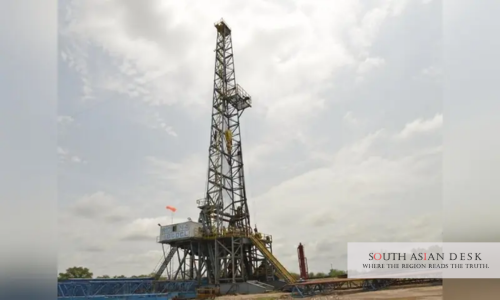
Oil & Gas Development Company Limited has announced an oil and gas discovery from its Bobi Deep-1 exploratory well in the Bobi and Dhamraki Mining Lease, located in Sanghar district, Sindh.
In a notice submitted to the Pakistan Stock Exchange, the company said it was the operator of the lease with a 100 percent working interest. The disclosure was dated Wednesday, June 3, 2026, and was submitted in compliance with Section 96 of the Securities Act, 2015 and Clause 5.6.1(a) of PSX regulations.
The company said the Massive Sand of the Lower Goru Formation was tested through a cased-hole Drill Stem Test after interpretation of wireline logs. The test produced 2,000 barrels of oil per day and 1.1 million standard cubic feet of gas per day.
The test was conducted at a choke size of 32/64 inch, with a wellhead flowing pressure of 1,050 pounds per square inch. These are initial test figures and do not by themselves establish the final recoverable reserves or long-term production profile of the well.
OGDCL said the Bobi Deep-1 exploratory well was re-entered on Sunday, May 3, 2026, to test the hydrocarbon potential of massive sands in the Lower Goru Formation. The well was drilled to a total depth of 3,305 metres in the Sembar Formation using the company’s in-house technical and operational capabilities.
Lower Goru Formation test opens new play
The company described the discovery as the first hydrocarbon discovery from the Massive Sand play in the Bobi and Dhamraki Mining Lease area. It said the result had established a new exploration play and helped de-risk similar prospects in the surrounding region.
In exploration terms, a new play can be important because it may indicate that nearby geological structures have comparable hydrocarbon potential. However, further appraisal, technical evaluation and development planning would be required before the wider impact can be fully assessed.
OGDCL said the discovery is expected to add to the hydrocarbon reserves base of both the company and the country. It also said the find could contribute to bridging Pakistan’s energy demand-supply gap through indigenous resources.
The company did not disclose the estimated size of the reserves, the expected commercial production date, the required surface facilities or whether additional appraisal wells are planned.
Sanghar remains important for OGDCL operations
Sanghar has long been an important district for Pakistan’s oil and gas operations. OGDCL’s Sinjhoro Gas Project, also in Sanghar, has daily production of 30 to 40 million standard cubic feet of gas, 3,300 barrels of oil and 170 metric tonnes per day of liquefied petroleum gas, according to the company’s project information.
The latest discovery adds to the district’s profile as a producing region in Sindh, where several exploration and production companies have operated across different concessions.
OGDCL is Pakistan’s largest state-linked exploration and production company. The PSX company profile says it was incorporated on Thursday, October 23, 1997, under the Companies Ordinance, 1984, now the Companies Act, 2017. The company was established to undertake exploration, development and production of oil and gas resources and related activities formerly carried out by Oil and Gas Development Corporation.
OGDCL’s own production figures, listed on its website, show net crude oil output of 36,451 barrels per day and gas output of 715 million cubic feet per day as of April 2026. The company also listed 778 metric tonnes per day of LPG and 26 metric tonnes per day of sulphur.
Domestic energy supplies under pressure
The discovery comes as Pakistan continues to face pressure in its energy sector from declining domestic gas production, high import costs and foreign exchange constraints.
Pakistan relies on domestic oil and gas output alongside imported crude, petroleum products and liquefied natural gas. New discoveries can help reduce import dependence, but their national impact depends on sustained production volumes, reserve size, development speed and connection to processing and pipeline infrastructure.
The Ministry of Energy’s Petroleum Division lists Pakistan Petroleum Exploration and Production Data Repository and Pakistan Petroleum Information Services among its key sector resources, reflecting the government’s focus on upstream data, exploration and production activity.
For energy planners, even moderate discoveries can matter if they can be tied into existing infrastructure quickly. OGDCL’s statement did not say whether Bobi Deep-1 can be connected to nearby processing facilities or whether additional infrastructure will be required.
Background
OGDCL is one of Pakistan’s central upstream energy companies and operates across exploration, drilling, reservoir management, production and commercial activities.
The Bobi Deep-1 discovery was made in the Bobi and Dhamraki Mining Lease in Sanghar district. The well was re-entered in May 2026 and tested in the Lower Goru Formation, one of the important hydrocarbon-bearing formations in Pakistan’s sedimentary basins.
The company’s statement described the discovery as a milestone because it was the first hydrocarbon discovery from the Massive Sand play in the lease area. While the initial test rate is commercially relevant, the full value of the discovery will depend on appraisal and future production results.
What’s next
OGDCL is expected to carry out further technical evaluation to determine the discovery’s commercial potential, reserves and development options. The company may also assess whether similar prospects around the Bobi and Dhamraki Mining Lease can be targeted through future drilling.
The OGDCL oil gas discovery will be closely watched by investors, energy officials and local industry as Pakistan seeks more indigenous production to reduce pressure on imported fuel supplies.
Published in SouthAsianDesk, June 4, 2026
Follow SouthAsianDesk on X, Instagram and Facebook for insights on business and current affairs from across South Asia.