Pakistan budget 2026-27 planning has left little room for new development schemes after the Finance Division indicated PKR 1.126 trillion for the federal PSDP against ministries’ demands of about PKR 4.1 trillion, officials said in Islamabad on Monday, June 1, 2026.
Pakistan budget 2026-27 puts PSDP under pressure
Pakistan’s development spending is set to remain under severe pressure in the 2026-27 fiscal year, with the Annual Plan Coordination Committee warning that the federal Public Sector Development Programme, or PSDP, is far below the amount sought by ministries and divisions.
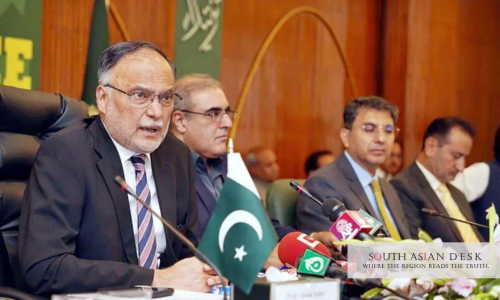
The APCC, chaired by Federal Minister for Planning, Development and Special Initiatives Ahsan Iqbal, met in Islamabad to review the PSDP for 2025-26, assess development performance and finalise priorities for the Annual Plan 2026-27.
According to the official statement, the Finance Division has indicated an Indicative Budget Ceiling of PKR 1.126 trillion for the federal PSDP, against development demands of about PKR 4.1 trillion. The government said the throw-forward, the cost of completing ongoing projects, has crossed PKR 10 trillion.
The gap means the government will have to prioritise ongoing and near-completion schemes rather than add new projects. The official statement said more than 98 percent of available resources would be directed towards ongoing projects, with priority for high-impact schemes in water, energy, transport and other core infrastructure sectors.
Pakistan budget 2026-27 shaped by IMF fiscal targets
The development squeeze comes as Pakistan remains under an International Monetary Fund programme that requires continued fiscal consolidation.
After a staff visit to Islamabad from Wednesday, May 13, 2026, to Wednesday, May 20, 2026, the IMF said Pakistani authorities had reaffirmed their commitment to a primary surplus target of 2 percent of GDP in FY2027. The Fund said the fiscal adjustment would be supported by efforts to broaden the tax base, improve tax administration, strengthen spending efficiency and improve public financial management at federal and provincial levels.
The IMF Executive Board earlier completed the third review of Pakistan’s Extended Fund Facility and the second review under the Resilience and Sustainability Facility, allowing fresh disbursements of about US$1.1 billion and about US$220 million, respectively.
The Fund said Pakistan’s policy priorities include maintaining macroeconomic stability, strengthening public finances, reforming state-owned enterprises, improving energy sector viability and creating space for human capital and productive public investment.
For Pakistan, the practical effect of these constraints is that the federal government must balance development needs with debt servicing, revenue targets and commitments under the IMF-backed reform programme.
National development outlay reaches PKR 4.715 trillion
Despite the limited federal PSDP space, the APCC recommended a national development outlay of PKR 4.715 trillion for 2026-27 for consideration by the National Economic Council.
The proposed national outlay includes PKR 1.126 trillion for the federal PSDP, PKR 3.138 trillion for provincial Annual Development Programmes and PKR 451 billion in investment by state-owned enterprises.
The planning ministry said provincial development programmes have increased substantially, while the federal PSDP has remained constrained. It added that allocations for Azad Jammu and Kashmir, Gilgit-Baltistan and the newly merged districts of Khyber Pakhtunkhwa had been protected. Less developed areas, including Balochistan and Gwadar, were also listed among priority areas.
The official statement said token allocations had been avoided and new projects of a provincial nature had been discouraged, except where they aligned with national priorities.
Ongoing projects to get priority
The APCC said funding priority would go to strategic and core ongoing projects, particularly in water resources, transport, communications and energy.
Foreign-aided projects would also receive rupee cover to support execution, maintain foreign exchange inflows and honour international commitments. Projects with more than 80 percent expenditure would be prioritised for completion in 2026-27 so that economic benefits can be realised sooner.
The official statement listed major ongoing schemes such as ML-I, Diamer Bhasha Dam, Dasu Dam, Mohmand Dam and Thar Connectivity among the large projects requiring funding. Ministries and divisions demanded about PKR 3.3 trillion for ongoing projects, including about PKR 1.8 trillion for mega and core projects.
The Economic Affairs Division indicated a demand of PKR 426 billion in rupee cover based on projected disbursement estimates for the next fiscal year.
Ahsan Iqbal said the PSDP was not merely a budget line but “a statement of national intent”, adding that development funding was directly linked to growth, productivity and public welfare. He also said exports should be placed at the centre of national policy to reduce dependence on borrowing.
Background
Pakistan has faced repeated balance-of-payments pressures in recent years, making IMF-backed stabilisation a central part of economic policy. The current IMF programme was approved in September 2024 and is intended to support macroeconomic stability, rebuild reserves and advance structural reforms.
In the development sector, official figures show the PSDP has fallen as a share of the national budget and GDP. The planning minister told the APCC that the PSDP stood at 19.6 percent of the national budget and 2.5 percent of GDP in 2017-18, but had declined to 4 percent of the budget and 0.6 percent of GDP by 2025-26.
For the current fiscal cycle, the PSDP 2025-26 was initially fixed at PKR 1 trillion against total demand of PKR 3.2 trillion, before being reduced to PKR 837 billion after two cuts. Officials said PKR 529 billion had been utilised by project sponsors as of Monday, June 1, 2026.
Published in SouthAsianDesk, June 2, 2026
Follow SouthAsianDesk on X, Instagram and Facebook for insights on business and current affairs from across South Asia.