Pakistan China ties deepen on two fronts this year, moving well beyond the infrastructure focused relationship that has defined much of the past decade. On the financial side, Islamabad has entered China’s domestic bond market for the first time, while on the scientific side, a Pakistani astronaut is preparing to become the first foreign national to board China’s Tiangong space station. Together, these developments mark seventy five years of diplomatic relations between the two countries with a relationship that is becoming more financially integrated and more technologically ambitious than at any point in its history.
Pakistan China Ties Deepen – A Landmark Panda Bond Issuance
In May, Pakistan became the first South Asian nation to tap China’s onshore bond market, issuing its debut Panda Bond in a ceremony held at Pakistan’s embassy in Beijing. Panda Bonds are yuan denominated debt instruments issued by foreign governments or institutions within China’s domestic capital market, and Pakistan’s inaugural offering raised 1.75 billion yuan, equivalent to around 250 million dollars, as the first tranche of a broader 7.2 billion yuan programme worth roughly one billion dollars in total.
Federal Minister for Finance and Revenue Muhammad Aurangzeb described the moment as one of pride for Pakistan, noting the country had become the first Panda Bond issuer from South Asia, a milestone he said reflected growing confidence among Chinese investors in the country’s economic direction and reform agenda. According to Khurram Schehzad, an adviser to the finance ministry, the landmark issuance attracted investor demand exceeding 8.8 billion yuan, equivalent to around 1.26 billion dollars, resulting in an oversubscription of more than five times the amount on offer. Notably, demand for the first tranche alone exceeded the entire planned size of the programme, a signal Schehzad described as a powerful reflection of international investor confidence in Pakistan’s economic outlook.
The bond was structured as Pakistan’s first Sustainable Panda Bond, with proceeds earmarked for projects in the water, energy and health sectors, reflecting a broader global trend of tying capital market access to sustainability linked investment. The issuance was supported by the Asian Development Bank and the Asian Infrastructure Investment Bank, and the ceremony in Beijing was attended by representatives of the Chinese government, multilateral development banks, investors, financial institutions and credit rating agencies.
Why The Panda Bond Pakistan Programme Matters
For decades, Pakistan’s external financing has relied heavily on Western capital markets and multilateral lenders such as the International Monetary Fund and the World Bank. Analysts have described the Panda Bond Pakistan programme as a genuine diversification strategy, opening access to the world’s second largest capital market at a time when the country faces persistent and large external financing requirements. Abdul Rehman Warraich, a former chief of Pakistan’s Debt Management Office, told Dawn that the programme represents an important step toward integrating the country with China’s financial system, helping familiarise Chinese investors with Pakistan while gradually building confidence in its economic potential.
The move also builds on an expanding network of financial linkages between the two countries, including existing currency swap arrangements between the State Bank of Pakistan and the People’s Bank of China, along with a rising share of bilateral trade being settled directly in yuan. Supporters argue this diversification reduces Pakistan’s vulnerability to disruption in any single funding channel and strengthens the international standing of the yuan as countries increasingly look to diversify their reserves and trade settlements away from the dollar.
Not every assessment has been entirely positive. Some commentary has raised concerns that deeper financial integration with Beijing could reinforce Pakistan’s reliance on Chinese credit, noting that China is already Pakistan’s largest bilateral creditor, with total exposure estimated at more than 25 billion dollars once commercial loans, deposits and energy sector liabilities are included. The central question raised by these critiques is not whether Pakistan should engage with Chinese capital markets, but how that engagement should be structured so that it supports productive growth and export expansion rather than simply easing short term liquidity pressure.
CPEC And The Wider Economic Relationship
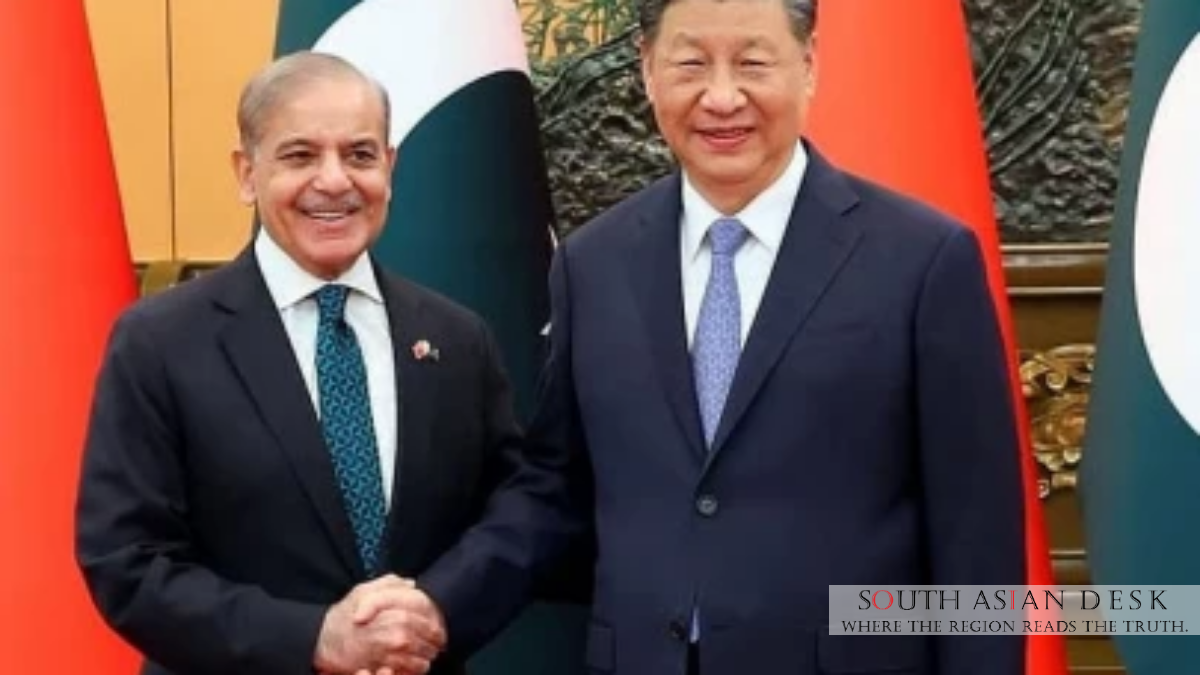
The Panda Bond issuance arrived alongside a broader diplomatic push. Prime Minister Shehbaz Sharif travelled to China in May for a visit focused heavily on trade, industrial cooperation, financial connectivity and the future direction of the China Pakistan Economic Corridor, holding talks with President Xi Jinping and Premier Li Qiang. Pakistan’s Foreign Office said the trip was intended to strengthen political trust and strategic coordination between the two governments, describing the relationship as a long standing friendship entering a new phase.
Cooperation has also broadened beyond the federal level. President Asif Ali Zardari’s own visit to China resulted in multiple agreements and memoranda of understanding between the Sindh provincial government and Chinese provincial authorities and businesses, spanning trade, agriculture, urban development, technology and investment. This growing engagement between Pakistani provinces and their Chinese counterparts illustrates how bilateral ties are extending well beyond central government channels into sub-national partnerships. China remains Pakistan’s largest trading partner and one of the few governments willing to provide rapid financial support during periods of external vulnerability, with bilateral trade between the two countries approaching 17 billion dollars in the first eight months of 2025 alone.
Pakistan’s Growing Presence In Space
Alongside its financial diversification, Pakistan has been quietly building a more ambitious space programme, almost entirely through cooperation with China. The Space and Upper Atmosphere Research Commission, Pakistan’s national space agency, has launched five indigenous satellites in the space of roughly sixteen months, a pace that would have seemed unlikely for an agency long overshadowed by regional rivals. The first, PRSC-EO1, an electro-optical Earth observation satellite, launched in January 2025 from China’s Jiuquan Satellite Launch Center. A second Earth observation satellite, EO-2, followed in February 2026, launched alongside six other satellites during an offshore mission from Guangdong province.
In April 2026, Pakistan launched its most advanced satellite to date, the EO-3, from the Taiyuan Satellite Launch Center. The EO-3 carries an artificial intelligence powered onboard computer capable of processing imagery in real time rather than transmitting raw data to ground stations, along with a Multi-Geometry Imaging Module and an advanced energy storage system, both developed in-house by SUPARCO. Between these Earth observation launches, Pakistan also sent up its first hyperspectral satellite, the HS-1, in October 2025, designed to analyse hundreds of light bands to detect mineral deposits, monitor crop growth and track environmental change with high precision.
Pakistani Astronaut China Space Station Mission
The most striking symbol of deepening scientific cooperation, however, is set to come later this year, when a Pakistani astronaut is due to join a short duration mission aboard the China Space Station as a payload specialist. The China Manned Space Agency confirmed the mission as part of its broader 2026 spaceflight plans, which include two crewed missions and one cargo resupply flight to the station. Two Pakistani Air Force pilots, Muhammad Zeeshan Ali and Khurram Daud, were selected in April following a rigorous multi round screening process and have since been undergoing intensive training at China’s Astronaut Center in Beijing, with one of them ultimately expected to fly.
Whichever candidate is chosen will become the first foreign astronaut to board the Tiangong space station, China’s answer to the International Space Station after the United States excluded China from that programme. The Pakistani astronaut China space station mission will see the selected pilot work as a genuine member of the crew rather than a symbolic passenger, conducting scientific research and microgravity experiments during a crew rotation period in which the station typically hosts six astronauts for several days. Prime Minister Sharif met both candidates shortly after their selection, describing their participation as a landmark achievement for the country and a source of national pride.
None of Pakistan’s recent space milestones would have been possible without direct Chinese assistance. Every satellite launch to date has taken place from a Chinese facility, the astronaut candidates are being trained exclusively by Chinese instructors, and SUPARCO’s most ambitious future project, a lunar rover mission targeted for 2028, will similarly depend on Chinese technology and technical support. Observers have noted that this level of cooperation goes well beyond a simple commercial launch arrangement, reflecting instead the depth of the broader strategic relationship between the two countries.
A Relationship Entering A New Phase
Seventy five years after Pakistan and China first established diplomatic relations, the combination of Islamabad’s entry into Chinese capital markets, its expanding satellite programme, the forthcoming astronaut mission and intensifying provincial level cooperation all point toward a partnership that is becoming steadily more integrated across financial, industrial and scientific domains. This deepening comes even as Pakistan simultaneously pursues renewed diplomatic and economic outreach toward Washington, a balancing act that officials in Islamabad describe as requiring careful calibration rather than exclusive alignment with either side.
Security considerations continue to shape the pace of that integration on the Chinese side, with attacks on Chinese engineers and workers in Pakistan in recent years remaining a persistent concern for Beijing as it weighs further investment. Even so, the scale and range of cooperation now underway, from sovereign bond issuance to human spaceflight, suggest that the relationship between the two countries is entering a phase defined less by infrastructure financing alone and more by a genuinely diversified strategic partnership.
Published in SouthAsianDesk, July 15, 2026
Follow SouthAsianDesk on X, Instagram and Facebook for insights on business and current affairs from across South Asia.