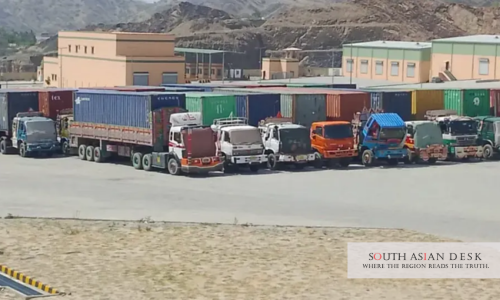
Pakistani customs authorities have cleared 26 WFP containers at Torkham border for entry into Afghanistan, marking a rare reopening of a crossing that has remained largely shut to cross border movement since October 2025. The containers, carrying food and other essential supplies on behalf of the World Food Programme, were issued gate passes on Monday evening after officials in Khyber district awaited final approval from higher authorities throughout the day. The clearance of these WFP containers at Torkham border comes at a moment when humanitarian access into Afghanistan has been severely constrained.
A Route Closed By Security Concerns
The Torkham crossing has long served as one of the principal channels for trade and humanitarian movement between Pakistan and Afghanistan, forming a critical link along the wider Pakistan Afghanistan trade route. Since October 2025, however, the border post has been largely closed to cross border traffic because of what officials have described as an escalating security situation along the frontier, disrupting the flow of goods, aid and everyday commerce along this Pakistan Afghanistan trade route.
Against that backdrop, Monday’s clearance of the WFP containers at Torkham border represents a notable, if narrow, exception. Customs clearing agents told Dawn that the containers had arrived at the Torkham import terminal early in the morning but were made to wait for much of the day while officials sought a final decision from senior authorities before allowing them through. Only in the evening, despite the gates having been officially closed to cross border movement, were the containers issued the necessary gate passes.
WFP Containers At Torkham Border Cleared Through Customs
According to the clearing agents, all documentation required for the shipment, including the Goods Declaration paperwork and electronic scanning procedures, had already been completed by the time approval was granted. Officials reportedly informed the agents that the cleared vehicles would be permitted to proceed into Afghanistan on Tuesday, once the formal clearance process for the WFP containers at Torkham border was finalised on the Pakistani side.
The consignment forms part of a broader humanitarian assistance Afghanistan effort coordinated by the World Food Programme, aimed at supplying food and other essential goods to communities in need across the country. Whether the containers are ultimately allowed to complete their journey, however, depends on a separate and less predictable factor, namely the response of the authorities on the Afghan side of the frontier.
A History Of Uncertainty With Kabul
The path for aid convoys through Torkham has not always run smoothly, even when Pakistani customs formalities have been completed without issue. Earlier this year, a similar convoy of roughly 20 WFP containers was turned back and sent to Karachi after Taliban authorities food aid policy led Kabul to refuse the shipment altogether, declining to accept assistance from the UN body at that time.
That precedent leaves the fate of the current 26 containers genuinely uncertain. While Pakistani officials have cleared the shipment for departure, confirmation of whether the WFP containers at Torkham border will actually be permitted to cross into Afghanistan and reach their intended destinations is expected only once Taliban authorities issue their own decision, likely early on Tuesday.
Wider Significance
The temporary opening of the Torkham crossing for this consignment, even as the wider route remains closed, illustrates the delicate balance Pakistani authorities are attempting to strike between maintaining border security and allowing essential humanitarian assistance Afghanistan supplies to reach communities in need. With the broader Pakistan Afghanistan trade route still largely suspended, the movement of these WFP containers at Torkham border is likely to be watched closely as a test of whether further humanitarian exceptions might follow, or whether the crossing will revert to its closed status once this shipment has passed through.
Published in SouthAsianDesk, July 15, 2026
Follow SouthAsianDesk on X, Instagram and Facebook for insights on business and current affairs from across South Asia.