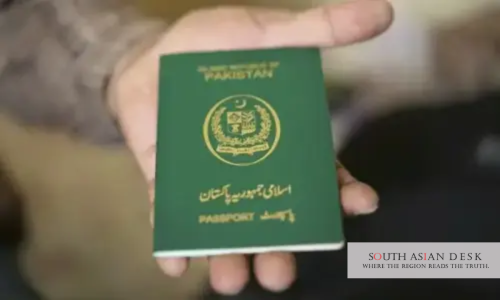
Pakistan e-passports will fully replace machine-readable passports under a new government reform plan aimed at improving travel document security, reducing fraud and modernising passport services in Pakistan.
The decision was taken during a special meeting chaired by Interior Minister Mohsin Naqvi at the Passport and Immigration Headquarters in Islamabad on Friday. Director General Passports and Immigration Muhammad Ali Randhawa briefed the minister on ongoing reforms and the proposed shift to a fully electronic passport system.
According to officials, the complete transition to Pakistan e-passports is intended to curb passport-related fraud and forgery by replacing older travel documents with chip-based biometric passports. However, the government has not yet announced a final cut-off date for phasing out existing machine-readable passports.
Pakistan e-passports to replace machine-readable passports
The move marks a major step in Pakistan’s wider effort to digitise public services and bring travel documents in line with international border security standards.
An e-passport is a biometric passport containing an electronic chip embedded in one of its pages. The chip stores key information about the passport holder, including biometric data, facial details, biographical information, a unique identification number and a digital signature.
The Directorate General of Immigration and Passports says Pakistan’s e-passports comply with International Civil Aviation Organisation standards. The system is also designed to support e-gate facilities at international airports, allowing faster identity verification and reducing queues for eligible travellers.
Pakistan introduced e-passports in 2022, initially for diplomatic and official categories. The facility was later made available from field offices across the country. The latest decision indicates that the government now intends to move completely away from machine-readable passports.
Cashless passport payments from July 1
As part of the same reform package, all passport offices are set to shift to cashless passport payments from July 1. The measure will end manual cash handling at banks and is aimed at improving transparency, convenience and efficiency in the passport application process.
Officials also reviewed a new fee structure for premium passport services. Under the proposed arrangement, applicants seeking premium services will be charged in line with the actual cost of those services.
The government has also decided to migrate online passport applications to the Pak ID platform. The move is expected to streamline digital submissions and reduce processing delays by integrating passport applications with existing national identity services.
Passport home delivery service planned
Authorities also informed the meeting that initial work on passport home delivery has been completed. Once launched, the service will allow citizens in Pakistan and overseas Pakistanis to receive passports at their doorstep.
Interior Minister Mohsin Naqvi said the process of providing passports directly to citizens’ homes would begin soon. The government has not yet announced a formal launch date for the service.
The meeting also reviewed progress on a proposed Business Passport policy. Naqvi directed officials to finalise the policy at the earliest in consultation with the Federal Board of Revenue.
Officials said the overall reform plan is intended to make passport services in Pakistan more secure, accessible and efficient, while improving the country’s compliance with global travel document standards.
Published in SouthAsianDesk, June 20, 2026
Follow SouthAsianDesk on X, Instagram and Facebook for insights on business and current affairs from across South Asia.